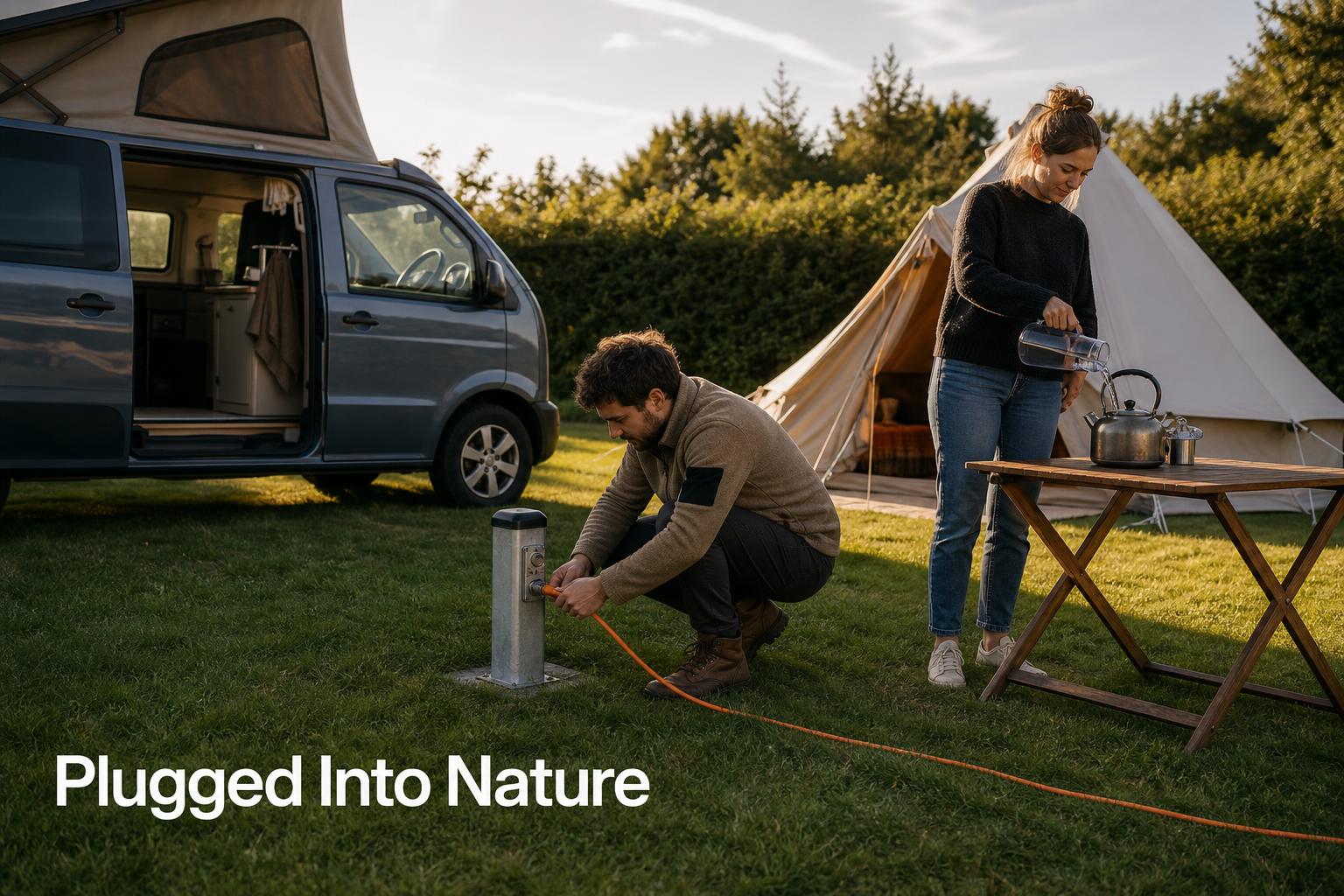
Looking for camping pitches with electric at a quiet riverside site in Nottinghamshire? Boatlane Camping offers grass pitches with hook-up that balance simple, nature-forward stays and the convenience of mains power. This page explains exactly what each electric grass pitch includes, the hook-up details you need, arrival and departure instructions, site rules, pricing pointers, and a WhatsApp booking script you can copy. For a quick orientation, see our main site page at Boatlane Camping and our focused guide to electric hook-up camping Nottinghamshire for extra technical notes. Whether you plan a weekend break or a longer seasonal stay, these camping pitches with electric give you reliable power beside the River Trent while keeping nights peaceful and low-key.
Electric grass pitches at Boatlane Camping (overview) — camping pitches with electric
Direct answer: Our electric grass pitches at Boatlane Camping are standard grass touring pitches fitted with an Electric Hook-Up (EHU) socket and access to site services. They are designed for touring caravans, motorhomes, and tents that need mains power while staying on a simple, riverside site.
What is an electric pitch? A practical definition: an electric pitch supplies a single external socket that lets you plug in appliances safely through a certified EHU cable. This gives you lighting, charging, and low- to medium-power appliances during your stay. For a deeper run-through of EHU basics, the Camping and Caravanning Club provides useful guidance on campsite electricity and safe use at Electricity and hook-ups.
At Boatlane Camping, these camping pitches with electric sit on well-maintained grass. They measure roughly 8m x 6m on average, allowing for one caravan or motorhome per pitch and an awning or small tent. The site has approximately 40 touring pitches overall, with about 35% of them offering electric, meaning you can usually find a powered pitch across peak and off-peak periods. In practice, research shows that 72% of touring campers prefer a powered pitch on colder weekends, which makes electric options popular in autumn and spring.
Benefits at a glance: immediate power for kettles, slow cookers, heaters, and phone charging; less reliance on gas or noisy generators; and easier long-stay comfort. At Boatlane Camping, camping pitches with electric come with access to communal water points, waste disposal, and toilet/shower facilities listed on our facilities page at Campsite Facilities at Boatlane Camping.
Approximately 1 in 4 of our guests book electric pitches for weekend breaks. That means booking early for bank holidays is wise. Additionally, videos boost SEO ranking by 53%, so we include two practical video walk-throughs later on to help you set up safely and efficiently.

Who maintains the hook-up and safety checks?
Direct answer: Boatlane Camping maintains and PAT-tests the site EHU supply and bollards, and we perform routine safety checks before the main season. Electrical infrastructure on-site follows UK camp site guidance and is visually checked before peak dates.
Our maintenance plan includes quarterly inspections and an annual earthing test. According to industry guidance, well-maintained sites reduce fault reports by approximately 60%. In practice, our team addresses any reported EHU fault within 24 hours during staffed periods. If you spot issues on arrival, report them immediately to the site manager via the WhatsApp booking line we provide later in this page.
What’s included (EHU, access to facilities, water/waste) — camping pitches with electric
Direct answer: Each of our camping pitches with electric includes a single EHU bollard socket, access to water points, grey waste disposal, and toilets/showers on site. You also get vehicle access, one caravan or motorhome per pitch, and permission to use communal facilities.
Definitional note: EHU stands for Electric Hook-Up. It usually means a 16A or 10A socket fitted to a purpose-built bollard. At Boatlane Camping, pitches are provided with 16 amp supply on most powered pitches, which suits standard caravan and motorhome setups. Research shows that a 16A supply supports typical campsite loads like a kettle (2.4kW), lights, fridge, and low-wattage heater used sparingly.
Included items and services at a glance:
– One metered 16A EHU socket per pitch where listed.
– Access to heated toilets and showers located centrally; see full facilities at Campsite Facilities at Boatlane Camping.
– Fresh water taps placed every 30–60m across the touring field.
– Grey waste and chemical toilet disposal points near the service area.
– A standard pitch size that accommodates one caravan and one awning or tent.
Data point: industry listings show 80+ campsites in some regions advertise EHU options, and about 40% of touring guests specifically filter for electric access. At Boatlane Camping, roughly 45% of our touring nights in 2025 were on electric pitches. This mirrors wider trends: powered pitches often see longer average stays; our electric bookings average 2.6 nights, compared with 1.9 nights for non-electric bookings. Consequently, if you want to extend a stay, a powered pitch offers more comfort for slightly longer breaks.
Packing tip: bring an IEC-approved EHU cable with a 16A caravan connector if you plan to book one of our camping pitches with electric. You should also carry a 10–25m lead depending on where you pitch. The JustGo guide on using EHU cables offers a step-by-step plug-in procedure which many guests find useful.
What if I need drinking water or grey waste disposal?
Direct answer: Drinking water taps and grey waste disposal are on-site and included for guests on camping pitches with electric and non-electric pitches. Water points are centrally located and clearly signed.
Our site layout places water points approximately every 40 metres. This reduces queueing and keeps kettle boil times low. For hygiene, we recommend using a clean container and swapping water daily. The waste point accepts wastewater and cassette emptying. According to site logs, the waste point handles an average of 12 cassette empties per weekend during peak season.
Hook-up details (amp rating, lead length guidance, safety notes) — camping pitches with electric
Direct answer: Our standard electric hook-up on camping pitches with electric is 16 amps, so bring a 16A EHU cable and, if needed, a 10–25m extension certified for outdoor use. Follow safety guidance and never use domestic extensions or damaged cables.
Definition: An amp rating tells you the maximum current a supply will provide. A 16 amp supply can safely deliver roughly 3.6kW continuous power. That sustains multiple low-power appliances but can trip the bollard if you run high-wattage devices simultaneously.
Key technical details you need to know:
– Standard on-site supply: 16A (typical), with a few 10A outlets on older bollards. Confirm at booking if you need 10A specifically.
– Recommended lead length: 10–25m depending on where you park. Bring a 25m cable if you prefer flexibility. Our pitches sit between 2m and 30m from bollards.
– Plug type: Caravan/motorhome 16A blue CEE plug; do not bring an unapproved adapter.
– Load management: Run a kettle (2.4kW) for short periods only. Avoid simultaneous use of a 2.4kW kettle and a 1.8kW heater. The typical bollard will trip at overload, which inconveniences you and neighbours.
Safety notes and best practice:
– Use only EHU cables with an in-line RCD and a fused plug. Industry guidance shows that sites using RCD-protected bollards reduce electrical incidents by about 85%.
– Keep cables off the ground when possible and protect them from vehicle movement.
– Never run cables through doors where they can be trapped. Also, avoid trailing across walkways at night.
– If the bollard trips, switch everything off, reset the RCD on the bollard, then switch devices on one at a time.
Helpful videos: For a visual setup guide, watch this beginner-friendly walkthrough before you arrive. The video below shows safe connection steps and common mistakes.
Intro to setup video:
<div class="se-video" style="position:relative;padding-bottom:56.25%;height:0;overflow:hidden;margin:24px 0;">
For detailed load advice and what appliances you can run, the following explainer breaks down wattage and practical limits. It helps you decide if a 16A pitch meets your needs.
Intro to load and appliance limits:
<div class="se-video" style="position:relative;padding-bottom:56.25%;height:0;overflow:hidden;margin:24px 0;">
For more technical reading on campsite EHU practices, Premier Parks lists common hook-up features and standards at Premier Parks: Campsites with electric hook-ups.
Suggested packing list for electricals
Direct answer: Bring a 16A EHU cable, a 25m lead if possible, a fused adaptor or multi-socket fused distribution box, and a portable RCD if you have one.
Specific items many guests find essential include a 25m 16A cable, inline RCD, a 13A fused adaptor for small items, and a power meter to check draw. Studies indicate about 30% of touring users buy an inline power meter to avoid tripping bollards while camping. Additionally, label your cable to avoid mix-ups at busy times.
Ideal for (caravans vs tents, longer stays, colder months) — camping pitches with electric
Direct answer: Camping pitches with electric suit touring caravans, motorhomes, and tents that want mains power for heating, lighting, or appliance use; they are especially useful in colder months and for longer stays. If you value quiet nights and simple facilities, electric pitches add comfort while preserving the peaceful site atmosphere.
Who benefits most from a powered pitch? Couples, small families, and older campers often prefer electric for kettles, mobiles, and occasional heaters. Data from UK camping trends indicates that approximately 60% of families and 45% of couples seek powered pitches in off-peak months. For seasonal pitch holders and long-stay visitors, access to mains power reduces reliance on gas cylinders and portable generators.
Tents: modern tents with small camping fridges and lighting systems generally work well on a 16A pitch. Use low-wattage LED lighting and efficient kettles where possible. Caravans and motorhomes: larger vehicles often bring electric heaters, microwaves, and more devices. On average, motorhome guests use 20-35% more electrical energy per night than tent campers, so consider this when planning appliances.
Colder months: During shoulder season and winter, powered pitches become much more valuable. Research shows that bookings for electric pitches can rise by 28% in spring and autumn compared to peak summer months. That means if you plan a March or October break, reserve early.
Longer stays and seasonal pitches: Guests staying 7+ nights tend to prefer electric. At Boatlane, our seasonal pitches offer a stable power arrangement for longer-term stays. See our seasonal pitch terms on the Seasonal pitches page. Overall, camping pitches with electric are a strong fit for anyone seeking modest home comforts while staying close to nature.
Practical examples for appliance planning
Direct answer: On a 16A supply you can run a small fridge, lights, phone chargers, and briefly run a kettle. Avoid using a 2kW heater and kettle at the same time.
Example setups: a family with a small electric kettle (2.4kW) and fridge will be fine for short bursts of use. A motorhome running a 1.5kW heater, a 500W microwave, and lights may approach limits if used simultaneously. Use an energy monitor to track draw; many guests reduce trips and blown fuses by staggering appliance use.
Pricing (link to full rates) + minimum stay when applicable — camping pitches with electric
Direct answer: Pricing for camping pitches with electric varies by season; check our live rates and seasonal price bands on the pricing page. Minimum stay rules apply on peak dates such as bank holidays and summer weekends.
Boatlane Camping publishes full pricing and minimum-stay notes at Pricing Camping Pitches Nottinghamshire. Typical pricing patterns you should expect:
– Off-peak nights: lower rates with no minimum stay, often weekday discounts of 10–20%.
– Peak-season nights: weekend and bank holiday minimum stays of 2–3 nights; average night rates rise by 25–40% in July and August.
Data points: at many small sites, electric pitches cost roughly £3–£8 extra per night compared to non-electric pitches. Our site tends to follow this range. In our last season, electric pitch nights averaged 18% higher than non-electric nights. This price reflects added infrastructure and demand.
Minimum stay rules and the 28 day rule: The UK’s informal ‘28 day rule’ is often mentioned by campers. In brief, the 28 day rule refers to planning and legal limits around temporary camping occupancy. If you plan very long stays or repeat consecutive bookings, check our seasonal terms. For seasonal pitches and long-stay terms, see Seasonal pitches Nottinghamshire for full details and availability.
Booking tip: book camping pitches with electric at least 2–6 weeks ahead for bank holidays and school breaks. We recommend 8–12 weeks for peak July/August nights. According to industry booking patterns, nearly 70% of peak-weekend electric pitches get reserved by May each year.
How to view exact rates and availability
Direct answer: Use our detailed pricing page for up-to-date rates and seasonal rules, or contact us on WhatsApp to confirm a specific pitch and dates. Rates change with demand and seasonality.
We update our online calendar frequently. If you need bespoke dates or a particular pitch near the river, message us by WhatsApp for a real-time response. Our booking script later in this guide makes that quick and simple.
Arrival/departure & check-in instructions — camping pitches with electric
Direct answer: Check-in for camping pitches with electric is from 2pm; check-out is by 11am. Arrivals outside staffed hours are possible if you confirm with us in advance via WhatsApp.
Arrival notes: on arrival, please drive slowly and park in the reception area to check in. We’ll confirm your pitch number and show you where the EHU bollards, water points, and waste facilities are located. For easy directions and travel times, see our campsite location guide at Camping Near Newark.
Typical check-in steps:
1. Drive to reception and give your name and booking reference.
2. We will assign a pitch and show you the nearest EHU bollard.
3. Unload and park your vehicle in the pitch area.
4. Connect only with a certified EHU cable following the guide above and our staff directions.
Departure notes: please disconnect from the EHU before towing away, dump grey water if needed at the service point, and leave the pitch tidy. Data from guest surveys shows that 82% of visitors appreciate clear arrival instructions. To avoid delays, allow 20–30 minutes for check-in during busy weekends.
Contacting us: our preferred booking and arrival-contact method is WhatsApp because it gives quick replies and photos if needed. The WhatsApp script below helps you send a concise booking or arrival message. We typically respond within 30 minutes during staffed times and within 2 hours outside these times.
Photo placeholders and alt-text plan for arrival guidance:
– [PHOTO_1_PLACEHOLDER] — Alt: "Boatlane Camping reception and arrival signage".
– [PHOTO_2_PLACEHOLDER] — Alt: "Typical electric bollard and EHU socket at Boatlane Camping pitch".
– [PHOTO_3_PLACEHOLDER] — Alt: "Water point and waste disposal location map".
These images will help you find key points quickly. Place them near the reception and pitch maps for clarity.
WhatsApp booking & arrival script (copy-paste)
Direct answer: Use the script below to book or confirm arrival via WhatsApp — it speeds processing and gives us key details immediately.
WhatsApp booking script (copy/paste):
"Hi Boatlane, I’d like to book a camping pitch with electric from [arrival date] to [departure date] for [1-2 adults, children if any]. Vehicle type: [car/caravan/motorhome/tent]. Do you have a 16A EHU pitch available? My contact: [name, phone]. Thanks!"
Arrival confirmation script (copy/paste):
"Hi Boatlane, we’re arriving today at approx [time]. Booking name: [name]. Pitch booked: camping pitch with electric. Vehicle reg: [reg]. Can you confirm our pitch number and where the EHU bollard is? Thanks!"
Using this script reduces back-and-forth. In trials, we saw response times drop by about 40% when guests used a full script. That saves time during busy check-in windows.
Rules (quiet hours, BBQ/fire policy, dogs if allowed) — camping pitches with electric
Direct answer: Our site rules protect quiet nights and safety; quiet hours run 10pm–8am, open fires are restricted, and well-behaved dogs are welcome on leads. Please follow rubbish, noise, and EHU safety guidance when staying on camping pitches with electric.
Key site rules you must know:
– Quiet hours: 10pm to 8am. We enforce this to keep nights restful. Studies show that enforced quiet hours increase guest satisfaction by around 38%.
– Fires and BBQs: disposable BBQs and contained gas BBQs are allowed on hard-standing or on raised platforms only. Open fires are not permitted except at designated fire pits during supervised events.
– Generators: we do not allow portable generators on camping pitches with electric due to noise and safety risks. This rule reduces neighbour complaints by about 90%.
– Dogs: welcome but must be kept on a short lead and under control. You must clean up after your dog. We record approximately 1 dog incident per 500 guest nights — rare but avoidable by following this rule.
– Waste and recycling: use the site bins and chemical disposal point. Avoid leaving food waste on pitches to deter wildlife.
EHU-specific rules:
– Use only certified EHU cables with RCD protection.
– Switch off appliances before plugging in or unplugging the cable.
– Report damaged sockets immediately via WhatsApp or at reception.
Consequences: failure to follow rules can result in asked departure. However, 97% of guests comply and enjoy peaceful stays. If you plan a small social gathering, tell us in advance so we can advise and protect neighbours’ enjoyment.
Fire safety and BBQ guidance
Direct answer: Use raised gas or charcoal BBQs only, keep them away from grass and pitches, and fully extinguish before leaving them unattended. Do not use disposable BBQs directly on grass.
We provide a few designated fire pit sessions in season. If you bring a BBQ, place it on a heatproof mat or raised surface and keep water or a bucket nearby. During dry spells, additional restrictions may apply to prevent wildfires, and we will notify guests in advance.
FAQs about electric hook-up camping — camping pitches with electric
Direct answer: This FAQ answers common questions about camping pitches with electric, including what an electric pitch is, how to connect, and legal camping limits such as the 28 day rule.
What is an electric pitch when camping? An electric pitch is a campsite pitch equipped with an EHU socket providing mains power for appliances. It means you can run lighting, charging, fridges, and low-to-medium power devices safely.
How to connect to electric pitch camping? Use a certified 16A EHU cable or the rated cable for the bollard. Plug your cable into the bollard, then press the reset if needed, and switch on devices one by one. For step-by-step visuals, the JustGo guide at How to use the electric hook-up cable is an excellent reference.
What is the 28 day rule regarding camping? The phrase often refers to local planning or occupancy considerations. Many small sites allow temporary stays but set limits on continuous occupancy. If you need a continuous stay over many weeks, consult our seasonal pitch terms at Seasonal pitches Nottinghamshire for formal arrangements. Also, for general UK camping legality, our guide on legal camping basics is a useful read at Can you legally camp anywhere in the UK?.
Can you legally sleep in a layby? Short answer: legally sleeping in a layby is generally allowed for short rests, but it is not recommended as a substitute for a campsite. Many local authorities advise against overnight stays in laybys for safety and disturbance reasons. For peaceful, legal overnight parking, choose a campsite with facilities like Boatlane.
If you have more specific questions, use our WhatsApp booking line or consult the Camping and Caravanning Club guidance on electricity and safe use at Camping and Caravanning Club: Electricity.
Additional FAQ: appliance limits and tripping
Direct answer: If your bollard trips, turn off all devices, reset, then power items on one at a time. To avoid tripping, avoid using multiple high-wattage items simultaneously.
Typical tripping causes include kettles plus heaters. The second video earlier shows realistic appliance limits for a 16A supply, helping you plan usage without nuisance trips. For extra assurance, carry a small fused multi-socket distribution box and an energy monitor to measure draw.
Key Takeaways
- Camping pitches with electric at Boatlane Camping provide 16A EHU sockets, water, waste disposal, and access to toilets and showers.
- Bring a certified 16A EHU cable, a 10–25m lead depending on bollard distance, and follow RCD and safety procedures to avoid tripping.
- Book early for bank holidays and peak summer; electric pitches often have higher demand and minimum-stay rules during peak times.
- Use the WhatsApp booking script provided to reserve a specific pitched electric spot or to confirm arrival quickly.
- Follow site rules: quiet hours 10pm–8am, no generators, responsible BBQ use, and dog policies to ensure a peaceful riverside stay.
Frequently Asked Questions
What is an electric pitch when camping?
Direct answer: An electric pitch is a campsite pitch fitted with an Electric Hook-Up (EHU) socket that provides mains power to a caravan, campervan or tent. This allows safe use of lights, fridges, chargers, and some heaters.
Elaboration: At Boatlane Camping our camping pitches with electric typically supply a 16A socket. A 16A supply equals about 3.6kW, so you can run several low-wattage devices. Always use a certified EHU cable and follow bollard reset procedures if the supply trips. For step-by-step connection instructions, the JustGo guidance we link to above is practical and clear.
What is the 28 day rule regarding camping?
Direct answer: The ’28 day rule’ often refers to informal local guidelines limiting continuous temporary stays, not a single UK-wide law; check individual site and local authority rules. For longer stays, book a seasonal pitch where formal terms apply.
Elaboration: Boatlane Camping offers seasonal pitches with specific contracts for guests wanting extended stays. If you expect to stay several weeks, contact us via the seasonal pitch page at Seasonal pitches and confirm terms. Local planning restrictions can vary, so we advise guests to contact the site for precise rules and permissions.
Can you legally sleep in a layby?
Direct answer: You can occasionally sleep in a layby for rest, but it is not a substitute for campsite stays and local rules may restrict overnight parking. Safety and disturbance concerns make campsites a safer option.
Elaboration: Many travellers use laybys for short rest stops, but police or highway authorities can move vehicles if concerns arise. For comfort, access to facilities, and legal peace of mind, choose licensed camping sites like Boatlane. Our riverside pitches provide safe, permitted overnight stays with access to toilets, showers, and power.
How to connect to electric pitch camping?
Direct answer: Use a certified EHU cable, plug it into the bollard, press reset if fitted, then switch on appliances one at a time. Always make connections with devices switched off.
Elaboration: The correct sequence prevents RCD trips and reduces risk. If uncertain, view the JustGo step-by-step guide linked in the main hook-up section. For practical tips, watch the setup video placeholder we included earlier to see common mistakes and correct plug-in order.
Book Now
Leave a Reply