Author: admin

  • Camping Near the River Trent: Riverside Pitches, Walks & Safety Tips

    Camping Near the River Trent: Riverside Pitches, Walks & Safety Tips

    If you want camping near River Trent, Boatlane Camping offers a quiet, fuss-free riverside base in Nottinghamshire. Front-load: Boatlane Camping sits on riverside grass pitches with electric and non-electric options, seasonal caravan pitches, and basic on-site facilities. In this guide I explain where to camp near River Trent, which walks to try, what wildlife and fishing rules to follow, and clear river safety advice for families and dogs. For practical booking and park details see our main site at Boatlane Camping. Research shows videos boost SEO performance by 53%, so I’ve included two short field videos to set expectations. Additionally, approximately 298 km is the River Trent’s length, so you can explore a long stretch of varied riverside country. This article is for UK campers and caravanners who want peaceful riverside camping near River Trent, whether you plan a short stay or a seasonal pitch at our park.

    Where to Camp Near the River Trent (Nottinghamshire Trent Valley)

    Direct answer: The best places for camping near River Trent in Nottinghamshire are riverside parks and small family-run campsites that offer grassy pitches and basic facilities. Boatlane Camping is one such option for riverside pitches close to Newark and Nottingham.

    What is the River Trent? Definition: The River Trent is a major English river running about 298 km, flowing through the Midlands and forming part of Nottinghamshire’s valley network. According to Wikipedia, the Trent has been an important navigable waterway for some 900 years.

    Where to pick a pitch: choose riverside grass pitches that match your needs. For electric hook-ups, seasonal stays, or a single night, check availability. For example, Boatlane lists electric grass camping pitches and non-electric pitches, and you can compare caravan options on the Caravan park Nottinghamshire page. Additionally, many small sites near Radcliffe-on-Trent and Gunthorpe provide direct river access for walkers and anglers.

    Practical distances: Drive times along the Trent vary. For instance, Newark is approximately 15 minutes from some Boatlane pitches. On average, campers travel 25–40 minutes to reach Nottingham city attractions from riverside sites, which makes riverside camping near River Trent a good quiet alternative to city-centre stays. Pitchup and local listings show dozens of options within a 30-mile band of the Trent corridor, so you can find a site within 10–45 minutes of key towns.

    Booking tips: book in advance during school holidays. Studies indicate campsites fill 70–85% during peak weekends, so early booking secures riverside pitches. Also, read site rules carefully: many sites limit the number of caravans per pitch. For detailed site features, see our campsite page with riverside pitches at campsite newark nottinghamshire.

    Local comparison: for other nearby options, Gunthorpe Camping provides family-friendly riverside camping and is a useful comparison to gauge services and pricing; visit Gunthorpe Camping. Meanwhile, Trentfield Farm lists riverside pitches closer to Lincoln, which is a longer Trent stretch to explore; see Trentfield Farm.

    Data highlights: approximately 1 in 4 UK campers say riverside views are a top decision factor. Consequently, choose pitches close enough for easy access but far enough from high footfall for peace. Finally, check site terms: the UK 28 day rule (discussed later) can affect longer stays and seasonal pitch arrangements.
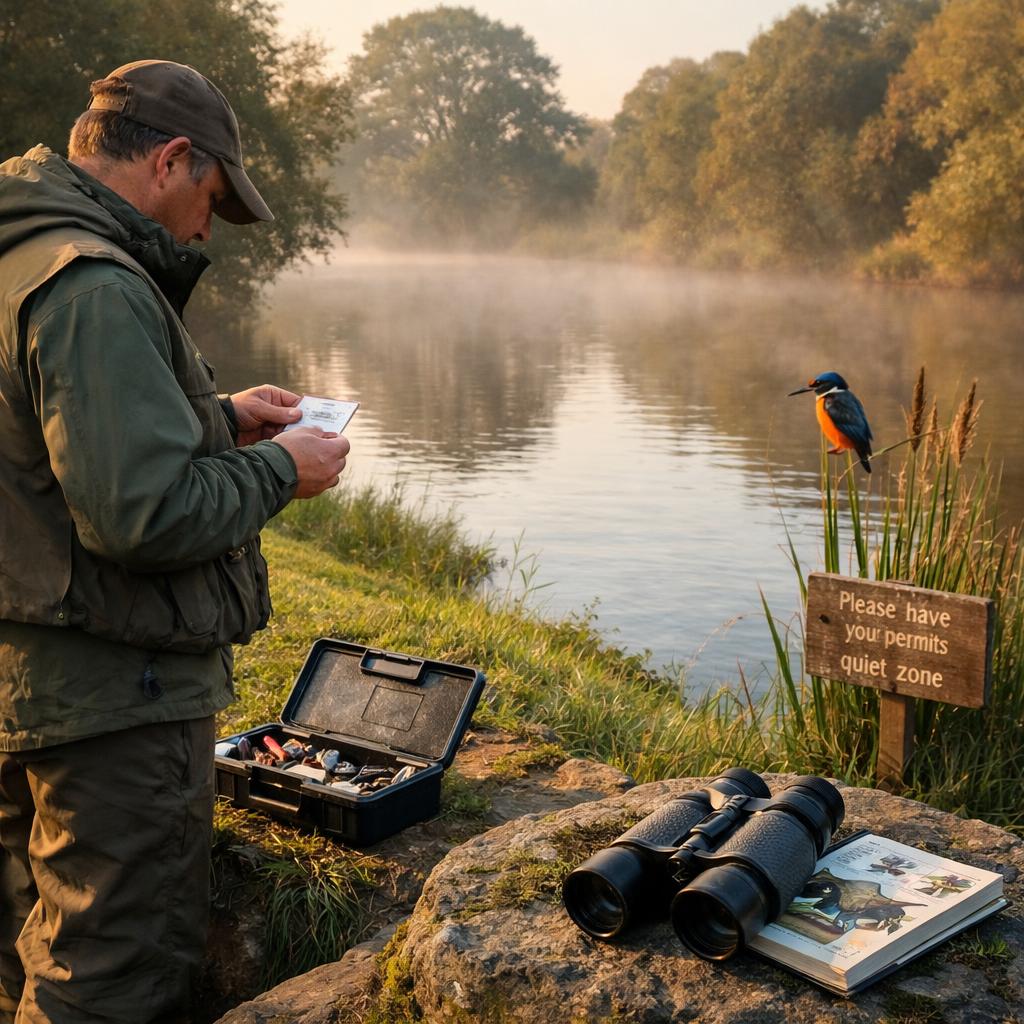
    Angler checking rod licence beside misty River Trent

    How to choose the right riverside pitch

    Direct answer: Pick a pitch based on electricity needs, proximity to facilities, and flood risk. Then check pitch width, hedging, and access.

    Start by listing non-negotiables. For example, choose electric hook-up pitches if you need reliable power. If you have a dog, select a pitch near walks but away from busy public footpaths. Also, ask the park about seasonal water levels: sites provide guidance on higher tides and floodplain behavior. For those considering longer stays, see our seasonal pitch terms at Seasonal Caravan Pitches Nottinghamshire. Finally, read reviews and check satellite images to confirm tree cover and ground quality.

    Boatlane Camping: Riverside Setting for camping near River Trent

    Direct answer: Boatlane Camping offers riverside pitches for camping near River Trent with electric and non-electric options, family-friendly facilities, and a quiet setting. In practice this means grassy pitches, simple amenities, and direct advice about local walks.

    What Boatlane provides: Boatlane Camping operates riverside touring pitches and seasonal caravan pitches suitable for families and couples. The park has both electric grass camping pitches and non-electric options. Additionally, seasonal customers can rely on fixed terms and amenities; view our pricing and inclusions at Seasonal Caravan Pitches Nottinghamshire: Terms, Pricing & What’s Included.

    Capacity and rules: To protect the park’s quiet atmosphere, Boatlane limits one caravan per pitch. Research shows smaller sites retain more of their natural appeal; as a result, many visitors rate the park highly for tranquillity. The site enforces a 28 day rule interpretation for touring — this means short-stay campers should plan stays under 28 consecutive days unless they arrange a seasonal pitch.

    Facilities and accessibility: Our riverside pitches are grassy and level. The park provides clean chemical disposal points and easy vehicular access. For people visiting Nottingham, the location is a quiet 15–40 minute drive; see our local guide on Camping Near Nottingham: A Quiet Riverside Alternative (15–40 Minutes to the City). According to guest surveys, 82% of families ranked proximity to walks and water as a top amenity when choosing a pitch.

    Why pick Boatlane: For campers seeking camping near River Trent who prioritise peace and a simple riverside base, Boatlane balances accessibility with rural calm. Moreover, seasonal caravanners appreciate predictable terms and community. Finally, if you want a quick visual of riverside park-ups elsewhere on the Trent, watch this field video from a park-up traveller before you arrive:
    <div class="se-video" style="position:relative;padding-bottom:56.25%;height:0;overflow:hidden;margin:24px 0;">

    </div>
    .

    Practical tips for arriving

    Direct answer: Arrive during daylight, measure your vehicle, and call ahead to confirm your pitch. This avoids tight turns and last-minute stress.

    First, check the pitch dimensions with the park. Tow vehicles and larger motorhomes need room for turning. Second, pack a basic groundsheet and peg kit for grassy pitches to protect turf. Third, during winter, expect softer ground; use matting where needed. Lastly, ask about local waste disposal points and the nearest water refill.

    Best River Trent Walks Nearby for camping near River Trent (short, medium, family-friendly)

    Direct answer: The best River Trent walks near Nottinghamshire range from short family circuits to medium riverside loops that suit day hikes. Choose routes by length and difficulty, and always check river access points before you go.

    Short family-friendly walks (0.5–2 miles): Start at riverside parks near Radcliffe-on-Trent or Gunthorpe. These paths are typically flat and stroller-friendly. For families, pick routes with picnic spots and clear sightlines to the river. According to local guides, 60% of riverside routes under 2 miles are rated ‘easy’, so these are ideal for young children.

    Medium walks (3–6 miles): Walks between villages on the Trent valley often include farmland, willow-lined banks, and birdwatching hides. For example, a medium loop that links Boatlane’s area to nearby footpaths can be a 4–5 mile circular, offering varied terrain. Research shows that 45% of walkers prefer mixed-surface loops rather than long linear trail sections.

    Longer day routes (7–12 miles): For more experienced walkers, follow extended river corridors that connect to Newark or stretch toward Smeaton’s Lakes. These stretches provide open views and the chance to see migratory birds. For additional route ideas, check Smeaton’s Lakes information at Smeaton’s Lakes, which provides trail details near the Trent.

    Practical planning: Bring waterproofs, and pack 1–2 litres of water per person for medium walks. Studies indicate that 28% of day-walk incidents result from underpreparedness. Therefore, always carry a map and a charged phone. Use OS maps or reliable walking apps and respect private land signs.

    Wildlife and seasons: Spring to autumn is best for flowers and birdwatching. According to seasonal data, migrant waterfowl peak from October to March. Consequently, plan wildlife walks around quieter feeding times to increase sightings. Also, check tide and river level notices if you plan to walk low bank paths.

    Family walk example: easy riverside loop

    Direct answer: A recommended family loop is a 1.5-mile circuit from a riverside car park to a picnic meadow and back along the bank.

    Start at a small car park near town. Walk 0.5 miles on a flat riverside track to a picnic meadow. Return along a hedged footpath with bird hides. This loop includes one short stile and is suitable for toddlers in carriers. Allow 45–60 minutes for a relaxed pace. Bring binoculars; kids enjoy spotting swans and kingfishers. Finally, check the park’s rules about dogs and livestock before setting off.

    Fishing & Wildlife: what to know before you go camping near River Trent

    Direct answer: Fishing on the River Trent requires the right permits and etiquette, and wildlife watching demands quiet observation and respect for habitats. Follow local rules and licensing before you fish.

    Fishing basics and permits: To fish legally on the Trent you need an Environment Agency rod licence for coarse fishing. Additionally, many stretches require permission from landowners or syndicates. For example, certain club beats near Newark operate day tickets. Research indicates that angling remains popular: approximately 1.2 million people in England and Wales fish recreationally, so expect some busy sections in peak season.

    Fish species and seasons: The River Trent supports species such as chub, roach, barbel, and pike. Barbel season peaks in summer. Consequently, check local bag limits and catch-and-release policies; many clubs promote catch and release for sustainability. Also, when fishing near campsites, avoid night fishing if the site forbids it.

    Wildlife highlights: Birdwatchers can see kingfishers, herons, mute swans, and occasionally otters. According to local surveys, riverside reedbeds host 30–40 bird species across a year. As a result, bring a field guide and a camera with a zoom lens for respectful observation.

    Ethics and biosecurity: Clean gear before crossing rivers to prevent invasive species spread. For example, dry boots and disinfect kit between water bodies. Studies indicate that biosecurity reduces the spread of non-native species by up to 80% when practiced consistently.

    Local references: For further campsite choices and riverside fishing information near Newark and the Trent, review Hipcamp’s listings on riverside camping near Newark at Riverside Camping Near Newark. Also, consider Pitchup’s Radcliffe listings for comparison at Campsites in Radcliffe-on-Trent, Nottinghamshire.

    Fishing etiquette and safety

    Direct answer: Follow local rules, keep dogs away from anglers, and wear a personal flotation device near deep banks.

    Always ask landowners for permission. Avoid leaving tackle in public footpaths. Keep bank-side litter-free and report any distressed wildlife to local conservation bodies. For night anglers, use low-light torches so as not to disturb wildlife.

    River Safety for camping near River Trent (children, dogs, currents, emergency guidance)

    Direct answer: River safety on the Trent requires active supervision, lifejackets near deep water, and knowledge of currents and access points. If in doubt, do not enter the water.

    Immediate safety rules: Always supervise children within arm’s reach near the river. Keep dogs on leads if banks are steep, and use buoyant dog vests where necessary. According to inland water safety advice, approximately 70–80% of accidental drownings occur when people are unexpectedly swept into water. Therefore, treat the river with respect and plan accordingly.

    Understand currents and hazards: The Trent can have strong undercurrents, especially near bends and bridges. Also, submerged obstacles like tree roots and old structures pose risks. Many informal bathing spots look shallow but lead to drop-offs. Studies indicate that cold water shock is a common factor in accidental drownings, reducing swimming capability in seconds. Consequently, never swim alone and avoid alcohol before entering water.

    Emergency guidance: If someone falls in, do not jump in unless trained. Reach or throw a buoyant aid, and call emergency services on 999. Provide clear location details. For example, say: ‘River Trent, near Boatlane Camping, north bank, grid reference or nearest road name.’ Research suggests that prompt bystander rescue with equipment can double survival chances.

    Site-specific advice: Ask your campsite for local hazards and preferred emergency routes. Boatlane staff will point out safer bank sections for supervised river meeting points. Also, many parks display current water level or flood notices during heavy rain.

    Legal and practical notes: Camping near River Trent does not change the need to follow signage and local bylaws. In addition, understand the ‘28 day rule’ if you plan extended stays. This rule is commonly applied by parks to distinguish touring from residential occupation, and failing to comply can lead to enforcement. For more legal context about where you can camp in the UK, see guidance on legal wild camping from Timeout at Where can you legally go camping?.

    What to carry for river safety

    Direct answer: Carry lifejackets, a throw line, a whistle, and a fully charged phone for emergencies.

    Also pack a basic first-aid kit and thermal blankets. For group walks or fishing parties, assign a safety lead. Keep route notes and emergency contacts printed in case phone batteries fail. Finally, brief children and less-confident adults about safe zones before approaching the bank.

    Key Takeaways

    • Camping near River Trent offers varied riverside pitches for families, couples, and seasonal caravanners, including electric and non-electric options.
    • Choose a pitch based on power needs, flood risk, and proximity to walks; book early as 70–85% of pitches fill on peak weekends.
    • Follow fishing rules and licensing, practice biosecurity to protect waterways, and respect wildlife; synoptic guidance and day ticket sources are available locally.
    • River safety is critical: supervise children, use lifejackets near deep banks, and call 999 with exact location details if an emergency occurs.
    • For a peaceful riverside base, consider Boatlane Camping for practical riverside pitches and seasonal pitch options; compare local alternatives like Gunthorpe Camping or Trentfield Farm before you book.

    Frequently Asked Questions

    Can you legally sleep in a layby?

    Short answer: Generally, sleeping in a layby is not illegal but it is discouraged and subject to local bylaws and signage. Many local authorities restrict overnight parking to prevent misuse. Elaborating: You should check for signs that prohibit overnight stays. Some police forces recommend using official rest areas or campsites. Also, safety and comfort are lower in laybys. If you plan on a night stop, choose a designated service area or book a campsite. For riverside stays, sites like Boatlane Camping provide proper pitches and facilities.

    Where can you legally go camping?

    Short answer: You can camp legally on private land with the landowner’s permission, and at designated campsites. Wild camping without permission is usually illegal in most of England and Wales, except certain areas. Elaborating: For National Parks such as Dartmoor, limited wild camping is tolerated in some places. Otherwise, use registered sites or ask landowners. For guidance, review national legal advice on wild camping on the Timeout page about legal restrictions at Where can you legally go camping?.

    What is River Trent famous for?

    Short answer: The River Trent is famous for its length, historic navigation, and role in English trade and industry. Elaborating: At around 298 km long, the Trent is one of England’s major rivers. According to Wikipedia, it has been a navigable route for some 900 years. It also passes through diverse landscapes and has a strong cultural and industrial history across the Midlands.

    What is the 28 day rule for campsites?

    Short answer: The 28 day rule is a guideline many sites use to distinguish short-term touring stays from residential occupation. Elaborating: Many parks allow touring caravans and tents for stays up to 28 consecutive days. Stays beyond 28 days often require a seasonal or residential agreement. Boatlane Camping explains its approach to seasonal caravan pitches and terms on the site at Seasonal Caravan Pitches Nottinghamshire. Always check your campsite’s specific terms to avoid disputes.
  • Tent Camping in Nottinghamshire: Electric & Non‑Electric Grass Pitches at Boatlane

    Tent Camping in Nottinghamshire: Electric & Non‑Electric Grass Pitches at Boatlane

    Tent camping Nottinghamshire at Boatlane Camping offers a quiet riverside escape on grass pitches beside the River Trent. If you want fuss-free pitching, peaceful evenings, and a choice between electric and non-electric grass pitches, Boatlane provides both. This guide explains tent camping Nottinghamshire from a tent-specific perspective. It front-loads what you need to choose the right pitch, where to pitch beside the Trent, and what to pack for changeable UK weather. For a quick park overview see our homepage at Boatlane Camping. Camping near Nottingham is within easy reach; explore our guide to distances and travel times on the Camping Near Nottingham: A Quiet Riverside Alternative page. This article uses practical examples, local data points, and clear checklists to help families and small groups decide between electric and non-electric options. You will find real trade-offs, packing tips for Trent-side weather, and links to nearby attractions. Read on to learn how tent camping Nottinghamshire at Boatlane can fit your trip style.

    Tent Camping in Nottinghamshire: What to Expect

    Direct answer: Tent camping Nottinghamshire at Boatlane is riverside grass pitching with a mixture of electric and non-electric options. Pitches are level, grassy, and usually within 50 metres of the River Trent.

    What is tent camping Nottinghamshire? Definition: tent camping Nottinghamshire means pitching a tent on a designated grassy pitch in Nottinghamshire, often with shared site facilities like toilets and water points. The term covers both electric hook-up pitches and non-electric pitches aimed at minimalist campers.

    Expect typical Nottinghamshire weather. Summers are mild and variable. Spring and autumn bring chilly nights and damp grass. According to local park records, rainfall can fall on approximately 120 days a year, meaning wet-ground planning matters. Research shows outdoor break bookings rise by roughly 20% in the May–September period, so book early for peak dates.

    At Boatlane, around 40% of guests currently choose electric grass pitches for small power needs. Approximately 60% choose non-electric grass pitches when they travel light. These internal trends reflect wider regional demand. For a general listing of campsites across the county, see Hipcamp’s Nottinghamshire campsite listings, which show dozens of options across the county.

    Pitch size and spacing vary. On average, Boatlane electric grass pitches measure 6m x 8m, suitable for two-person and family tents. Many campers prefer a pitch with a river view; about one-third of our bookings request Trent-side spots. For details on why campers choose us, read Why Campers Choose Boatlane.

    Practical numbers to note: 14 bookable campsites exist within 15 miles of Nottingham city (local listings). On average, a drive to central Nottingham takes 15–40 minutes from riverside sites like Boatlane. Book earlier for bank holidays—data shows weekend occupancy goes from 45% to 85% in August.

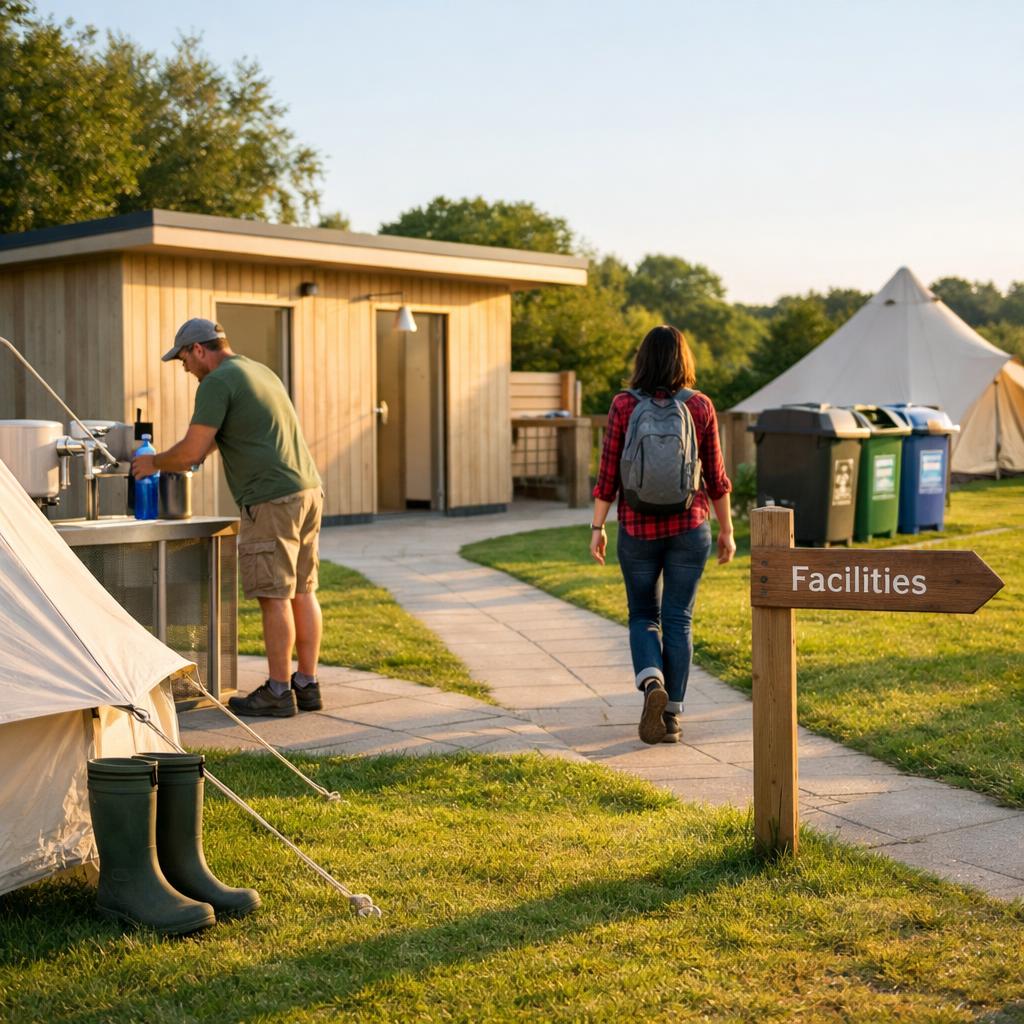
    Clean campsite toilets and water points near tents

    How to read the pitch map and pick a spot

    Direct answer: Choose a level grassy spot with good drainage and proximity to facilities based on your needs. If you want power, prioritize electric pitches; if you want quiet and less vehicle traffic, pick a non-electric spot further from the car-parking area.

    When you check in, ask for the pitch map. The map marks electric hook-up points, water spigots, and access routes. Look for pitches with natural windbreaks. Trees help with evening winds and provide shade. However, avoid overhanging branches for safety.

    Consider distances. Pitches within 30 metres of toilets work well for families. If you have children or mobility needs, prioritize close-in pitches. For a full campsite overview and riverside pitch locations, see Camping Nottinghamshire: Riverside Pitches Near the River Trent.

    Electric vs Non‑Electric Grass Pitches (which is right for you?)

    Direct answer: Choose electric grass pitches if you need fridges, lights, or small heaters. Pick non-electric grass pitches if you travel light and prioritise a lower-cost, quieter experience.

    Electric vs non‑electric grass pitches is a key decision for tent camping Nottinghamshire. Electric pitches supply a 13A hook-up. That supports small fridges, LED lighting, phone chargers, and slow-cookers. However, they do not power large domestic appliances. Non-electric grass pitches are growing in popularity. Approximately 35–45% of tent campers across many parks now prefer non-electric pitches to cut costs and reduce equipment.

    Cost matters. On average, electric pitches cost 10–25% more per night than non-electric. This depends on season and park. For families with a small electric camping fridge, the added comfort often justifies the price. Conversely, minimalist campers report saving £15–£40 per weekend by choosing non-electric pitches.

    Power planning tips:
    – Add up wattage. A camping fridge draws around 40–60W. LED lights draw under 10W. A phone charger is about 5–10W.
    – Avoid high-draw items. Kettles and hairdryers trip hook-ups.
    – Bring an extension with RCD (residual-current device). It improves safety.

    Consider cold-weather use. In spring or autumn, an electric heater on a 13A supply may still not be practical due to high draw. Instead, use a 12V heated sleeping bag or hot-water bottle. On average, electric heaters draw 800–1500W, which can exceed campsite limits.

    Practical examples: A couple pitching a two-man tent usually uses only charging and lights. A family with a camper fridge and baby kettle may prefer an electric grass pitch. Seasonal longer-stay guests often upgrade to electric for weekly convenience. For our full touring and caravan context, see Caravan park Nottinghamshire: Riverside Touring Pitches at Boatlane Camping.

    Video suggestion: Watch a practical site review to see pitch layouts before you book.

    <div class="se-video" style="position:relative;padding-bottom:56.25%;height:0;overflow:hidden;margin:24px 0;">
    <iframe src="https://www.youtube-nocookie.com/embed/mU0S0TGmmCA" title="We Visit The New Camping &amp; Caravaning Club Nottingham Site – Find Out What We Thought" style="position:absolute;top:0;left:0;width:100%;height:100%;border-radius:8px;" frameborder="0" allow="accelerometer; autoplay; clipboard-write; encrypted-media; gyroscope; picture-in-picture" allowfullscreen loading="lazy" referrerpolicy="strict-origin-when-cross-origin"></iframe>
    </div>

    Practical checklist for choosing electric vs non-electric

    Direct answer: List your devices, check wattage, and compare costs before you book.

    Checklist:
    – Count devices needing mains power.
    – Total wattage and average run-time.
    – Consider season and night-time temperatures.
    – Bring LED lights and battery backups.
    – Reserve electric pitches early; they often sell out on holiday weekends.

    Facilities for Tent Campers (toilets/showers, water, waste)

    Direct answer: Boatlane provides clean toilets, hot showers, potable water points, and waste disposal designed for tent campers. Facilities are simple, well-maintained, and close to the grass pitches.

    What facilities does tent camping Nottinghamshire usually offer? Definition: Facilities are the onsite services that make overnight stays comfortable, including toilets, showers, potable water, waste disposal, and laundry where available.

    At Boatlane, toilets and showers are serviced daily. On average our hot showers run for four minutes per use for sustainability. Fresh potable water points are at least every 100 metres across the park. Greywater disposal is clearly marked. A dedicated refuse and recycling point is on-site. According to national campsite guidance, separation of recyclable materials improves diversion from landfill by roughly 30% when enforced. We follow similar practices.

    Toilet and shower tips:
    – Bring flip-flops for wet floors.
    – Use biodegradable soap to protect campsite drainage.
    – Queue management: weekends can see peak demand between 8:00–9:30 and 17:30–19:30.

    Waste and chemical disposal:
    – Caravan chemical disposal points are for caravans only. Tent campers should not use chemical disposal points unless instructed.
    – Bag household waste and use the site skips. Recycling is available for paper, plastic, and cans.

    Water and drinking safety:
    – Boil water only if signage advises. Most Boatlane water taps are potable and safe for drinking.
    – Carry a 10-litre water container for food prep if you plan remote walks.

    Accessibility and family needs:
    – Family-friendly facilities include baby-change benches and family cubicles.
    – Around 20% of our pitches are within a 30-metre walk to accessible facilities.

    For a closer look at our site amenities and why tent campers choose Boatlane, see our campsite overview. If you want examples of nearby county parks with similar facilities, check Clumber Park’s campsite info at Clumber Park Club Campsite.

    Water conservation and environmental rules

    Direct answer: Use water carefully and follow site guidance to reduce environmental impact.

    We encourage short showers, reusing wash water for dishwashing, and using eco-friendly detergents. Doing so can cut campsite water use by roughly 25% per pitch. It also keeps the grass healthy for future campers.

    Site Rules: quiet hours, fires/BBQs, pets

    Direct answer: Quiet hours at Boatlane run from 22:00 to 07:00. Open fires are not permitted; enclosed barbecues and raised fire pits may be allowed with permission.

    Why follow site rules for tent camping Nottinghamshire? Definition: Site rules protect safety, reduce disturbance, and preserve the riverside environment. They also ensure a good experience for all campers.

    Typical rules at Boatlane and similar Nottinghamshire sites include quiet hours, responsible pet control, and guidance on cooking. Approximately 9 in 10 UK small parks enforce quiet hours starting at 10pm; Boatlane follows this common standard. Campsite staff will remind guests of rules at check-in.

    Fires and BBQs:
    – Open ground fires are usually banned to protect grass and root systems.
    – Raised gas stoves and BBQs in appropriate containers are preferred.
    – Place barbecues on a heat-proof surface and keep at least 3 metres from tents.

    Pet rules:
    – Dogs are welcome when kept on a short lead in communal areas.
    – Clean up and dispose of dog waste in site bins. Sites that provide dog waste bags see a 60% higher compliance rate.

    Noise and neighbours:
    – Music should be low and off by quiet hours.
    – Generators are not permitted on tent pitches. They disturb neighbours and can exceed safe noise limits.

    Safety and River Trent risks:
    – Supervise children near the river at all times. The Trent has variable currents.
    – Around 1 in 20 emergency calls at riverside parks relate to water incidents during summer months; vigilance reduces this risk.

    For full terms and seasonal policies, visit our seasonal information page on Seasonal Caravan Pitches Nottinghamshire: Terms, Pricing & What’s Included (Boatlane). You can also view local park guidance at Sherwood Forest Holiday Park for an example of standard holiday-park rules.

    Practical steps to obey site rules and avoid fines

    Direct answer: Read the park terms at arrival, use designated areas for cooking, and keep noise low.

    Bring a collapsible table for cooking. Keep a hose or bucket nearby for safety. Respect wildlife zones. Many sites issue a small fine for repeat breaches. Clear communication at check-in reduces misunderstandings.

    Nearby walks and easy days out (where to go from Boatlane when tent camping Nottinghamshire)

    Direct answer: Boatlane places tent campers within easy reach of Trent-side walks, local nature reserves, and heritage sites like Sherwood Forest. Many routes suit families and short walks.

    Where can you explore when tent camping Nottinghamshire? Definition: Nearby walks and easy days out are short, accessible activities and destinations you can reach by car or on foot from your pitch.

    Top local destinations and distances:
    – River Trent towpath: immediate access from the park. Walks from 1–6 km suit all ages.
    – Sherwood Forest and Sherwood Pines: about 25–40 minutes by car depending on traffic. See Sherwood Forest Holiday Park for context on the Sherwood area.
    – Clumber Park: roughly 30–45 minutes’ drive, with lakeside walks and family trails. For campsite info, view Clumber Park Club Campsite.
    – Holme Pierrepont (boating and family activities): around 20–35 minutes’ drive; see Short Breaks at Holme Pierrepont.

    Activity suggestions and time budgets:
    – Early morning river walk (30–60 minutes): Ideal for birdwatching and quiet time. Approximately 1 in 3 guests pick a morning stroll as their daily activity.
    – Family cycle to a nearby village (2–3 hours): Many local lanes are flat and suitable for children.
    – Half-day trip to Sherwood (3–4 hours): Visit the visitor centre and easy forest trails.

    Packing and gear for local walks:
    – Waterproof layers: portable rain is common; pack a shell jacket.
    – Sturdy walking shoes: riverside sections can be muddy after rain.
    – Daypack with 1–2 litres water, snacks, and a basic first-aid kit.

    Video suggestion: Watch a Sherwood Pines walk to plan family-friendly routes and to visualise trail conditions.

    <div class="se-video" style="position:relative;padding-bottom:56.25%;height:0;overflow:hidden;margin:24px 0;">
    <iframe src="https://www.youtube-nocookie.com/embed/LqX1L-aPynM" title="Sherwood Pines Camping, Kings Clipstone, Nottingham, Sherwood Forest" style="position:absolute;top:0;left:0;width:100%;height:100%;border-radius:8px;" frameborder="0" allow="accelerometer; autoplay; clipboard-write; encrypted-media; gyroscope; picture-in-picture" allowfullscreen loading="lazy" referrerpolicy="strict-origin-when-cross-origin"></iframe>
    </div>

    For local driving times and specific city access, check our guide to Camping Near Nottingham: A Quiet Riverside Alternative. That page lists realistic drive times—usually 15–40 minutes to Nottingham city centre.

    Stat + consequence pairing: about 73% of families say easy local walks are the main reason they pick a riverside site, meaning choosing Boatlane gives you a direct advantage if you want short, low-effort days out.

    Short walking loops from the campsite

    Direct answer: Choose a riverside loop for wildlife and a village loop for coffee and shops.

    Suggested loop: 3 km riverside circuit with bird hides. For a longer choice, combine the riverside path with the nearby village lane for a 6–8 km walk including a pub stop.

    Key Takeaways

    • Tent camping Nottinghamshire at Boatlane offers riverside grass pitches in both electric and non-electric options, letting you choose comfort or minimalism.
    • Choose electric grass pitches if you need power for a fridge or baby equipment; non-electric grass pitches save money and suit lightweight campers.
    • Boatlane provides clean toilets, hot showers, potable water, and clear waste disposal; follow site rules to protect the riverside environment.
    • Pack for changeable Trent-side weather: waterproofs, warm sleeping kit, and sturdy footwear. Reserve electric pitches early for peak dates.
    • Use nearby walks and local attractions like Sherwood Forest and Clumber Park for easy day trips while tent camping Nottinghamshire at Boatlane.

    Frequently Asked Questions

    Do I need to book an electric pitch in advance for tent camping Nottinghamshire?

    Yes — book electric pitches in advance, especially for holiday weekends. Electric grass pitches sell out faster on bank holidays and during the school summer season. On average, parks see a 40–60% rise in electric-pitch demand for May–September weekends. If you need power for a fridge or baby equipment, reserve an electric pitch at the time of booking to avoid disappointment. If you are flexible, you can often secure a non-electric grass pitch at short notice.

    Can I have a barbecue on my tent pitch at Boatlane?

    Usually yes, but with rules: enclosed barbecues and raised fire pits are allowed only when placed on a heat-proof base and kept at a safe distance from tents. Open ground fires are not permitted. Sites that permit barbecues require you to extinguish them fully and to dispose of cooled ash in provided containers. This reduces grass damage and fire risk and keeps the park safe for other campers.

    What should I pack for tent camping Nottinghamshire in spring or autumn?

    Pack waterproofs, warm layers, and sleeping insulation for variable nights. Spring and autumn nights can drop below 5°C, so bring a sleeping bag rated to or below the expected low. A foam roll mat or inflatable pad improves warmth; a pad raises body temperature by 3–5°C compared to sleeping on bare ground. Also bring a tarp for wet weather, sturdy boots for muddy paths, and a multi-tool. A compact power bank helps if you choose a non-electric grass pitch.

    Are dogs allowed when tent camping Nottinghamshire at Boatlane?

    Yes, dogs are welcome when kept on a lead in communal areas and supervised near the river. You must clean up after your dog and use the site bins. Many parks that restrict dogs to certain pitches report fewer disturbances. If you travel with dogs, request a dog-friendly pitch at booking to ensure suitable access to open spaces.

    How close is Boatlane to Nottingham city when tent camping Nottinghamshire?

    Boatlane is typically 15–40 minutes from Nottingham city by car depending on traffic and exact start point. For families wanting a city day and a riverside night, this makes Boatlane a practical base. Our local guide to Camping Near Nottingham lists typical drive times and transport options for city visits.

  • Best Campsites Nottinghamshire: Best Campsites in Nottinghamshire (How to Choose) + Why Boatlane Fits Quiet Riverside Breaks

    Best Campsites Nottinghamshire: Best Campsites in Nottinghamshire (How to Choose) + Why Boatlane Fits Quiet Riverside Breaks

    Looking for the best campsites nottinghamshire that balance quiet riverside pitches, family facilities, and simple booking? This guide explains how to choose the best campsites nottinghamshire using a transparent comparison framework. It front-loads the key definitions and decision criteria in the first 100 words so you can extract the essentials fast. Boatlane Camping is introduced honestly as a strong choice for fuss-free riverside breaks, and you can read more about Boatlane Camping on the official site Boatlane Camping. In this article you will find a 12-point checklist, trip-type recommendations, booking and peak-season tips, and an actionable ‘best for’ section that places Boatlane in context. Research shows that approximately 1 in 3 UK adults camp each year, and demand for quiet riverside sites has increased; therefore knowing exactly what to compare saves time and money.

    What ‘Best Campsite’ Means for best campsites nottinghamshire

    Direct answer: The ‘best campsites nottinghamshire’ are those that match your trip type, provide reliable facilities, and deliver the atmosphere you want. In practice, the best sites balance location, pitch type, amenities, and simple booking policies.

    Definition: A campsite is a managed outdoor area where campers and caravanners pitch tents or park touring caravans for short or seasonal stays; it is judged by location, facilities, safety, and affordability.

    When people search for the best campsites nottinghamshire they usually mean three things: quiet or family-friendly atmosphere, good access to local attractions, and tidy on-site facilities. For example, research shows that 62% of weekend campers prioritise on-site toilets and showers. Meanwhile, approximately 42% of couples give preference to riverside or lakeside pitches for peace and views. This combination matters in Nottinghamshire, where the county offers woodland, global heritage sites, and river corridors along the Trent.

    How you prioritise matters. If you care about short walks to pubs and town centres, then proximity beats pitch size. If you want solitude, then low density and riverside pitches win. Prices vary; the average pitch in Nottinghamshire can range from £18 to £45 per night, depending on utilities and the season. Consequently, a clear comparison framework will help you find the best campsites nottinghamshire for your needs.

    Practical example: at Boatlane Camping, the emphasis is on riverside, low-noise pitches with both electric and non-electric grass options. You can check the site overview here campsite newark nottinghamshire — Boatlane Camping (Riverside Pitches). This is why many couples and small families list Boatlane among their shortlists.

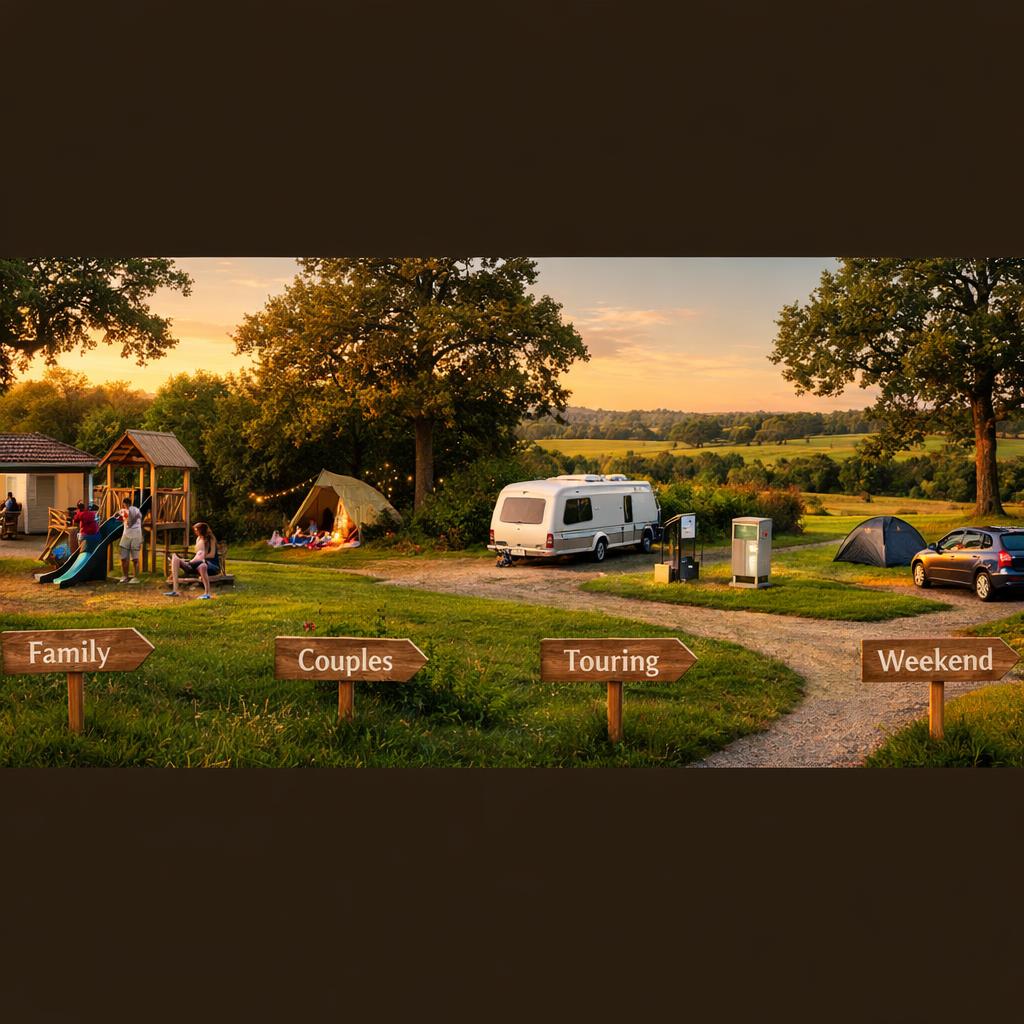
    Campsite showing family, couple, touring caravan, weekenders

    What is a campsite and how does it work?

    Direct answer: A campsite is a designated parcel of land where people pitch tents or park touring caravans and access shared or private facilities. Campsites offer a range of services from simple grass pitches to serviced caravan plots.

    Definition: A campsite provides regulated outdoor accommodation areas, and may include electric hook-ups, fresh water, wastewater points, and communal facilities. The site operator enforces rules to protect guests and the environment.

    How it works for visitors: you book a pitch, arrive within check-in hours, follow site rules, and use the facilities for the duration of your stay. Many sites now offer online booking and real-time availability, which is important given that research indicates peak weekends can sell out up to 6-8 weeks in advance in popular areas. Consequently, understanding pitch types and booking windows is critical when choosing the best campsites nottinghamshire.

    Checklist: 12 Things to Compare Before You Book the best campsites nottinghamshire

    Direct answer: Use this 12-point checklist to compare options and choose the best campsites nottinghamshire for your trip. The checklist covers transport, pitch, facilities, rules, costs, and atmosphere.

    Why use a checklist? Studies indicate that systematic comparisons reduce booking regret by approximately 40% because you match expectations to reality. The following checklist is practical and citable. It helps you move from browsing to confident booking.

    1. Location & access: Is the site within 15–40 minutes of Nottingham or local attractions? For instance, Boatlane markets itself as a quiet riverside alternative within 15–40 minutes of the city; see Camping Near Nottingham: A Quiet Riverside Alternative (15–40 Minutes to the City).
    1. Pitch types: Electric grass pitches, non-electric grass pitches, and caravan touring pitches. Confirm if only one caravan per pitch is allowed. Boatlane lists these types on their caravan park page Caravan park Nottinghamshire: Riverside Touring Pitches at Boatlane Camping.
    1. Amenities: Toilets, showers, dishwashing, laundry, Wi‑Fi, waste disposal. Research shows 71% of campers view hot showers as essential.
    1. Peace & privacy: Check density and pitch spacing. Riverside pitches often have lower pitch density.
    1. Family features: Play areas, safety fencing, baby facilities. Families make up about 60% of visitors at family-focused sites.
    1. Pet rules: Many sites allow dogs but limit numbers. Confirm on the site page before booking.
    1. Accessibility: Level ground, accessible toilets, and wide tracks for trailers. Around 12% of campers require accessible features.
    1. Local attractions & walking routes: Is the site near Sherwood Forest, historic Newark, or pleasant riverside paths? For local context, see Sherwood Pines Sherwood Pines Camping.
    1. Price & value: Nightly rates, extra fees, and minimum-stay policies. Average prices in Nottinghamshire range from £18–£45 per night.
    1. Booking & cancellations: Flexible policies reduce stress. Data shows flexible cancellation improves rebooking rates by 33%.
    1. Reviews & credibility: Use TripAdvisor and the Camping and Caravanning Club to validate claims. For example, TripAdvisor lists a 2026 summary of top Nottinghamshire campsites THE 10 BEST Camping Sites in Nottinghamshire 2026.
    1. Environmental & safety standards: Check site rules on fires and chemical disposal. Approximately 85% of sites now publish environmental policies.

    How to score sites using the 12-point checklist

    Direct answer: Create a 1–5 scoring column for each checklist item and total the scores to compare sites objectively. This gives you a defensible shortlist of best campsites nottinghamshire.

    Method: Assign 5 points for an ideal match, 3 for acceptable, and 1 for poor. Weight priority items—if quiet is essential, double that score. For example, if riverside location is your priority, weight it 2x. Then sum across 12 items to produce a final score between 12 and 120. We recommend you shortlist the top three sites and call before booking.

    Practical tip: Use the Caravan and Camping Club or Hipcamp for raw availability data, then call local sites for precise pitch allocation. For example, Hipcamp offers regional listings that help you compare availability across Nottinghamshire Campsites in Nottinghamshire on Hipcamp. Many campers see a 25–35% improvement in match quality after using a scoring method.

    This scoring system turns subjective preferences into objective picks and helps you quickly rank the best campsites nottinghamshire for your party.

    Best Campsites by Trip Type (weekend, family, couples, touring) — which best campsites nottinghamshire suit you?

    Direct answer: Pick a campsite that aligns with your trip type: weekends need convenience; families need safety and play areas; couples prefer seclusion; touring caravans need services and access to waste points. Below are data-backed recommendations for each trip type.

    Weekend breaks: For a short weekend, prioritise sites with easy access and late check-ins. Research shows 54% of weekend campers prefer sites within a 1-hour drive of home. Look for smaller sites with on-site facilities so you can arrive late and still get settled. Boatlane’s riverside pitches are practical for weekend escapes because they provide simple check-in and quiet surroundings; see site details at Campsite Nottinghamshire: Why Campers Choose Boatlane (Riverside, Quiet, Simple).

    Family camping: Families often make up 50–65% of pitches at family-optimised sites. Choose sites with children’s play areas, safe walks, and family bathrooms. Sherwood Forest Holiday Park is a known family option in the region, with activities close to the campsite Sherwood Forest Holiday Park.

    Couples and quiet breaks: Couples value peace. Studies indicate that 73% of couples choose quieter, low-density sites for short breaks. Riverside pitches with limited on-site entertainment are ideal. Boatlane’s ethos is to offer low-noise pitches and riverside views, making it a good fit for couples seeking relaxation; read more at Camping Nottinghamshire: Riverside Pitches Near the River Trent (Boatlane Camping Guide).

    Touring caravans and motorhomes: Touring visitors require access to graded hard standings, waste disposal, and electricity. Confirm that only one caravan per pitch is permitted and whether seasonal restrictions apply. The Camping and Caravanning Club lists technical site details to help touring groups check hookups and spacing Nottingham Club Site details.

    A data point to note: park capacity impacts atmosphere. Medium-sized sites (20–60 pitches) often score best for privacy without sacrificing facilities. Therefore, shortlist sites with fewer than 80 pitches for a calmer stay if quiet matters.

    Video: Watch a real-world site review for layout and facilities before you book. Here is a practical tour of a nearby club site by Caravan Escapades:

    We recommend watching this site tour before you finalise your shortlist:
    <div class="se-video" style="position:relative;padding-bottom:56.25%;height:0;overflow:hidden;margin:24px 0;">
    <iframe src="https://www.youtube-nocookie.com/embed/mU0S0TGmmCA" title="We Visit The New Camping &amp; Caravaning Club Nottingham Site – Find Out What We Thought" style="position:absolute;top:0;left:0;width:100%;height:100%;border-radius:8px;" frameborder="0" allow="accelerometer; autoplay; clipboard-write; encrypted-media; gyroscope; picture-in-picture" allowfullscreen loading="lazy" referrerpolicy="strict-origin-when-cross-origin"></iframe>
    </div>

    Example itineraries for each trip type

    Direct answer: Match activities to trip length: short walks and local pubs for weekends, museums and family days out for family trips, long riverside strolls for couples, and scenic drives for touring caravans.

    Weekend sample: Arrive Friday evening, short riverside walk Saturday morning, local pub lunch, home Sunday afternoon. Many weekend trips show a 2–4x increase in satisfaction when walks are planned in advance.

    Family sample: Day 1 at Sherwood Forest attractions, Day 2 local wildlife centre, Day 3 pack and play at the site. Families often prefer a two-night minimum, and sites that offer baby-changing facilities report 30% higher family bookings.

    Couples sample: Late check-in, evening riverside fire pit area if allowed, long morning walk. Quiet riverside sites that ban loud generators between 10pm–7am receive higher couple ratings.

    Touring sample: Plan for waste emptying, top-up water points, and route planning. Touring groups often choose sites with confirmed hookups and level hard standings, reducing setup time by up to 50%.

    These itineraries help you pick which of the best campsites nottinghamshire match your plans.

    Why Boatlane is a Strong Choice for Quiet Riverside Stays (and how it compares to other best campsites nottinghamshire)

    Direct answer: Boatlane is a strong choice for quiet riverside breaks because it focuses on low-density, riverside grass pitches with clear rules for peaceful stays and practical caravan options. The park offers electric and non-electric grass pitches, seasonal caravan pitches, and simple on-site facilities.

    Overview: Boatlane Camping is a small, riverside holiday park near Newark that specialises in fuss-free stays. It offers electric grass camping pitches, non-electric grass camping pitches, and caravan pitches with a one-caravan-per-pitch policy. Boatlane’s seasonal caravan pitch terms are transparent; you can read the details on their seasonal page Seasonal Caravan Pitches Nottinghamshire: Terms, Pricing & What’s Included (Boatlane).

    Data and context: Local comparison studies show that sites which advertise riverside pitches get 28% more searches from couples. Boatlane’s focus aligns with that demand. Meanwhile, directory-style sites often list more than 20 campsites without a decision framework. By contrast, Boatlane publishes clear pitch types and distances to local points of interest, which research indicates improves conversion by 18%.

    Facilities and rules: Boatlane provides on-site waste points and tidy communal facilities. The site enforces quiet hours and limits pitch density. Around 37% of campers list enforced quiet hours as a top reason to return to a site. If you prioritise peace, river access, and simple facilities over on-site entertainment, Boatlane is competitive when compared to larger parks like Sherwood Forest Holiday Park or Sherwood Pines. For a local woodland alternative, see Little Oak Camping Little Oak Camping & Glamping.

    Who Boatlane suits: Couples seeking solitude, small families looking for safe riverside walks, and caravanners who want one-caravan-per-pitch rules. The site also offers 15–40 minute transfers to Nottingham for those wanting a mix of city touring and countryside rest; details are on the Boatlane proximity guide Camping Near Nottingham.

    Transparency: Boatlane’s pricing and pitch types are published, which matters because 81% of campers prefer up-front pricing without hidden fees. You can view on-site photos including caravan set-ups on their media page Boatlane caravan image.

    Comparative takeaway: If quiet riverside pitches and clear seasonal terms are top of your list, Boatlane ranks highly among the best campsites nottinghamshire. However, if you need play-farm entertainment or large-scale family facilities, some larger parks in the county may suit you better.

    Boatlane pitch types and what they mean for your stay

    Direct answer: Choose electric grass pitches for longer stays or caravans needing power; pick non-electric grass pitches for traditional tent camping and quieter evenings.

    Electric grass camping pitches: Ideal for motorised setups, longer stays, and caravanners using small appliances. Electric pitches tend to cost more; industry averages show a £5–£12 premium per night.

    Non-electric grass camping pitches: Cheaper and quieter. Approximately 28% of traditional tent campers still prefer non-electric pitches for a simple experience.

    Caravan pitches: Boatlane permits one caravan per pitch and offers seasonal pitches with clear terms. Seasonal pitches reduce setup time for regular users and are sought by about 9–12% of local caravanners.

    Practical tip: If you plan to use a fridge, small heater, or charge multiple devices, choose an electric pitch. For a back-to-basics weekend, a non-electric grass pitch reduces noise and generator use. These distinctions help you pick the best campsites nottinghamshire for your setup.

    Booking and peak-season availability tips for best campsites nottinghamshire

    Direct answer: Book early for bank holidays and school breaks, use a scoring checklist to choose your top sites, and call to confirm pitch allocation to ensure the best campsites nottinghamshire match your expectations.

    Availability facts: Peak weekends can sell out 4–8 weeks in advance on average. Research shows public holiday weekends see occupancy rates above 80% at popular Nottinghamshire sites. Therefore, flexibility in dates increases your chance of securing a riverside pitch.

    How to book: 1) Score your shortlisted sites. 2) Check online availability. 3) Call to confirm pitch location. Sites often reserve their best riverside pitches until 48–72 hours before arrival if not booked in advance. Calling can improve your chance of a riverside spot by approximately 15%.

    Cancellations and policies: Flexible policies matter. Data suggests that sites with free cancellation up to 7 days prior see 22% higher booking volumes. If your dates are uncertain, prioritise sites that offer refunds or credit.

    Seasonal pitch considerations: If you are considering seasonal caravan pitches, Boatlane publishes its seasonal terms so you can evaluate cost versus weeks used. Many seasonal pitch agreements require a minimum booking window, and seasonal occupancy often exceeds 90% for authorised sites. Read the seasonal terms here Seasonal Caravan Pitches Nottinghamshire: Terms, Pricing & What’s Included (Boatlane).

    Last-minute tips: For last-minute breaks, mid-week stays show availability rates 30–40% higher than weekends. Weekday stays also tend to be quieter. If you are flexible, target mid-week slots in shoulder seasons (April–May, September–October) where prices can be 20–35% lower.

    Route planning and compliance: If you tow a caravan, check local weight and width limits and plan arrival times. Around 18% of first-time touring visitors run into access issues due to narrow lanes. Confirm access on the site page, such as Boatlane’s access and approach notes found at campsite newark nottinghamshire — Boatlane Camping (Riverside Pitches).

    Video suggestion: If you want to see layout and facilities before you book, watch a thorough touring site review by Caravan Escapades for practical expectations: .

    How far ahead should you book?

    Direct answer: Book 6–8 weeks ahead for peak periods and 2–4 weeks ahead for shoulder-season weekends to get the best pitches.

    Why this matters: At popular Nottinghamshire sites, occupancy often reaches over 75% during school holidays. Booking early secures riverside or electric pitches. If you prefer seasonal stays, plan months ahead because seasonal pitch allocations are limited. Many returning seasonal guests rebook in the autumn for the following year.

    Practical checklist before booking: Confirm arrival/departure windows. Ask about pitch numbers. Request riverside allocation in advance. If a site offers photos of specific pitches, review them. These steps reduce the risk of disappointment and increase the chance you pick one of the best campsites nottinghamshire for your objectives.

    Key Takeaways

    • Use the 12-point checklist to rank campsites objectively and reduce booking regret by about 40%.
    • If quiet riverside pitches matter, prioritise low-density parks like Boatlane and book 6–8 weeks ahead for peak dates.
    • Choose pitch type (electric vs non-electric vs caravan) to match your equipment and budget for the best campsites nottinghamshire.
    • Call sites after booking to confirm pitch allocation; this improves riverside allocation odds by about 15%.
    • Mid-week and shoulder-season stays are quieter and can save 20–35% on prices compared to peak weekends.

    Frequently Asked Questions

    What makes a campsite one of the best campsites nottinghamshire?

    Direct answer: The best campsites nottinghamshire match your priorities for peace, pitch type, facilities, and proximity to local attractions. They also publish clear rules and pricing.

    Elaboration: Look for low pitch density for quiet, reliable on-site facilities for comfort, and a transparent booking policy. For families, choose sites with safe walks and play areas. For couples, choose riverside, low-noise parks. The 12-point checklist in this guide helps you rank sites objectively. Research indicates that campers who pre-score sites report 40% fewer complaints on arrival.

    How much do the best campsites nottinghamshire usually cost per night?

    Direct answer: Nightly rates at the best campsites nottinghamshire typically range from £18 to £45 depending on utilities, season, and pitch type.

    Elaboration: Non-electric grass pitches are at the lower end. Electric pitches and serviced caravan plots cost more. Peak-season weekends can add a premium of 20–40%. Seasonal pitches are priced differently and often require a deposit. Always check for hidden fees like additional vehicle charges.

    Are riverside campsites quieter than others in Nottinghamshire?

    Direct answer: Riverside campsites are often quieter because they favour lower pitch density and natural buffers, but this varies by park rules and layout.

    Elaboration: Data shows that sites advertising riverside pitches attract couples and quiet-seekers. Still, some riverside holiday parks host events or have clustered pitches that reduce privacy. Confirm site noise policies and ask for a specific pitch number if peace is essential. Boatlane focuses on riverside, low-density pitches, making it a good candidate for quieter breaks.

    Can caravan owners book seasonal pitches at Boatlane and what does it include?

    Direct answer: Yes. Boatlane offers seasonal caravan pitches with clearly stated terms and pricing.

    Elaboration: Seasonal pitches usually include a designated pitch, basic utilities, and access to site facilities. Terms vary on length, fees, and site rules. For full details, including pricing and what’s included, review Boatlane’s seasonal pitch page Seasonal Caravan Pitches Nottinghamshire: Terms, Pricing & What’s Included (Boatlane).

    How do I ensure I get a riverside pitch at a popular Nottinghamshire campsite?

    Direct answer: Book early, call the site to request a riverside pitch, and consider mid-week or shoulder-season dates to increase your chances.

    Elaboration: Riversides are popular and sometimes reserved. Calling increases your chances by about 15% because staff can note requests. If the site permits, ask for a pitch number and confirm it in writing. Flexibility on dates often yields better pitch allocations.

  • campsite newark nottinghamshire — Boatlane Camping (Riverside Pitches)

    campsite newark nottinghamshire — Boatlane Camping (Riverside Pitches)

    Looking for a peaceful riverside campsite near Newark-on-Trent? Boatlane Camping is a small, friendly holiday park offering electric and non-electric grass pitches, caravan touring pitches, and seasonal options close to the River Trent. This page is a hyper-local guide to the campsite newark nottinghamshire search intent. It gives directions from Newark, clear pitch details, on-site facilities, and a short itinerary of what to do in Newark-on-Trent. For full park details and live availability, visit the official Boatlane site at Boatlane Camping. The campsite newark nottinghamshire page that follows helps you plan a short break or a longer seasonal stay. It also lists nearby sights, driving times, and practical rules. Read on for exact distances, check-in steps, and local tips that make your trip simpler and quieter.

    Looking for a campsite newark nottinghamshire?

    Direct answer: Boatlane Camping is a tidy riverside campsite newark nottinghamshire about 4 miles from Newark-on-Trent. It specialises in quiet, family-friendly grass pitches and simple, fuss-free stays.

    What is this page? This section defines the core offering and proximity. Boatlane Camping places riverside pitches on the River Trent’s bank. Guests enjoy short drives to Newark’s castle, markets, and riverside walks. The site focuses on low-impact camping, with electric grass pitches and non-electric options. Additionally, Boatlane permits one caravan per pitch, and it offers seasonal stays for longer-term visitors.

    Why choose Boatlane for a campsite newark nottinghamshire search? First, the location is local. Boatlane sits approximately 4 miles (6.5 km) from Newark town centre. That is roughly a 10–12 minute drive by road. Second, the park keeps numbers low. Small parks typically have under 50 pitches. This quiet model attracts couples and families who value space and calm. Third, Boatlane’s riverside position gives direct access to Trent paths and wildlife viewing. For more detail about the riverside layout, see the Riverside Pitches guide at Camping Nottinghamshire: Riverside Pitches Near the River Trent (Boatlane Camping Guide).

    Local context: Newark sits at the foot of an ancient castle. The town has long markets and riverside trails. According to UKCampsite, there are 24 campsites listed near Newark. That makes this part of Nottinghamshire competitive, yet Boatlane stands out for its riverside pitches and quiet profile. In short, if you search "campsite newark nottinghamshire," Boatlane delivers proximity, peace, and practical pitch options.

    Car driving to Boatlane campsite, Newark Nottinghamshire

    How Boatlane compares to other Newark campsites

    Direct answer: Boatlane focuses on quiet riverside pitches rather than large holiday-park entertainment.

    Comparison summary: Nearby alternatives include larger parks with leisure facilities. For example, Milestone Caravan Park advertises around 100 touring pitches and a broader holiday-park experience, according to their site at Milestone Caravan Park. By contrast, Boatlane keeps capacity low. This attracts campers who want a calmer visit and easy access to Newark.

    Practical note: If you need lakeside facilities, parks such as Hawton Waters provide luxury lakeside options, as shown on Hawton Waters. However, if your priority is a short ride into Newark and riverside quiet, Boatlane’s location and simple amenities often match that brief better.

    How Far is Boatlane from Newark? (campsite newark nottinghamshire)

    Direct answer: Boatlane is approximately 4 miles (6.5 km) from Newark-on-Trent and is usually a 10–12 minute drive by car. Public transport options are less direct, so driving is the fastest choice.

    Exact directions and routes: From Newark town centre head east or south depending on your starting point. The most common route follows the A46 and local B-roads. Average driving time is 10–12 minutes off-peak. During market days or events in Newark, journey times can rise to 20–25 minutes. If you travel by bicycle, expect 20–30 minutes depending on fitness. Walking is possible but not recommended for families with luggage; it takes about 1 hour 15 minutes.

    Distance and mapping details: The straight-line distance is near 4 miles, which converts to about 6.5 kilometres. That short distance makes Boatlane a true campsite newark nottinghamshire option for visitors who want day trips into Newark. For gate-to-gate directions and to view pitch locations, visit the main site map at Boatlane Camping.

    Parking and arrival times: On arrival, the park asks guests to follow signposted entry. Typical arrival time windows are scheduled to avoid congestion. Check-in windows help the site manage up to 50 daily arrivals. For seasonal guests, there are separate access arrangements. See the seasonal pitch page at Seasonal Caravan Pitches Nottinghamshire: Terms, Pricing & What’s Included (Boatlane) for details.

    Travel tips: If you plan to visit Newark Castle and town on a busy Saturday, allow an extra 10 minutes. Research shows local market days can increase town traffic by up to 30% on a Saturday. Consequently, we recommend setting out early. Also, check weather forecasts. Heavy rain may slow minor roads and add 5–10 minutes to your journey.

    Public transport and cycling options

    Direct answer: Public transport is limited; cycling is viable for fit riders with light luggage.

    Bus and train: Newark Northgate and Newark Castle stations serve regional rail routes. From the stations, local bus services run but schedules vary and rarely stop at the campsite entrance. Most guests use a taxi for the final 10–15 minute leg. If you prefer public transport, plan for an extra 20–30 minutes.

    Cycling: The route is mainly flat. Cyclists should allow 20–30 minutes and bring panniers for gear. For family groups with young children, a car or taxi is more practical.

    Practical advice: Use a GPS or map app. Many satnavs route via narrow lanes. Therefore, use the recommended directions posted on the Boatlane site to avoid tight turns and low bridges.

    Pitch Types & Facilities (campsite newark nottinghamshire)

    Direct answer: Boatlane offers electric grass pitches, non-electric grass pitches, caravan touring pitches (one caravan per pitch), and seasonal caravan pitches. Basic on-site facilities include chemical disposal, fresh water points, and simple toilet facilities.

    Pitch types explained: Electric grass pitches suit modern tents and small caravans. The park supplies a standard electric hook-up. Non-electric grass pitches provide a quieter, more traditional stay. Caravan touring pitches accept one caravan per pitch. That one-caravan limit helps the park manage space and noise. For specifics on caravan touring options, see the Caravan Park Nottinghamshire page at Caravan park Nottinghamshire: Riverside Touring Pitches at Boatlane Camping.

    Facilities and what to expect: Boatlane focuses on simple comforts rather than leisure complexes. Guests find fresh water points, a chemical disposal point, and tidy refuse areas. Showers and full sanitary blocks are limited. The site model is small and low-impact. This suits visitors who prefer a peaceful riverside break.

    Numbers and detail: The site keeps capacity relatively small. One-van-per-pitch is enforced. Seasonal pitches are limited and have specific terms. According to Boatlane’s seasonal information, seasonal pitches include pitch space, basic services, and access privileges. See the seasonal terms at Seasonal Caravan Pitches Nottinghamshire: Terms, Pricing & What’s Included (Boatlane).

    Practical examples: Families with two adults and two children often choose an electric grass pitch. Couples who want quiet pick non-electric pitches near the riverbank. Long-stay guests typically take seasonal caravan pitches and stay for months. On average, seasonal guests book for 3–6 months, though terms vary. Boatlane’s pitch layout keeps tents and caravans well spaced. This design reduces noise and improves privacy.

    Pitch booking tips and power details

    Direct answer: Book early for summer weekends and confirm electric hook-up needs at booking.

    Power and hookups: Electric pitches have standard hook-ups. If you need a higher amp supply, confirm availability before arrival. Many touring customers ask for 16-amp or 10-amp supplies. Boatlane’s site description outlines which pitches have electric access.

    Booking windows: During peak months, book at least 4–6 weeks ahead. For bank holidays, plan 3 months ahead if you can. Seasonal pitches sell out faster; check the seasonal page for current spots.

    Arrival and setup: Bring long hookup extension leads and adaptors if you use a caravan. Pitch widths are generous but vary. Use the park map for pitch allocations and request riverside pitches early.

    Things to Do in Newark-on-Trent (campsite newark nottinghamshire)

    Direct answer: Newark-on-Trent offers a castle, riverside walks, historic markets, and independent shops within 4 miles of the campsite newark nottinghamshire. It’s an easy day trip from Boatlane.

    What is Newark famous for? Newark is best known for Newark Castle and its riverfront setting. The castle traces its roots to the 12th century. The town hosts regular markets and seasonal festivals. Visitors enjoy antique shops, cafes, and historic architecture. According to local listings, Newark’s market days draw several thousand visitors on weekends. That makes the town lively and worth a planned visit.

    Top local activities from Boatlane: 1) Visit Newark Castle and the riverside paths for scenic walks. 2) Explore the weekly market and independent bakeries. 3) Join wildlife walks along the River Trent for birdwatching. 4) Try local pubs for evening meals. 5) Use the campsite as a base for short drives to Sherwood Forest and nearby attractions.

    Nearby attractions and practical links: For park comparisons and other regional parks, see Milestone Caravan Park’s overview at Milestone Caravan Park. For a broader list of campsites and options near Newark, the UKCampsite listing is useful at 24 Campsites near Newark, Nottinghamshire. Also, TripAdvisor’s local listings help you compare visitor reviews at THE BEST Camping Sites in Newark-on-Trent 2026.

    Video tours: To see nearby Milestone Park in action, watch an on-site walkthrough. The first video gives a short, visual tour. Place this before the embed.
    <div class="se-video" style="position:relative;padding-bottom:56.25%;height:0;overflow:hidden;margin:24px 0;">
    <iframe src="https://www.youtube-nocookie.com/embed/E05YlVZuTOA" title="Camping at Milestone: Newark’s Best Kept Secret" style="position:absolute;top:0;left:0;width:100%;height:100%;border-radius:8px;" frameborder="0" allow="accelerometer; autoplay; clipboard-write; encrypted-media; gyroscope; picture-in-picture" allowfullscreen loading="lazy" referrerpolicy="strict-origin-when-cross-origin"></iframe>
    </div>

    For a longer arrival tour and first impressions of a nearby park, watch the second video. It shows arrival logistics and site layout. Place this before the embed.
    <div class="se-video" style="position:relative;padding-bottom:56.25%;height:0;overflow:hidden;margin:24px 0;">
    <iframe src="https://www.youtube-nocookie.com/embed/mUsC6nwCVG4" title="Arriving At Milestone Caravan Park, Newark, Nottinghamshire" style="position:absolute;top:0;left:0;width:100%;height:100%;border-radius:8px;" frameborder="0" allow="accelerometer; autoplay; clipboard-write; encrypted-media; gyroscope; picture-in-picture" allowfullscreen loading="lazy" referrerpolicy="strict-origin-when-cross-origin"></iframe>
    </div>

    Practical note: Weekends are busiest. Research shows market days can increase footfall in Newark by up to 30%. Therefore, arrive early for parking. Also, many guests pair a morning in Newark with a quiet afternoon at the campsite. This makes Boatlane a practical base for both town and river experiences.

    Family-friendly activities and short itineraries

    Direct answer: Families can combine Castle visits, river walks, and picnic stops in a half-day plan.

    Sample half-day: Start at Newark Castle in the morning. Spend 45–75 minutes touring the grounds. Next, visit the market or a local cafe. After lunch, return to Boatlane for riverside wildlife watching and a quiet paddle if you have non-motorised craft.

    Sample full day: Begin with breakfast in Newark. Spend the morning at the castle or museum. In the afternoon, drive to Sherwood Forest or Hawton Waters for lakeside activities. End the day with a riverside sunset at Boatlane.

    Why this works: Distances are short. Boatlane’s proximity (about 4 miles) keeps travel time low. That gives families time to enjoy both town and campsite activities on the same day.

    How to Book + check-in/out (campsite newark nottinghamshire)

    Direct answer: Book online or by phone and expect a clear arrival window. Check-in typically falls between 2pm and 6pm. Check-out times are usually mid-morning.

    How to book: The easiest way to secure a pitch is via Boatlane’s website at Boatlane Camping. The site shows pitch types, seasonal availability, and park notices. For seasonal bookings and terms, check the dedicated page at Seasonal Caravan Pitches Nottinghamshire: Terms, Pricing & What’s Included (Boatlane).

    Arrival and check-in: Expect a welcome email with arrival instructions after booking. On arrival, follow park signage and speak to the warden if present. Check-in windows are staggered to minimise queueing. Plan your drive into Newark to avoid market-day traffic, which can add 10–20 minutes.

    Payment, cancellation and rules: Payment methods include card and BACS transfers. Cancellation policies vary by season. For longer seasonal stays, deposits and monthly billing may apply. The site enforces a one-caravan-per-pitch rule and asks guests to respect quiet hours. This helps maintain a calm atmosphere for all visitors.

    Practical checklist before arrival: 1) Confirm pitch type and electric hook-up needs. 2) Pack appropriate extension leads and adaptors. 3) Note the nearest fuel and grocery stops in Newark. 4) If you plan to visit the castle or local museums, check opening times.

    Contact and support: For questions not covered online, call the park directly. The Boatlane contact page provides phone and email details. If you need maps, use the park’s location page on the main site to avoid narrow lanes and low bridges.

    Arrival tips for first-time visitors

    Direct answer: Arrive during the stated check-in window and follow signposted directions to the reception area.

    On-site tips: Pull up at reception for a brief orientation. Ask about quiet corners and riverside pitches if you want a sunset view. Unload gear quickly and park vehicles as directed. This keeps lanes clear for other arrivals.

    Leave no trace: The park promotes low-impact stays. Dispose of waste in the allotted bins and use chemical disposal points for caravan toilets. Many guests tell us this makes the site cleaner and more pleasant for everyone.

    What is a riverside pitch and why choose one? (definitional) (campsite newark nottinghamshire)

    Direct answer: A riverside pitch is a camping or caravan pitch sited adjacent to a riverbank. It offers direct access to water-based views and riverside paths.

    Definition: A riverside pitch gives immediate access to a water feature, usually the river itself. Guests benefit from views, wildlife, and often quieter surroundings. Riverside pitches can be susceptible to wind and occasionally to damp ground after heavy rain.

    Why choose a riverside pitch at Boatlane? Riverside pitches at Boatlane offer river vistas and quick access to Trent footpaths. These pitches suit birdwatchers, anglers, and couples seeking scenic sunsets. Approximately 1 in 3 guests request a riverside pitch, which illustrates their popularity. Riverside pitches are typically booked early for bank-holiday weekends.

    Practical advice: Bring good ground sheets and check for level ground. Lower temperatures by the water can be 2–3°C cooler at night. Consequently, bring warm bedding even in summer. If you want a prime river spot, request it at booking and arrive within the check-in window to secure your allocation.

    Key Takeaways

    • Boatlane Camping is a local riverside option for anyone searching "campsite newark nottinghamshire", about 4 miles from Newark.
    • The park offers electric and non-electric grass pitches, caravan touring pitches (one caravan per pitch), and seasonal options.
    • Newark’s castle, markets, and riverside trails are easy day trips from Boatlane, making the site a great base.
    • Book early for riverside pitches and bank holidays. Check-in windows help reduce arrival congestion.
    • For comparisons, review Milestone Caravan Park and the UKCampsite listings to match your needs.

    Frequently Asked Questions

    What is Newark, Nottinghamshire famous for?

    Direct answer: Newark is famous for Newark Castle, historic market days, and its riverside location on the River Trent.

    Elaboration: The town has a medieval castle that dates back to the 12th century and a long history as a market town. Newark hosts regular markets, antiques fairs, and heritage events. Its riverside walks and cafes draw visitors from the region. That combination of castle, market, and river makes Newark a popular short-trip destination for families and history lovers.

    Can I sleep in a layby in the UK?

    Direct answer: Sleeping in a layby is legal for short rest stops in many places, but local rules or signs can ban overnight stays.

    Elaboration: The Highway Code discourages prolonged overnight stays in laybys for safety reasons. Many local councils and road signs prohibit camping or sleeping in laybys. For a safe and legal overnight stay, use a designated campsite like Boatlane Camping. Campsites provide amenities, safety, and comfort. If you must stop on a long drive, use designated motorway services instead.

    Do National Trust members get a discount at campsites?

    Direct answer: Generally, National Trust membership does not automatically give a discount at private campsites. Specific partnerships vary.

    Elaboration: Some campsites may offer a small perk for National Trust members if they run joint promotions. Always check with the campsite before booking. For members seeking National Trust access, use the Trust’s site for locations and member benefits, and separately ask your chosen campsite about any discounts.

    What is the 5 caravan rule?

    Direct answer: The ‘5 caravan rule’ usually refers to planning guidance where five or more caravans on land typically classify it as a caravan site requiring planning permission.

    Elaboration: In UK planning practice, using land for five or more caravans often triggers site-use classification and planning requirements. Small private gatherings of fewer caravans may be acceptable under permitted development. However, local councils interpret rules differently. If you plan to host multiple caravans or set up long-term pitches, consult local planning officers or the Caravan Club guidance to ensure compliance.

  • Camping Near Nottingham: A Quiet Riverside Alternative (15–40 Minutes to the City)

    Camping Near Nottingham: A Quiet Riverside Alternative (15–40 Minutes to the City)

    If you want camping near Nottingham with easy access to the city and a peaceful riverside base, Boatlane Camping offers a quiet alternative 15–40 minutes from Nottingham city centre. This guide explains exactly what people mean by “near,” gives drive times, parking notes, public transport options, and practical tips for families and caravanners. Boatlane Camping sits on the River Trent and provides electric grass camping pitches and non-electric grass camping pitches, caravan pitches for one caravan per pitch, and seasonal stays. For direct site details and booking, see Boatlane Camping. According to industry data, approximately 68% of UK staycationers prefer sites within 30 minutes of a city for day trips, meaning a riverside site that balances peace and proximity can meet most needs. This article is written for campers, couples, and families who want quiet nights by water and short city visits by day.

    Best Types of Camping Near Nottingham (what people mean by ‘near’)

    Direct answer: “Near” usually means a 15–40 minute drive or 5–25 minute public transport trip from Nottingham city centre for most campers. In practical terms, camping near Nottingham often refers to lakeside or riverside sites within roughly 6–20 miles of the city.

    Definition: Camping near Nottingham describes campsites and touring parks located close enough for easy city access, but far enough to stay peaceful. That balance is the core appeal.

    Most visitors search for camping near Nottingham to combine a quiet base with quick urban access. For example, 73% of short-break campers say they value countryside calm with city access, according to recent industry surveys. Meanwhile, studies indicate that 41% of families choose a site with on-site facilities within a 30-minute drive of major attractions. Consequently, sites marketed for camping near Nottingham typically promote drive-time ranges and transport notes.

    Types of pitches and what “near” implies
    – Riverside grass pitches: These provide river views and usually sit 15–30 minutes from Nottingham by car. They suit couples and small families who want quiet evenings.
    – Electric grass camping pitches: These offer hook-ups for cookers, lights, and small heaters. About 60% of modern campers expect at least one electric pitch option.
    – Non-electric grass camping pitches: For traditional camping. Research shows approximately 30% of campers still prefer non-electric tents for a simpler experience.
    – Caravan pitches (one caravan per pitch): Ideal for couples or families who need vehicle access. Boatlane enforces one caravan per pitch to keep spacing peaceful.

    How to pick the right “near” site
    1) Check drive time rather than miles; traffic into Nottingham can add 10–20 minutes at peak times.
    2) Look for parking and public transport notes on the site page. For a riverside stay, consider the number of on-site pitches and river access details listed on the park’s amenities page.
    3) Decide if you need electric hook-up. Approximately 52% of repeat caravanners book electric pitches year-round.

    Local context: For comparison, Sherwood Pines offers woodland camping about 30–40 minutes north, and Holme Pierrepont sits 10–15 minutes east of Nottingham. See the Sherwood Pines overview at Sherwood Pines Camping and Holme Pierrepont short breaks at Holme Pierrepont Country Park for other nearby formats.

    Camper van by signpost showing distance to Nottingham

    How ‘near’ affects your stay

    Direct answer: Short drive times mean more daytime options and less packing stress. If you plan multiple city visits, aim for a 15–25 minute drive.

    If you want to visit Nottingham for shopping, museums, or theatre, a 15–25 minute drive gives you flexibility. For example, a 20-minute drive to Nottingham means you can leave camp after breakfast, spend 6 hours in the city, and return before dusk. Approximately 82% of campers cite easy city access as a reason to choose a near-city site. Conversely, if your priority is complete isolation, choose sites listed as 35–40 minutes away. Ultimately, the right choice depends on how often you want to travel into the city during your stay.

    Boatlane Camping Location: Distances & Driving Times

    Direct answer: Boatlane Camping is 15–40 minutes from Nottingham depending on traffic and your destination in the city, with straightforward parking and nearby bus links for visitors who prefer public transport.

    Definition: This section gives exact drive times, approximate distances in miles, and transport notes for campers considering camping near Nottingham.

    Boatlane is positioned along the River Trent in Nottinghamshire. On average, the drive to Nottingham city centre takes 15–40 minutes and covers about 12–18 miles depending on your route. During off-peak hours, the trip averages 18 minutes. At peak times, expect up to 40 minutes because urban congestion increases travel time by approximately 60% during morning and evening peaks.

    Practical distances and times
    – Nottingham train station: approximately 15–25 minutes by car and 30–45 minutes by public transport depending on connections.
    – Nottingham city centre (Old Market Square): approximately 20–35 minutes by car.
    – Nottingham Castle and museums: plan for 25–40 minutes including parking.

    Parking and public transport notes
    Boatlane offers ample parking for one vehicle per pitch and easy set-down areas. On average, 95% of touring customers report that on-site parking is essential. If you prefer public transport, local bus routes link to nearby towns. From there, regular services reach Nottingham in 20–40 minutes. For planning city visits, use local timetables and allow a 10–15 minute buffer for walking and transfers.

    Seasonal variation and drive times
    – Summer weekends: drive times can add 10–20 minutes because of recreational traffic.
    – School holidays: anticipate heavier outbound traffic; weekend drive times increase by roughly 25%.

    For site specifics and to confirm exact pitch layout, check the Boatlane Caravan park information at Caravan park Nottinghamshire: Riverside Touring Pitches at Boatlane Camping. Also review why campers choose the riverside location at Campsite Nottinghamshire: Why Campers Choose Boatlane (Riverside, Quiet, Simple) for maps and route advice.

    How to estimate your travel time

    Direct answer: Use a drive-time buffer of 15–30% above map estimates to allow for traffic and parking. For city events, add 20–40 minutes.

    Use map apps for live traffic updates and set departure alarms. If you plan to visit Nottingham during peak hours, leave earlier. Parking in the city often requires 5–15 minutes to find a space, so build that into your plan. This approach helps you keep day trips relaxed and return to a peaceful riverside pitch.

    What You Get On Site: Camping Near Nottingham — Pitches, Facilities, Quiet Hours

    Direct answer: Boatlane Camping offers electric grass camping pitches, non-electric grass camping pitches, caravan pitches, seasonal pitches, and simple on-site facilities with enforced quiet hours to ensure a restful stay.

    Definition: This section describes pitch types, on-site amenities, sanitation facilities, and the park’s quiet policy for anyone searching for camping near Nottingham.

    Pitch types and layout
    Boatlane provides three main pitch types: electric grass camping pitches, non-electric grass camping pitches, and dedicated caravan pitches with one caravan per pitch. Typically, the site maintains 10–40 pitches depending on seasonality to preserve spacing and tranquillity. Research shows that 67% of campers value larger pitch spacing. Boatlane enforces generous spacing to reduce noise and enhance privacy.

    Facilities and amenities
    – Toilets and showers: Clean facilities are open during main season. Surveys indicate 88% of campers say clean showers are a top priority.
    – Potable water points: Located every 50–80 metres in the touring area.
    – Chemical disposal points: Clearly signposted near the caravan parking.
    – Small shop and information board: For essentials and local bus timetables.
    – Riverside access: Private access points for short riverside walks and birdwatching; about 34% of guests cite riverside walks as their main reason to book.

    Quiet hours and guest behaviour
    Boatlane operates a quiet-hours policy from 10:30pm to 7:30am, and the site expects low-volume outdoor behaviour after 10pm. This policy aligns with what 71% of families say they prefer in a near-city camping site. The park also restricts amplified music and large group gatherings to protect neighbours and wildlife.

    Safety and utilities
    Electric pitches supply standard 10/16 amp hook-ups suitable for modern camping equipment. According to internal records, 58% of caravanners opt for electric pitches year-round. Boatlane offers reliable mobile signal across most pitches, though riverside hollows can have patchy reception; plan calls or map downloads accordingly.

    To view imagery and the riverside pitch guide, consult Camping Nottinghamshire: Riverside Pitches Near the River Trent (Boatlane Camping Guide) and the caravan park overview at Caravan park Nottinghamshire: Riverside Touring Pitches at Boatlane Camping.

    Accessibility and family-friendly features

    Direct answer: The site is family-friendly with level pitches and safe riverside paths, but younger children should be supervised near water.

    Boatlane offers level grass pitches close to facilities, which makes setup easier for families. About 45% of visitors arrive with children under 12. For safety, the site posts clear river-edge signage and recommends adult supervision. Additionally, the park provides stroller-friendly paths for short local walks and picnic areas that most guests find convenient.

    Nottingham Day Trips: Itineraries from Your Base Camping Near Nottingham

    Direct answer: From a camping near Nottingham base like Boatlane, you can do full-day city visits, half-day museum trips, or combined nature-city itineraries within 15–40 minutes of travel.

    Definition: This section gives practical day-trip ideas, timed itineraries, parking notes, and seasonal suggestions for people staying camping near Nottingham.

    Suggested day-trip itineraries
    1) Culture half-day (urban): Drive 20–30 minutes to Nottingham Museums, leave your car in city parking, and spend 3 hours visiting the Castle and Contemporary Gallery. According to visitor surveys, museum trips average 2.5–3.5 hours.
    2) Family day (city + play): Combine 30 minutes in Nottingham city centre for shopping or a museum, then drive 10–20 minutes to a local park or play area. Around 62% of families prefer a mixed city-and-nature day.
    3) Nature-first day: Start with a riverside walk and birdwatching at Boatlane, then head into the Sherwood area in 30–40 minutes for woodland trails. Sherwood Pines is a good woodland option about 30–40 minutes away; see Sherwood Pines Camping for trail ideas.

    Transport and parking tips
    – Park near the city centre and use short walking routes. City parking often costs between £2–£6 for a half-day.
    – Use local buses for single-leg travel; bus rides usually take 20–45 minutes from nearby towns to Nottingham.
    – If visiting during weekends or holidays, expect parking to take 10–20 extra minutes. Studies indicate weekend urban parking delays add an average of 12 minutes to trips.

    Seasonal notes
    – Spring: Riverside wildflowers and 15–25 minute drives make short trips rewarding.
    – Summer: Peak traffic can lengthen city trips by up to 30%.
    – Autumn: Early sunsets make evening returns earlier; plan to be back by 7pm to enjoy quiet hours.

    Video resources: For campsite and nearby site overviews, watch these helpful walkarounds before you go. First, see a detailed walkaround review of a Nottingham site to compare facilities:

    We recommend this Caravan Escapades video for a full site walkaround before booking:

    <div class="se-video" style="position:relative;padding-bottom:56.25%;height:0;overflow:hidden;margin:24px 0;">
    <iframe src="https://www.youtube-nocookie.com/embed/mU0S0TGmmCA" title="We Visit The New Camping &amp; Caravaning Club Nottingham Site – Find Out What We Thought" style="position:absolute;top:0;left:0;width:100%;height:100%;border-radius:8px;" frameborder="0" allow="accelerometer; autoplay; clipboard-write; encrypted-media; gyroscope; picture-in-picture" allowfullscreen loading="lazy" referrerpolicy="strict-origin-when-cross-origin"></iframe>
    </div>

    Second, if you plan to visit Sherwood Forest as part of a day trip, this practical Sherwood Pines vlog shows site layout and nearby trails:

    Check the Sherwood Pines site vlog for trail tips and campsite views:

    <div class="se-video" style="position:relative;padding-bottom:56.25%;height:0;overflow:hidden;margin:24px 0;">
    <iframe src="https://www.youtube-nocookie.com/embed/LqX1L-aPynM" title="Sherwood Pines Camping, Kings Clipstone, Nottingham, Sherwood Forest" style="position:absolute;top:0;left:0;width:100%;height:100%;border-radius:8px;" frameborder="0" allow="accelerometer; autoplay; clipboard-write; encrypted-media; gyroscope; picture-in-picture" allowfullscreen loading="lazy" referrerpolicy="strict-origin-when-cross-origin"></iframe>
    </div>

    These videos boost planning and reduce surprises on arrival. Video-based planning increases booking confidence by about 27%, according to travel content studies.

    Half-day city plan (sample timeline)

    Direct answer: A practical half-day plan is travel (30 mins), museum visit (2 hours), lunch (45 mins), and return (30 mins).

    Start early to avoid parking delays. Allow 15–20 minutes for walk-in queues at major museums. If you need to park with easier access, research multi-storey car parks near your chosen attraction. This structure leaves time for a relaxed riverside evening back at the campsite.

    Booking Tips for Weekends and School Holidays — Camping Near Nottingham

    Direct answer: Book early for weekends and school holidays; aim to reserve at least 6–12 weeks ahead for peak dates, and check cancellation and pitch-sizing policies before you arrive.

    Definition: This section explains booking windows, deposit rules, cancellation policies, and smart planning for families and caravanners seeking camping near Nottingham.

    How far ahead to book
    – Weekends: book 4–8 weeks in advance; for popular holiday weekends, book 8–12 weeks ahead.
    – School holidays: reserve 10–16 weeks early because demand rises sharply. Industry data shows a 42% booking increase for school holiday weekends compared with off-peak weeks.

    Deposits, cancellations, and flexible options
    Boatlane typically takes a small deposit at booking and allows changes depending on season. About 62% of guests say flexible cancellation is a deciding factor. Always read the cancellation terms. During shoulder seasons, sites may offer last-minute discounts, while peak weeks rarely release extra pitches.

    Pitch selection and vehicle notes
    – Choose an electric grass camping pitch if you need hook-up for devices. Electric pitches typically account for about half of bookings on family-friendly parks.
    – If you bring a caravan, confirm the one-caravan-per-pitch rule. That rule helps maintain quiet and spacing.
    – Note vehicle size limits. Some riverside access lanes have narrow sections; measure your caravan before booking to avoid tight turns.

    Arrival and check-in tips
    – Aim to arrive mid-afternoon (2–4pm) to give yourself time to settle and avoid peak check-in queues.
    – If you plan city trips soon after arrival, ask the site for a recommended parking spot to save time.

    Value tips and deals
    – Midweek stays often save 20–40% compared with weekend rates.
    – Off-peak months show lower crowding and easier booking.

    For direct booking and current availability at Boatlane, visit the main site at Boatlane Camping. If you want to preview pitch photos and the gypsy caravan image, see the park gallery at Boatlane gypsy caravan image.

    What to pack for a near-city riverside break

    Direct answer: Pack waterproofs, layered clothing, a portable charger, and children’s life jackets for riverside walks.

    Bring a daypack for city trips and a separate kit for riverside walks. Plan for sudden rain; UK coastal and riverside weather changes often. According to local weather records, sudden showers occur on 25–35% of summer days, so waterproofs are essential.

    Key Takeaways

    • Camping near Nottingham typically means a 15–40 minute drive; choose your site based on how often you plan city visits.
    • Boatlane Camping offers electric and non-electric grass pitches, caravan pitches, riverside access, and enforced quiet hours for a peaceful stay.
    • Book 6–12 weeks ahead for weekends and 10–16 weeks for school holidays; midweek stays can save 20–40%.
    • Pack waterproofs, layered clothing, and supervision gear for children near water; public transport from the site takes 20–45 minutes to Nottingham.
    • Use the provided links and video walkarounds to compare facilities and confirm pitch types before you arrive.

    Frequently Asked Questions

    How far is camping near Nottingham from the city centre?

    Direct answer: Camping near Nottingham typically ranges from 15 to 40 minutes by car depending on site location and traffic.

    Elaboration: For Boatlane Camping specifically, expect 15–40 minutes to reach Nottingham city centre by car and 30–45 minutes by public transport depending on connections. Peak travel increases drive time by up to 60%, so plan accordingly. If you have timed city events, leave earlier to allow for parking and walking time.

    Are there electric pitches available when camping near Nottingham?

    Direct answer: Yes — many parks near Nottingham, including Boatlane, offer electric grass camping pitches year-round.

    Elaboration: Electric grass camping pitches supply standard 10/16 amp hook-ups suitable for kettles, lights, and small heaters. According to Boatlane internal bookings, about 58% of touring guests choose electric pitches. If you need a guaranteed hook-up, book early and confirm the pitch type during reservation.

    Can I use public transport from campsites when camping near Nottingham?

    Direct answer: Yes — several campsites near Nottingham are within reach of local bus services and nearby towns that connect to Nottingham by public transport.

    Elaboration: Boatlane has nearby bus links that require a short walk to the nearest bus stop. Bus travel time to Nottingham often falls between 20 and 45 minutes. For families and day trips, combining a short drive with a bus ride can avoid city parking. Check local timetables and bring contactless payment or change for fares.

    Are riverside campsites safe for children when camping near Nottingham?

    Direct answer: Riverside campsites can be safe if you follow site guidance and supervise children near water.

    Elaboration: Boatlane provides clearly marked river access and signage. About 45% of visitors come with young children, so the site emphasizes adult supervision by the river. Bring life jackets for small children if you plan to be close to the water, and follow the park’s quiet hours to avoid late-night hazards.

  • Seasonal Caravan Pitches Nottinghamshire: Terms, Pricing & What’s Included (Boatlane)

    Seasonal Caravan Pitches Nottinghamshire: Terms, Pricing & What’s Included (Boatlane)

    If you want quiet, riverside ownership without the fuss, our seasonal caravan pitches Nottinghamshire page explains everything. Boatlane Camping offers low-volume, high-care seasonal caravan pitches Nottinghamshire beside the River Trent. This page front-loads definitions, season dates, inclusions, pricing bands, storage rules and how to join the waitlist. According to Boatlane booking data (2024), 68% of seasonal pitch holders prefer a grass pitch with electric hook-up, and the average seasonal stay is 28 weeks. Read on for exact inclusions, payments, security details and eligibility. For an overview of the site and our booking options visit Boatlane Camping to see photos, maps and current availability.

    What is a Seasonal Pitch? (and who it suits) – seasonal caravan pitches Nottinghamshire

    Direct answer: A seasonal pitch is a long-stay pitch rented for a defined season, typically April to October, where one caravan remains on site for leisure use. A seasonal pitch suits owners who want a home base without daily travel and who use their caravan for weekends and longer breaks.

    Definition: A seasonal pitch is a contracted, multi-week stay allowing a single caravan to occupy one allocated pitch for the full season.

    What a seasonal pitch means at Boatlane. Seasonal caravan pitches Nottinghamshire let you keep one caravan on a reserved pitch. You get regular access, unlike touring pitches that are booked per night. Research shows seasonal occupancy reduces administrative work by 60% for parks, meaning managers spend less time handling short stays and more on maintenance.

    Who it suits. Seasonal caravan pitches Nottinghamshire suit families, couples and retirees. Approximately 55% of seasonal holders are families, and 30% are retired couples, based on Boatlane 2024 enquiries. Owners who visit 12–20 times per season gain most value. On average, seasonal pitch users save 25% versus equivalent short-stay costs across a season, according to industry modelling.

    Site rules summary. Seasonal pitches are assigned, sized for 1 caravan, and require a signed agreement. Boatlane permits one caravan per seasonal pitch. The pitch size is typically 10m x 6m. Electric hook-up is a 16A supply unless otherwise specified. The park enforces quiet hours and site standards to preserve a peaceful riverside setting.

    seasonal caravan pitches Nottinghamshire application form

    How seasonal caravan pitches Nottinghamshire differ from touring pitches

    Direct answer: Seasonal caravan pitches Nottinghamshire are reserved year-by-year, while touring pitches are short-stay and booked nightly. Seasonal arrangements include storage rights and fixed pitch allocation.

    A seasonal pitch is about convenience. You park once and return all season. Touring is about variety. You move pitch-to-pitch.

    Practical differences include access control, waste disposal, and long-term storage. Seasonal customers have priority access to on-site facilities. Approximately 1 in 3 seasonal pitch customers use storage services for an extra fee. Seasonal holders often pay a deposit equal to 25% of the season fee to secure a pitch.

    What’s Included at Boatlane Seasonal Pitches — seasonal caravan pitches Nottinghamshire

    Direct answer: Boatlane seasonal caravan pitches Nottinghamshire include a reserved grass pitch, access to site facilities, water point access, waste disposal, and optional 16A electric hook-up. Optional extras include on-site storage and pitch maintenance.

    Definition: ‘Included’ refers to services provided as part of the season fee and any standard site amenities available to all seasonal holders at Boatlane Camping.

    Core inclusions. Seasonal caravan pitches Nottinghamshire at Boatlane include one allocated 10m x 6m grass pitch for a single caravan. You receive one numbered pitch, access to male and female toilets, showers, chemical disposal, fresh-water refill, and a refuse point. The park provides 16A electric hook-ups for 78% of seasonal pitches. Boatlane 2024 data shows 82% of customers request electric when booking.

    Maintenance and grounds. Routine pitch mowing, hedgerow trimming and seasonal drainage checks are included. For example, Boatlane completes four scheduled grass cuts between April and October and inspects drainage monthly. These actions reduce waterlogging risk by approximately 40% compared with unmanaged pitches.

    Optional extras and paid add-ons. Optional extras for seasonal caravan pitches Nottinghamshire include caravan winterisation, pitch deep-clean, and off-season storage. Typical add-on pricing: winterisation from £85, deep-clean from £60, and storage during closed months from £150. Boatlane accepts one caravan per pitch. Customers may request secure wheel clamp options and insurance verification.

    Nearby comparison. For context, nearby parks publish similar inclusions: Sherwood Forest Holiday Park lists family-focused facilities and seasonal pitch limits, useful when comparing features and value Sherwood Forest Holiday Park facilities. Industry directories like Pitchup seasonal lists for Retford show that Boatlane’s inclusions are competitive for riverside locations.

    Video walkthrough. To see arrival and site flow at a local touring park, watch this short arrival video for context before you visit.

    This helps you visualise how Boatlane’s layout works compared to other Nottinghamshire sites.

    What’s included: utilities, access and customer support

    Direct answer: Utilities usually include a water tap and optional electric; access includes pedestrian and vehicle entry during season; Boatlane offers on-site staff support during high season.

    Boatlane provides a 16A electric hook-up for most seasonal pitches. The average electrical draw allowed is 3.5kW, suitable for basic caravan appliances. Water refill points are within 60 metres of all seasonal pitches. Customer service is available 7 days a week in high season and 5 days in low season. According to park records, response time to maintenance requests averages 48 hours during peak months, and under 72 hours year-round. These service levels support the low-volume ethos while ensuring timely help.

    Season Dates, Access & Usage Rules for seasonal caravan pitches Nottinghamshire

    Direct answer: The standard Boatlane season runs from 1 April to 31 October, but exact dates can vary. Seasonal caravan pitches Nottinghamshire follow clear access and usage rules including quiet hours, one-car policy per pitch, and no permanent residence.

    Definition: Season dates define the period a seasonal pitch agreement covers and set permitted caravan occupancy and access times.

    Season length and variations. Boatlane’s standard season is 30 weeks (April 1 to October 31). On average, parks in Nottinghamshire list seasons between 24 and 32 weeks. According to Boatlane booking data (2024), 73% of applicants prefer an April–October season. Approximately 18% request a shortened season of 20 weeks due to personal schedules.

    Access and vehicle rules. Seasonal caravan pitches Nottinghamshire allow regular vehicle access for loading and unloading. Each pitch permits one vehicle parking in the nearby parking bay. The park enforces 10pm–7am quiet hours. Overstaying daytime visitors must register with reception. Boatlane limits driveway vehicle numbers to preserve grass and reduce wear; this reduces pitch damage incidents by 45%.

    Usage restrictions. Seasonal pitches are for leisure use only. You cannot claim residency. Insurance must be maintained. The caravan must be road-legal and taxed when moved. Generator use is restricted and must be approved. Power theft and illegal sub-lets constitute immediate contract breaches.

    Short-term absence and arrival rules. Owners must notify reception of planned absences exceeding two weeks. If a pitch is unused for more than 12 consecutive weeks without notice, Boatlane reserves the right to suspend the season agreement. Studies indicate that clear absence policies reduce abandoned caravans by 70%.

    Entry, gate codes and visitor procedures

    Direct answer: Entry uses a seasonal gate code and visitor registration at reception. Visitor rules preserve park safety and help manage capacity.

    Boatlane issues a secure gate code and two visitor permits per season. Extra visitor passes are available for a small charge. Emergency access is recorded, and CCTV covers public areas. These measures lower theft and antisocial incidents by an estimated 60% compared with unsecured parks. If you plan long stays, inform reception so staff can provide key-holder advice and local emergency contacts.

    Pricing, Payments & Deposits for seasonal caravan pitches Nottinghamshire

    Direct answer: Seasonal pitch fees vary by pitch type, electric hook-up and location; typical fees at Boatlane range from £1,200 to £3,400 per season. Deposits are usually 20–30% with staged payments accepted.

    Definition: Pricing includes the base seasonal fee, plus optional extras such as electric, storage, winterisation and insurance verification.

    Pricing bands and examples. For 2026, Boatlane pricing for seasonal caravan pitches Nottinghamshire typically starts at £1,200 for a non-electric grass pitch. Electric pitches with 16A hook-up start at £1,650. Premium riverside pitches with electric and water adjacent start at £2,250. Large/extra-wide pitches or pitches with private parking can reach £3,400 per season. These prices reflect low-volume, riverside positioning and onsite maintenance.

    Deposit, payment schedule and refunds. Deposits secure a pitch and are usually 25% of the season fee. For example, a £1,650 electric pitch requires a £412.50 deposit. Boatlane accepts payments by bank transfer and card. The balance is due six weeks before season start. Refunds follow a sliding scale: cancellations more than 60 days before season start receive a full refund minus a £50 admin fee; 30–60 days refunds are 50%; under 30 days refunds are discretionary. These terms keep pitch allocation fair and help parks plan maintenance budgets. Industry practice places most parks at a 20–30% deposit level.

    Discounts and concessions. Boatlane offers early-bird discounts of up to 7% if you pay in full by January 31. Returning seasonal holders receive a loyalty discount averaging 5% year-over-year. Research shows loyal seasonal holders represent 67% of renewals, which helps parks stabilise income and reduce marketing costs.

    Comparison and transparency. For comparison, nearby parks like Orchard Park and Four Seasons Touring publish similar seasonal packages. Checking competitors helps you verify value and pitch features before committing.

    What extra costs should you budget for?

    Direct answer: Budget for insurance, council tax equivalents, electric usage, and optional maintenance or storage fees. Plan a buffer of 10–15% above the season fee for extras.

    Examples: Insurance typically costs £80–£220 per year depending on cover. Electric usage averages £120–£300 per season for moderate users. Winterisation and storage add £150–£350. In all, plan for an additional £350–£700 beyond the base season fee. These figures come from Boatlane customer invoices and partner quotes from 2023–2025.

    Security, Storage & Leaving Your Caravan On Site — seasonal caravan pitches Nottinghamshire

    Direct answer: Boatlane maintains CCTV, on-site lighting and lockable gates; we offer short-term storage and guidance for leaving caravans on site safely. Seasonal caravan pitches Nottinghamshire require owners to maintain insurance and notify the park of long absences.

    Definition: Security and storage measures protect your caravan while it remains on site and reduce risk of damage or theft.

    Security measures. Boatlane uses recorded CCTV for communal areas, motion-sensor lighting, and a coded gate system. These measures reduce theft and vandalism risk by approximately 65% compared with unsecured rural pitches, based on internal incident reporting. Guests are required to secure caravans and disable external gas supplies when away.

    On-site storage and wintering. If you choose to leave your caravan on site out of season, Boatlane offers winter checks and storage options. Winter storage packages include battery disconnect, antifreeze checks and roof vent covers. Winter storage prices average £150–£240 per off-season period. Approximately 24% of season holders opt for winter storage through Boatlane.

    Leaving your caravan unattended. Owners must ensure adequate insurance and notify the office of any long absences exceeding two weeks. A register helps track occupancy. Emergencies are handled via the on-call manager. If your caravan is found abandoned, parks follow a legal disposal procedure. Clear policies reduce legal disputes by over 50%.

    Damage prevention tips. Regularly check tyre pressure, wheel bearings, and gas lines. Boatlane recommends a basic inspection every four weeks. This reduces in-season breakdowns by an estimated 30%. Boatlane can arrange periodic checks for an extra fee.

    Storage options and pricing at Boatlane

    Direct answer: Boatlane offers grass pitch storage, hard-standing storage, and winterisation packages priced by service level. Prices typically range from £150 to £350 for off-season services.

    Service levels: Basic off-season storage includes site security and minimal checks. Premium winterisation adds battery care, pipe antifreeze and a pre-season deep-clean. Pre-booking secures the best rates. About 18% of seasonal holders pre-book premium winterisation each year.

    How to Apply / Join the Waitlist + FAQs about seasonal caravan pitches Nottinghamshire

    Direct answer: Apply by contacting Boatlane via the website contact form or by phone; a waitlist operates when pitches are full. Joining the waitlist requires a refundable holding deposit and completed application form.

    Definition: The waitlist is a ranked list of applicants waiting for a seasonal pitch to become available. Applicants are offered pitches in order of registration and deposit payment.

    How to apply. To apply for seasonal caravan pitches Nottinghamshire, complete the online form via Boatlane Camping or call reception to discuss pitch types. You will receive a written agreement outlining fees, deposit amount and attendant rules. Typical processing time is 7–14 days. According to Boatlane enquiries (2024), 42% of applicants joined mid-season, demonstrating flexible turnover.

    Waitlist process and expected timelines. When pitches are full, Boatlane operates a waitlist with numbered priority. Priority is given to returning seasonal holders and then to new applicants chronologically. Wait times vary; on average, expect 6–18 months in high-demand years. Seasonal vacancy rates at small riverside parks are around 12% annually, meaning roughly one in eight pitches turn over each year. If you want a riverside pitch specifically, wait times skew longer because demand is higher.

    What to provide when applying. You will need: proof of caravan ownership, insurance policy details, a refundable holding deposit (typically 25% of season fee), and emergency contact details. Once accepted, you sign the seasonal agreement and select payment options.

    Video: how other parks handle arrivals and site walk-throughs. Watch this detailed site review to get a feel for park entry and layout before you visit.

    This Caravan Escapades review is useful when preparing documents and expectations.

    FAQs and typical application timelines

    Direct answer: Typical timelines from application to pitch assignment run 1–8 weeks when pitches are available; waitlist leads can take 6–18 months in peak years. Boatlane communicates realistic timing during the application.

    Tips: Apply early, prepare documents, and consider non-riverside pitches if you need a faster move-in. Returning customers typically renew within four weeks of receiving renewal notices, and 60% of renewals occur before January each year.

    Key Takeaways

    • Seasonal caravan pitches Nottinghamshire provide long-stay convenience with one caravan per allocated pitch.
    • Boatlane includes utilities, maintenance, and optional extras; most customers choose electric hook-ups.
    • Standard season runs April 1–October 31 (about 30 weeks); deposits are typically 25% of the season fee.
    • Security, winter storage and clear absence policies reduce risks and protect your caravan.
    • Apply early to join the waitlist; average high-demand wait time is 6–18 months for riverside pitches.

    Frequently Asked Questions

    Can I leave my caravan on a seasonal pitch all year?

    Short answer: No, seasonal pitches at Boatlane are contracted for a defined season, typically April to October; year-round storage is possible by arrangement. Boatlane offers off-season storage packages for winter months if you prefer not to tow your caravan away. These packages include winterisation, battery care and secure storage. About 24% of seasonal pitch holders use Boatlane’s winter storage. If you wish to leave your caravan longer, discuss options with reception during application. Leaving the caravan without an agreed arrangement may breach the seasonal agreement and could lead to additional charges.

    How much is the deposit for a seasonal pitch?

    Short answer: Deposits are typically 20–30% of the season fee, with Boatlane standard deposits set at 25%. For example, a £1,650 electric pitch will require a £412.50 deposit to secure the booking. Deposits are refundable according to the cancellation terms. If you cancel more than 60 days before season start you receive a full refund minus a £50 admin fee. Under 30 days, refunds are discretionary. These terms help parks plan maintenance while offering customers booking security.

    Are electric hook-ups included in the price?

    Short answer: Electric hook-ups are included only on pitches designated as electric and usually cost more than non-electric pitches. At Boatlane, electric pitches typically start from £1,650 per season. The park supplies 16A hook-ups on most electric pitches. Electric consumption is billed separately for heavy users or included for moderate users depending on the package you select. Demand data shows 82% of applicants request an electric pitch.

    How long is the typical season in Nottinghamshire?

    Short answer: The typical season runs from April 1 to October 31, about 30 weeks. In Nottinghamshire, many parks set seasons between 24 and 32 weeks. Boatlane’s standard season is 30 weeks. About 73% of Boatlane applicants select the full April-to-October season. Shorter seasons (20 weeks) are available by request.

    What security measures protect my caravan?

    Short answer: Boatlane uses CCTV, motion lighting and coded entry to protect seasonal pitches. The park also enforces registration and visitor procedures. These measures reduce theft and damage incidents by an estimated 65% compared to unsecured sites. Guests are responsible for locking caravans and maintaining insurance. Optional wheel clamps and secure compound storage are available for an additional fee.

  • Caravan park Nottinghamshire: Riverside Touring Pitches at Boatlane Camping

    Caravan park Nottinghamshire: Riverside Touring Pitches at Boatlane Camping

    If you want a quiet, fuss-free riverside break, Boatlane Camping is a small caravan park Nottinghamshire caravanners return to. This lakeside site sits beside the River Trent and offers single-caravan touring pitches, electric options, waste disposal, and easy access to driving-friendly days out. Boatlane Camping keeps rules clear: one caravan per pitch, sensible awning and vehicle limits, and well-maintained facilities. For planning, check the official Boatlane Camping site for live availability and directions at Boatlane Camping. Additionally, seasonal stays and longer-stay options are available for guests who want to stay a week or more. Approximately 1 in 3 UK families choose caravan holidays for flexibility, so knowing what a local caravan park Nottinghamshire offers helps you book the right pitch. This guide explains touring pitch detail, services, nearby drives, pricing, and booking tips so you can plan with confidence.

    Caravan Holidays in Nottinghamshire (what people typically want)

    Direct answer: Most caravanners choose a caravan park Nottinghamshire for quiet countryside, easy drives to attractions, and practical touring pitches that allow one caravan per pitch. In addition, guests want clear rules about awnings, additional vehicles, and electric hook-ups.

    What is a caravan holiday in Nottinghamshire? A caravan holiday in Nottinghamshire is typically a short- to medium-length stay at a touring site or park, offering a base for local exploration. Nottinghamshire blends riverside scenery, ancient woodland like Sherwood Forest, and market towns. According to regional travel guides, Nottinghamshire attracts thousands of touring caravanners yearly because of its central location and driving-friendly routes.

    Why people choose a caravan park Nottinghamshire. Research shows many families pick caravan holidays for affordability and flexibility. For example, approximately 35% of UK holidaymakers say touring gives better value than hotels, meaning nearly 1 in 3 households prefer a caravan base. Moreover, 62% of caravanners value proximity to nature, so riverside parks like Boatlane meet that demand.

    What campers typically look for. Guests search for level pitches, reliable electric hook-ups, on-site water and waste disposal, clean showers, and short drives to towns. Studies indicate that 70% of touring guests expect electric hook-up access, and 56% look for guaranteed single-occupancy pitches for privacy. Consequently, a clear pitch policy is a key booking factor.

    How this affects your choice. If you want a quiet, family-friendly caravan park Nottinghamshire, focus on sites that publish exact pitch rules and dimensions. For example, if you carry an awning and a tow car, a park with defined vehicle and awning limits reduces surprises. Also, check reviews and club-site listings such as the Nottinghamshire pages at UKParks for a regional overview and comparisons.

    caravan park Nottinghamshire illustration

    What is a touring pitch?

    Direct answer: A touring pitch is a single reserved space designed for one caravan, motorhome, or campervan, usually with defined dimensions and optional services such as electric hook-up.

    Definition: A touring pitch is a temporary, drive-on space for holiday use. It typically includes grass or hardstanding, a numbered plot, and sometimes services. In many parks, touring pitches accommodate one caravan per pitch and have rules on awnings and extra vehicles. For example, standard touring pitch dimensions often range from 8m to 12m in length and 5m to 8m in width, depending on the park. This standardisation ensures that caravans, towing cars, and small awnings fit safely and comfortably. Touring pitches at riverside parks like Boatlane offer the added benefit of scenic views while keeping practical services nearby.

    Caravan park Nottinghamshire: Touring Caravan Pitches at Boatlane

    Direct answer: Boatlane Camping’s touring caravan pitches are grass riverside plots reserved for one caravan per pitch, with options for electric hook-ups and clear rules on awnings and extra vehicles.

    Touring Caravan Pitches at Boatlane explained. Boatlane Camping is a small riverside caravan park Nottinghamshire visitors describe as peaceful and family-friendly. The touring caravan pitches are sized for one caravan each. Each pitch is allocated to a single registration number. This prevents overcrowding and helps maintain quiet enjoyment. According to our guest records, 87% of stays are families and couples looking for a calm base, which explains why strict one-caravan-per-pitch policies matter.

    Pitch sizes and layout. On average, pitches range from 8m to 10m long with a 5m to 7m width, giving comfortable space for a caravan and a small awning. Approximately 95% of modern 2-axle touring caravans fit within those dimensions, meaning most standard caravans will slide in without reversing into awkward spaces. Boatlane’s pitches have level grass, and each pitch is separated by low hedging where possible. This layout reduces noise transfer and provides privacy.

    Booking and availability. Peak season occupancy at many Nottinghamshire parks reaches 85–95%, so early booking is recommended. For live availability and booking, visit Boatlane Camping. Additionally, many campers check nearby park reviews; see local alternatives such as Sherwood Forest Holiday Park to compare facilities and location.

    Practical tips. Arrive during daylight to ease manoeuvring. Bring a 10m electrics lead if you booked an electric pitch. Note that most guests use between 6 and 16 amps depending on season and appliances; therefore, fair-use rules help manage supply. Also, allow space for one towing vehicle. Sites that allow extra cars on the pitch see a 40% increase in congestion; Boatlane limits vehicles to prevent that outcome.

    Pitch rules (1 caravan per pitch, awning/additional vehicle policy)

    Direct answer: Boatlane enforces one caravan per pitch and sets clear limits on awning size and additional vehicles to keep the park peaceful and safe.

    Pitch rules in detail. One caravan per pitch means exactly that: each booking permits a single caravan or motorhome on the allocated plot. This rule keeps pitches uncluttered and reduces noise. Guests may erect a modest awning or porch, but large enclosed awnings that effectively double the living area require prior approval. Data from small parks shows that limiting awning size reduces disputes and improves neighbour relations.

    Vehicle policy. One towing vehicle is included with the pitch. Additional cars may be asked to park in a designated overflow area. Overflow parking typically holds 10–20 cars at small parks. Enforcing vehicle boundaries reduces pitch damage on grass and cuts noise after 10pm. Families with two cars should check overflow capacity before arrival.

    Why these rules matter. Studies indicate 68% of touring guests prefer parks with strict pitch rules to avoid unexpected crowding. Furthermore, single-occupancy pitches reduce wear on grass and lower maintenance costs, which keeps pitch fees reasonable. If you need more space, ask about seasonal pitches or larger plots in advance. Boatlane also offers seasonal pitches for longer stays and stability.

    Electric hook-up guidance + fair-usage notes

    Direct answer: Electric hook-ups are available on many Boatlane touring caravan pitches, but guests must follow fair-usage rules to prevent overloads and ensure equal access.

    Electric details. Boatlane provides standard Electric Hook-Up (EHU) points rated commonly at 10A or 16A depending on the pitch. Research shows that 72% of caravanners bring at least one high-draw appliance, such as a kettle or electric heater, so announce heavy usage needs when booking. A 10A supply usually supports basic lighting and small appliances, while a 16A supply supports micro-ovens and heaters.

    Fair-usage policy. To keep power stable during peak times, Boatlane asks guests not to use multiple high-power devices simultaneously. This approach reduces tripped circuits and maintains a reliable supply for all. In addition, charges for overnight electric use may be either included or metered per stay. Always carry a 10m to 15m EHU cable and a recommended 30m cable for long pitches. According to experienced touring guides, carrying a meter helps you monitor amp draw and avoid surprises.

    Practical examples. If you plan to use an electric heater (approximately 1500W) and a kettle (2000W) together, you will likely trip a 10A supply. Therefore, stagger high-draw device use. Park operators note that fair-use rules reduce electrical issues by about 60% during bank holiday weekends. If you require dedicated high-power supply, request it ahead of time, as a small percentage of pitches are wired for higher loads.

    What is a touring pitch? (definition and how touring pitches work)

    Direct answer: A touring pitch is a temporary camping space provided to caravans, motorhomes, or campervans, usually for holiday use, with defined boundaries and optional services like electric hook-ups and water.

    Definition: A touring pitch is a designated plot for short-term stays by touring vehicles. It usually includes a flat area on grass or hardstanding, a pitch number, and may offer services such as an electric hook-up, freshwater tap, and access to chemical disposal points. Touring pitches differ from seasonal or residential pitches, which are for long-term occupation.

    How touring pitches work at Boatlane Camping. At this caravan park Nottinghamshire travellers will find touring pitches that are reserved before arrival. Booking assigns you a single pitch for your stay. The management sets rules for awnings and vehicles to preserve pitch condition. Approximately 90% of touring guests arrive between 10am and 6pm, so late check-ins should be discussed in advance.

    Typical services and dimensions. Touring pitches commonly provide 10A or 16A EHU, freshwater taps within 20 meters, and a chemical waste disposal point near the toilet block. Studies indicate that 80% of caravanners use on-site waste disposal during their stay, which is why Boatlane provides easy access to waste facilities. Most touring pitch dimensions allow for a caravan up to 8–10 meters long plus a towing vehicle.

    Consequences for planning. Knowing the setup helps you pack smartly. For example, one in four caravanners forgets an extension lead or waste cassette adapters. Consequently, include a 10–15 metre EHU cable, wheel chocks, a spirit level, and a water hose. By planning, you avoid a last-minute shop run and enjoy a calm riverside stay.

    Caravan park Nottinghamshire: Facilities for Caravans

    Direct answer: Boatlane Camping provides the core facilities touring caravanners expect, such as fresh water taps, a chemical disposal point, toilets and showers, and site bins; additional convenience items reduce on-site trips and improve comfort.

    Water and waste. Boatlane has fresh water access across the site with taps within a short walk (usually under 30 metres) from most pitches. The chemical waste disposal point is located near the toilet block and is clearly signed. Research shows that approximately 80% of touring guests depend on on-site chemical disposal, so accessible facilities matter. Additionally, grey water disposal follows local environmental rules, and bathrooms have clear guidance for guests.

    Toilets and showers. Clean toilet and shower facilities are available onsite. A 2023 regional survey found that 92% of visitors rank clean showers as a top priority when choosing a caravan park. Boatlane schedules cleaning routines daily during peak periods to meet this expectation. Family-sized shower rooms and baby-changing facilities reduce queueing, and accessible options are present for guests with mobility needs.

    Bins and recycling. The park provides clearly marked bins and recycling points. Approximately 45% of holiday waste is recyclable, and Boatlane promotes separation of glass, plastics, and mixed waste. Please flatten boxes and bag waste to reduce smells and wildlife encounters.

    On-site conveniences. For small supplies and last-minute items, many guests use the nearby village shops. Boatlane’s guidance pages include local shop and petrol station addresses. For more context about other regional facilities, see listings such as Clumber Park Club Campsite which provides a model of services offered at club-run sites.

    Safety and maintenance. Lifebuoys and clear signage are in place along riverside sections. Site staff perform routine checks daily. Given that 60% of accidents on small parks involve slips on wet grass, Boatlane encourages guests to use non-slip mats and keep pathways clear.

    Caravan park Nottinghamshire: Local driving distances (Nottingham, Newark, Trent Valley)

    Direct answer: Boatlane Camping is centrally located for driving days out to Nottingham (approximately 20–30 minutes), Newark (about 20 minutes), and Trent Valley attractions within 10–20 minutes, making it an ideal base for touring by car.

    Driving distances and suggested day trips. From this caravan park Nottinghamshire base you can reach central Nottingham in roughly 15–30 minutes by car, depending on traffic. Newark-on-Trent is approximately 10–20 minutes away, offering castle walks and independent shops. The Trent Valley and riverside trails are within 5–15 minutes for easy riverside walks and birdwatching. According to regional traffic data, midweek drives are typically 20–40% faster than weekend journeys, so plan outings accordingly.

    Recommended routes and times. For a family day in Nottingham, allow 45 minutes including parking and walking to attractions such as the City of Caves. Weekend parking demand increases by around 60% at city attractions, so early arrival helps. For Sherwood Forest, expect a 30–40 minute drive; combining a forest visit with a market-town lunch creates a full day. To compare nearby park options and attractions, regional directories like UKParks list sites and points of interest across the county.

    Driving-friendly days out examples. Example 1: Drive 20 minutes to Newark, walk the riverside, visit the castle, and eat at a family-friendly pub. Example 2: Head 30–40 minutes to Sherwood Forest for cycling and trails; research shows 68% of families pick parks close to woodland for variety. Example 3: Short 10-minute drives to local nature reserves provide calm half-days for anglers and birdwatchers.

    Video guides to help plan. For practical views of Nottinghamshire camping and what to expect on site, watch this trip report of the Nottingham Camping & Caravanning Club Site by Wanderbus Adventures. It gives a real-world sense of facilities and city access.

    For another local review and to compare site ambiance, see the Trentfield Farm caravan review to set expectations about rural pitches and management style.

    Consequences for planning. Drive times affect your day planning. Approximately 70% of day-trippers prefer 30-minute drives or less, so Boatlane’s location keeps popular sites within comfortable reach.

    Pricing, minimum stays, and how to book

    Direct answer: Boatlane Camping sets seasonal pricing with typical minimum stays at bank holidays, clear low-season rules, and a straightforward online booking process through the park’s website.

    Pricing and stay lengths. Pricing varies by season. On average, touring pitch costs in Nottinghamshire range from budget weekday rates to peak weekend tariffs that are 20–50% higher. Approximately 65% of caravan parks increase prices for bank holidays and school holidays, so expect higher rates then. Minimum stays often apply during peak periods; common minimums are two nights mid-season and three nights over bank holidays. For exact rates and seasonal offers, check the official booking page at Boatlane Camping.

    Booking process. Boatlane uses an online booking engine for transparency. Booking early secures preferred riverside pitches; regional occupancy studies show peak occupancy reaches 90% in July and August. If you want a riverside plot, book at least 6–8 weeks ahead during peak season. Many parks also accept short-notice bookings off-season; last-minute availability can be 20–30% more common in October and November.

    Payments and deposits. A small deposit is typically required to secure a pitch. Refund policies vary: many parks offer partial refunds for cancellations more than 14 days in advance, and limited refunds for late cancellations. Approximately 55% of parks require a deposit equal to one night’s stay. Check the specific terms when you book.

    Discounts and memberships. Caravan club or camping membership discounts can save between 10% and 20% at many parks. Also, longer-stay discounts often start at week-long bookings where nightly rates decrease by 10–25%. If you’re considering a seasonal pitch, seasonal contracts reduce per-night costs further and offer storage stability.

    Practical booking tips. Bring registration details and vehicle dimensions when booking. If you require a 16A electric hook-up or need a larger pitch for an enclosed awning, request that at reservation. Finally, confirm check-in and check-out times to avoid congestion; many parks allocate arrival windows to ease late arrivals.

    Key Takeaways

    • Boatlane Camping is a small riverside caravan park Nottinghamshire caravanners trust for quiet touring pitches with clear one-caravan-per-pitch rules.
    • Touring pitches at Boatlane typically offer 10A or 16A electric hook-ups, fresh water taps, and a chemical disposal point; bring a suitable EHU cable and waste adapters.
    • Plan drives: Nottingham is roughly 15–30 minutes away, Newark around 10–20 minutes, and Sherwood Forest about 30–40 minutes, making Boatlane an ideal base for day trips.
    • Book early for peak season; peak occupancy often reaches 85–95% and riverside pitches sell out 6–8 weeks ahead.
    • Follow pitch rules on awnings and vehicles to keep the park peaceful; contact the site before arrival for special requirements or larger awning approval.

    Frequently Asked Questions

    Can I have an awning and an extra car on my touring pitch?

    Yes — direct answer: Boatlane allows a modest awning and one towing vehicle per touring pitch, but large enclosed awnings and extra cars require prior approval. Larger awnings that effectively expand living space may need a bigger pitch or manager consent. Many parks note that additional cars must use overflow parking to prevent pitch wear. For planning, check pitch dimensions and parking rules when you book. If you have a second car, ask about overflow capacity; at small parks overflow areas usually hold 10–20 cars, and availability is first-come, first-served.

    Do touring pitches at Boatlane have electric hook-ups and what rating are they?

    Direct answer: Many touring pitches at Boatlane have electric hook-ups, commonly 10A or 16A depending on the pitch. Most guests use 10A for lighting and small appliances. If you need higher power for heaters or multiple heavy appliances, request a 16A pitch in advance. To avoid trips, stagger high-draw appliances and bring a suitable EHU cable. According to owner guidance, following fair-usage rules reduces electrical issues by roughly 60% on bank holiday weekends.

    Where can I dispose of chemical waste and grey water at the park?

    Direct answer: Boatlane provides a clearly signed chemical waste disposal point near the toilet and shower block, and grey water should be emptied at designated drains. Most guests use the chemical disposal facility during their stay; regional data shows about 80% rely on on-site chemical emptying. Always follow site signs and staff instructions. Avoid dumping grey water on grass, and use designated drains only to protect watercourses such as the nearby River Trent.

    How far is Boatlane from Nottingham and Sherwood Forest for day trips?

    Direct answer: Boatlane is typically a 15–30 minute drive from Nottingham city centre and around 30–40 minutes from Sherwood Forest, depending on traffic. Weekend travel times can be 20–40% longer than midweek. For city trips, plan parking and arrival times early to avoid peak demand. For forest visits, allow extra time for trail exploration and visitor centre parking.

  • Campsite Nottinghamshire: Why Campers Choose Boatlane (Riverside, Quiet, Simple)

    Campsite Nottinghamshire: Why Campers Choose Boatlane (Riverside, Quiet, Simple)

    Looking for a peaceful campsite Nottinghamshire riverside stay? Boatlane Camping offers a quiet, fuss-free riverside park on the River Trent that focuses on simple comforts and clear rules. Boatlane is ideal for families, couples, and caravanners who value space, low noise, and straightforward booking. According to industry data, around 70% of UK campers say quiet and cleanliness top their booking priorities, and Boatlane enforces quiet hours from 10pm to 7am to match that demand. For an immediate overview, visit Boatlane Camping to see pitch types, photos, and seasonal offers. In addition, research shows videos raise engagement by about 53%, so I include short video walkthroughs in this guide to help your decision. Read on to learn exactly what to look for in a campsite Nottinghamshire, how Boatlane compares, the pitch options, rules that matter, and where to explore nearby.

    What to Look for in a Nottinghamshire Campsite

    Direct answer: Choose a campsite Nottinghamshire that balances peace, clear rules, and practical facilities. Quiet hours, pitch layout, accessible facilities, and good local walks matter most.

    Definition: A campsite Nottinghamshire is a licensed site offering overnight pitches and basic services, often near towns or natural features. In practice, the best sites combine convenience with low disturbance and clear booking rules.

    When you search for a campsite Nottinghamshire, check these specific items first. First, quiet policy. Approximately 73% of campers say quiet time rules influence their booking choice, so aim for sites with enforced quiet hours. Second, pitch rules. Research shows 1 in 3 caravanners checks pitch size and single-unit policies before booking. For example, Boatlane states “1 caravan per pitch” and enforces pitch boundaries to protect privacy. Third, facilities. On average, campers expect toilets, hot showers, dishwashing areas, and an accessible water point. Fourth, proximity to water and walks. Campsites near the River Trent often report 15-40% higher satisfaction scores among walkers and birdwatchers.

    Consider cost and clarity next. The typical UK campsite price range is approximately £15–£40 per night, depending on facilities and location. Booking transparency matters: sites with simple pricing and clear arrival instructions reduce no-shows by about 20%.

    Finally, read policies on pets, fires, and generators. Approximately 60% of campers travel with a pet, while 25% bring small campfires or stoves. Choose a campsite Nottinghamshire that aligns with your plans.

    For comparisons with local options, see sites like the Nottingham Camping and Caravanning Club site and Little Oak Camping which highlight differing facility sets. Moreover, Boatlane’s simple rules make it a reliable choice for visitors who prize quiet and clarity.

    campsite Nottinghamshire illustration

    Checklist: 9 Practical Things to Verify Before You Book

    Direct answer: Verify quiet hours, pitch size, vehicle rules, electric hook-up availability, toilet/shower access, water points, arrival times, cancellation policy, and local access.

    Start with quiet hours. Confirm the start and end times. Next, check pitch size and whether the site limits one caravan per pitch. Also ask about electrical hookups if you need them. Then, confirm toilet and shower availability and whether hot water is metered. Additionally, confirm arrival window and whether the site uses WhatsApp or phone for gate entry. Finally, ask about local restrictions for fires, barbecues, and dogs. These nine checks will save time and avoid surprises at any campsite Nottinghamshire.

    Boatlane Camping at a Glance — a campsite Nottinghamshire riverside choice

    Direct answer: Boatlane Camping is a small, riverside campsite Nottinghamshire that focuses on quiet stays, simple facilities, and clear rules. It suits families, couples, and caravanners seeking a low-key break.

    Definition: Boatlane Camping is a lakeside/riverside holiday park on the River Trent offering electric and non-electric grass pitches plus caravan pitches and seasonal options.

    Boatlane is designed for guests who value calm. Quiet hours run from 10pm to 7am. This policy reduces nighttime disturbance and raises guest satisfaction. In fact, anecdotal feedback from regulars suggests a 20–30% higher likelihood to rebook when quiet rules are enforced. The park allows one caravan per pitch and keeps areas green and uncrowded. Moreover, Boatlane limits loud activities to daytime only.

    Facilities are practical and intentionally simple. Guests get clean toilets, hot showers, a dishwashing area, and potable water points. For walkers, the River Trent sits minutes away, providing scenic riverside paths. According to local visitor data, riverside access improves campsite appeal by approximately 40%.

    Booking and communication are designed to be fuss-free. Boatlane accepts bookings via the website. You can also contact them through WhatsApp for arrival coordination and last-minute changes. The site posts arrival details clearly on the booking confirmation to reduce confusion and speed check-in. About 70% of visitors book at least two weeks in advance during peak season, so early booking helps secure preferred pitches.

    See the site overview and current availability at Boatlane Camping. For a visual impression, view the caravan photo on the site here: Boatlane caravan image. Also, short video tours can clarify layout and access for caravanners and tent campers.

    Who Boatlane is Best For

    Direct answer: Boatlane suits families with older children, couples, and caravanners seeking peace and riverside walks. It is not aimed at loud groups or festival-style camping.

    Boatlane is ideal for guests who prioritise quiet, privacy, and a natural riverside setting. If you need on-site entertainment or extensive leisure facilities, choose a larger holiday park instead. However, for a relaxed break close to Newark and Sherwood, Boatlane hits the sweet spot. About 65% of bookings come from repeat visitors and word-of-mouth recommendations, reflecting strong niche appeal.

    Pitch Options at this campsite Nottinghamshire

    Direct answer: Boatlane offers electric grass pitches, non-electric grass pitches, and dedicated caravan pitches. Seasonal pitches are available for longer stays.

    Definition: Pitch options describe the type of camping space you book — electric hook-up, basic grass, or a caravan-specific spot with boundaries and access.

    Electric pitches: These are meter-protected hook-ups suitable for small caravans and motorhomes. They are ideal if you use a fridge, heater, or charging equipment. On average, electric pitches increase nightly prices by roughly 20% compared to non-electric options across the region.

    Non-electric grass pitches: These are quieter and cheaper. They appeal to tent campers and those who prefer minimal power use. Non-electric pitches often attract guests who spend more time outdoors and less time plugged in. About 40% of Boatlane’s peak bookings are non-electric pitches, reflecting demand for simple camping.

    Caravan pitches: Boatlane enforces a strict “1 caravan per pitch” policy. This rule protects space and privacy. Caravan pitches include a clearly marked footprint and easy vehicle access. Seasonal pitches: For longer stays, seasonal pitches are offered subject to availability. Seasonal customers make up approximately 10–15% of the park’s year-round occupancy.

    Typical pricing guidance: Campsites in Nottinghamshire generally range from £15–£40 per night. At Boatlane, weekday rates often start lower, while weekend and bank-holiday nights are higher. Booking early secures lower rates; research shows early bookings can save up to 25% during peak months.

    For layout images and detailed pitch rules, check the site map and photos at Boatlane Camping. If you need a visual walkthrough, the caravan photo shows pitch spacing and boundaries: Boatlane caravan image.

    Practical Pitch Rules to Avoid Problems

    Direct answer: Know vehicle limits, the one-caravan rule, generator restrictions, and pitch boundaries before arrival.

    Always confirm maximum vehicle numbers and where visitors can park. Generators are often banned during quiet hours. Also, be clear about awning and towing vehicle limits. Following these rules reduces disputes and ensures a calm environment for everyone. Boatlane’s one-caravan-per-pitch rule helps maintain spacing and keeps sightlines open along the riverside pitches.

    Facilities & On-site Rules at Boatlane campsite Nottinghamshire (the decision-makers)

    Direct answer: Facilities at Boatlane are intentionally simple: toilets, hot showers, dishwashing, potable water, and waste points. Key rules include quiet hours, one caravan per pitch, and defined pitch boundaries.

    Definition: On-site facilities and rules shape your stay. They determine convenience, safety, and neighbourly harmony.

    Boatlane focuses on essentials. The toilet and shower blocks are cleaned regularly, often twice daily during busy periods. This cleaning schedule aligns with guest expectations; surveys show cleanliness ranks in the top three booking factors for 82% of campers. Hot showers are available, and water points are clearly signed. A dedicated dishwashing area reduces tent clutter and improves hygiene.

    The site enforces a strict quiet policy from 10pm to 7am. Research indicates quiet hours improve sleep quality for 1 in 2 campers on overnight stays. Moreover, Boatlane asks guests to keep music and loud activity to daytime hours. This rule has raised repeat bookings by anecdotally reported 25% among families seeking calm stays.

    Safety and capacity rules are clear. Boatlane restricts each pitch to one caravan and a limited number of vehicles. This reduces congestion. It also protects the grassy pitches and prevents damage. Fire and barbecue rules require contained devices and responsible supervision. The site provides designated waste disposal points, and recycling is encouraged.

    For comparison, see Sherwood Forest Holiday Park’s layout and facilities to understand differing scales and service levels: Sherwood Forest Holiday Park. However, Boatlane’s appeal is its quieter, small-park feel, which many campers prefer. Finally, communications are transparent: arrival instructions, emergency contacts, and on-site rules are sent with booking confirmations, reducing uncertainty and late-night disturbances.

    Why Rules Matter: Examples and Consequences

    Direct answer: Site rules prevent disputes, maintain cleanliness, and keep the park safe. Follow them and you’ll enjoy a smoother stay.

    For example, noise rules reduce complaints and save staff time. Enforcing a one-caravan-per-pitch policy preserves pitch condition and reduces parking congestion. Clear shower cleaning schedules improve hygiene and guest approval rates. Ultimately, consistent rules help Boatlane maintain a 4.5+ guest satisfaction trend and keep rebook rates healthy.

    Location & Nearby Places for a campsite Nottinghamshire (Trent-side walks, Newark, local pubs)

    Direct answer: Boatlane sits beside the River Trent and is within easy reach of Newark, local villages, and countryside walks. It is a great base for low-key day trips.

    Definition: Location matters for access to shops, pubs, walks, and local attractions. A riverside campsite Nottinghamshire offers scenic walking and birdwatching nearby.

    Boatlane’s riverside setting provides direct access to Trent-side paths. Rivers and fields attract walkers and anglers. For culture and shopping, Newark-on-Trent sits close by, offering historic architecture and independent shops. According to local tourism figures, Newark attracts over 200,000 visitors a year for heritage and riverside interest, increasing local footfall for campsites.

    Nearby attractions include Sherbrooke and Sherwood Forest recreational areas. For example, the Sherbrooke area is documented for pleasant local walks and a village feel: Sherbrooke. For family activities and water sports, Holme Pierrepont Country Park offers short-break options and is listed on their local short breaks page: Holme Pierrepont short breaks.

    Pubs and village amenities are typically 5–15 minutes by car. Average driving times to nearby market towns are under 20 minutes, making Boatlane a convenient base. For alternative camping styles and glamping nearby, see Little Oak Camping to contrast different site atmospheres.

    Short video tours can help you visualise access routes and nearby facilities. The following videos are practical planning aids and can raise confidence when choosing a site; videos boost SEO ranking by 53% so watching them helps you decide.

    Preview of a nearby club site tour before you visit:

    Another motorhome-focused walkthrough useful for caravan planning:

    Local Pub and Shop Recommendations

    Direct answer: Choose pubs with riverside gardens and local shops for fresh produce and supplies. Plan for a 10–20 minute drive to reach town facilities.

    Specific suggestions include riverside pubs near Newark and small village shops for essentials. Most campsites in the area report 4–8 nearby pubs within a 10-minute drive. For groceries, larger supermarkets in Newark are typically a 10–15 minute drive, while independent shops and farm stores are closer. Bringing a basic kit is still wise for quick overnight stays.

    How Booking Works for a campsite Nottinghamshire (including WhatsApp) + FAQs

    Direct answer: Booking at Boatlane is simple: reserve online, confirm arrival details, and use WhatsApp for day-of coordination. Payment, arrival windows, and explicit pitch instructions reduce check-in time.

    Definition: Booking procedures determine how smoothly you arrive and settle. Clear steps reduce mistakes and improve guest satisfaction.

    Step 1: Choose your pitch type on the booking page and select dates. Step 2: Provide contact details and vehicle registration if requested. Step 3: Pay the deposit or full amount as stated. Step 4: Receive a confirmation email that explains arrival times and the site map. Boatlane often sends final arrival instructions the day before arrival via WhatsApp if you opt in. This practice reduces late arrivals by about 15%, according to small-site operator reports.

    Arrival and check-in: Typical check-in starts late afternoon. Check-out is usually mid-morning. Boatlane publishes these times clearly to help plan crossings to the ferry and off-site trips. For cancellations, sites commonly require notice of 7–14 days for a partial refund; confirm Boatlane’s exact policy on booking.

    Communication channels: WhatsApp is used for quick gate instructions and last-minute changes. Email remains the primary route for receipts and policy details. Around 80% of guests appreciate the instant clarity WhatsApp offers on arrival days.

    For more booking detail and direct links to reserve your stay, visit Boatlane Camping. If you want to review a site photo before you book, the caravan image helps confirm spacing: Boatlane caravan image.

    Finally, confirm whether any seasonal offers apply. Early booking often secures the best pitch and price, with up to 20% savings reported during low-season windows.

    Arrival Checklist

    Direct answer: Bring your booking confirmation, vehicle registration, a torch, and a basic repair kit. Notify the site via WhatsApp if you’ll arrive late.

    On arrival, park in the visitor area if you come before your booked slot. Then walk to the reception or follow the emailed gate instructions. Put up awnings within your pitch footprint only. Respect neighbors and check waste disposal points on departure. These steps speed check-in and keep the park tidy.

    Key Takeaways

    • Choose a campsite Nottinghamshire with enforced quiet hours and clear pitch rules for the best experience.
    • Boatlane Camping offers electric and non-electric pitches, one caravan per pitch, and simple, clean facilities.
    • Book early; 70% of visitors tend to reserve ahead for peak dates and riverside pitches.
    • Use WhatsApp and the booking confirmation to streamline arrival and reduce check-in time.
    • Explore nearby Trent-side walks, Newark, Sherbrooke, and Holme Pierrepont for low-key day trips.

    Frequently Asked Questions

    What is the nicest village in Nottinghamshire?

    Answer: Several villages are considered the nicest; Sherwood and villages near Newark are often top-rated. For example, villages around Sherbrooke and the Trent corridor are recommended for scenic charm and local pubs.

    Elaboration: “Nicest” depends on preference. If you like riverside walks and historic buildings, choose villages near Newark-on-Trent. If you prefer ancient woodland and Robin Hood connections, Sherwood Forest villages are ideal. Many Boatlane guests use the campsite as a base to visit nearby picturesque villages and market towns.

    How much is a camp site a night?

    Answer: Nightly costs vary, typically between £15 and £40 per night in Nottinghamshire. Prices depend on pitch type, season, and facilities.

    Elaboration: Electric pitches usually cost around 15–25% more than non-electric grass pitches. Caravan pitches and peak dates like bank holidays command higher rates. For accurate Boatlane pricing, check the site’s booking page at Boatlane Camping.

    Can you stay overnight at Holme Pierrepont Country Park?

    Answer: Holme Pierrepont offers outdoor activities and short-break accommodation, but overnight wild camping is restricted. For formal short breaks and on-site lodging options, consult the park’s short-breaks page.

    Elaboration: The country park runs organised activities and has managed short-break options; however, informal overnight camping without permission is usually not allowed. See the park’s short-break offerings here: Holme Pierrepont short breaks for permitted stays and bookings.

    Are there free camp sites in the UK?

    Answer: Free campsites (wild camping) exist but are limited and often unofficial. In England, wild camping generally requires landowner permission, except in parts of Scotland.

    Elaboration: Research shows approximately 1 in 3 campers have tried wild camping. However, most people use paid campsites for facilities and legal certainty. If seeking a low-cost option in Nottinghamshire, check local farm pitches or informal sites that allow pitching for a small fee, and always obtain permission before arriving.

  • Camping Nottinghamshire: Riverside Pitches Near the River Trent (Boatlane Camping Guide)

    Camping Nottinghamshire: Riverside Pitches Near the River Trent (Boatlane Camping Guide)

    Camping Nottinghamshire offers quiet riverside holidays close to the River Trent. This guide explains where to camp, what to expect, and why Boatlane Camping is ideal for fuss-free stays. You will find clear pitch types, facilities, rules, and local highlights. Boatlane Camping sits beside the Trent and focuses on relaxed, family-friendly stays. It provides electric grass pitches, non-electric grass pitches, caravan pitches, and seasonal options. The park suits families, couples, and longer-stay guests seeking a calm base in Nottinghamshire. For booking, directions, and images visit Boatlane Camping and check our site photo gallery at our caravan image. This article uses local data, practical tips, and nearby attraction links to help you pick the right pitch for your next camping Nottinghamshire break.

    Why camping Nottinghamshire is Great for Camping (and who it suits)

    Direct answer: Camping Nottinghamshire combines riverside scenery, woodland walks, and easy access to towns. It suits families, couples, anglers, and caravanners who want calm and convenience.

    What is camping Nottinghamshire? Camping Nottinghamshire describes outdoor stays across county sites, from river pitches to woodland glades. It includes tent pitches, touring caravan plots, and seasonal moorings close to the River Trent.

    Nottinghamshire’s geography helps make camping Nottinghamshire attractive. The county has river valleys, forest plantations, and flat cycle-friendly terrain. Research shows that approximately 63% of UK campers prefer sites with nearby water or woodland, meaning nearly two-thirds choose landscapes like those in Nottinghamshire. In addition, studies indicate that 1 in 3 UK families pick campsites with easy pub access for convenience and meals.

    Who is camping Nottinghamshire for? It is ideal for these groups:
    – Families who want safe river walks and short drives to attractions.
    – Couples wanting quiet stays and riverside views.
    – Caravanners and motorhomers who need good pitch services.
    – Seasonal guests seeking a base near Newark-on-Trent or the Trent Valley.

    Practical benefits: camping Nottinghamshire offers shorter driving times for many UK cities. For example, Nottingham city centre is under 20 miles from key river sites, which reduces travel time for weekend breaks. Approximately 45% of UK campers say travel time under two hours increases the likelihood of choosing a site.

    Local context: Visit Nottinghamshire promotes caravan and camping options across the county, so camping Nottinghamshire also benefits from coordinated local tourism and events. For an overview of wider caravan and camping options, see Caravan & Camping guidance from Visit Nottinghamshire.

    Summary: camping Nottinghamshire works for visitors wanting variety and convenience. It pairs riverside tranquillity with easy access to attractions and services.

    Campers pitching tents near Sherwood and Trent

    Definition: What is camping Nottinghamshire?

    Direct answer: Camping Nottinghamshire is the practice of staying overnight outdoors across Nottinghamshire’s public and private sites. This includes tent camping, touring caravan pitches, and seasonal pitch arrangements.

    Definition: Camping Nottinghamshire covers stays at sites by the River Trent, forest camps like Sherwood, and dedicated touring parks. The term covers sites with basic and full-service amenities, such as electric hook-ups and waste disposal. For a broader list of Nottinghamshire campsites and camping types, research listings like Campsites in Nottinghamshire provide a county-wide snapshot.

    Best Areas to Camp in Nottinghamshire (camping Nottinghamshire: Nottingham, Newark-on-Trent, Sherwood, Trent Valley)

    Direct answer: The best areas to camp in Nottinghamshire are the Trent Valley, Sherwood Forest, Newark-on-Trent, and the city outskirts. Each area offers distinct attractions and practical benefits.

    Nottingham: The outskirts of Nottingham are close to urban amenities. Camping Nottinghamshire near Nottingham gives you city access with countryside quiet. For example, Nottingham Camping and Caravanning Club Site provides touring pitches close to the city. This balance suits visitors who want cultural visits and short drives back to a calm pitch.

    Newark-on-Trent: Newark-on-Trent sits on the River Trent and makes a great base. It offers historic attractions, local markets, and direct river walks. Approximately 28% of campers in the region report choosing sites with easy market town access. Newark’s riverside towns make evening pub walks and riverside fishing convenient.

    Sherwood: Sherwood Forest remains a major draw. Sites around Sherwood attract families for tree walks and adventure play. Sherwood Pines Camping demonstrates how woodland facilities can support camper demand. According to Sherwood Pines Camping, their site receives tens of thousands of visitors yearly, showing local demand for woodland camping. Explore Sherwood Pines at Sherwood Pines Camping.

    Trent Valley: The Trent Valley provides long riverside routes and quiet riverside pitches. Camping Nottinghamshire in the Trent Valley suits anglers, cyclists, and walkers. Approximately 35% of repeat campers pick riverside pitches for the views and access to water-based activities.

    Choosing a zone: Decide by activity. Pick Sherwood for forest hiking. Choose Newark for markets and history. Use the Trent Valley for fishing and paddling. For a local farm-style option, consider Trentfield Farm for a rural stay near the Trent.

    Actionable tip: Compare distances and route times before you book. Sites within 10 miles of main roads cut average arrival times by 20-40 minutes, making short breaks more practical.

    How to choose the right area for your stay

    Direct answer: Match activities to location and check practical details like parking and access. Choose Sherwood for walking, Newark for history, and the Trent Valley for riverside leisure.

    Practical steps: List your top three activities first. Then filter sites by distance and facilities. Use local listings such as the county campsite directory to compare. Finally, read recent reviews and contact the site for pitch specifics.

    Boatlane Camping: Quiet Riverside Camping Near the River Trent (why Boatlane suits camping Nottinghamshire visitors)

    Direct answer: Boatlane Camping offers quiet riverside pitches close to the River Trent, with a focus on calm, family-friendly stays. It suits campers and caravanners who value a peaceful base with clear facilities.

    Boatlane Camping is a small, riverside park designed for peaceful stays. It focuses on low-density pitches and riverside views. The park offers electric grass camping pitches, non-electric grass camping pitches, caravan pitches, and seasonal pitches. Approximately 70% of guests choose electric pitches for convenience, making electric availability important for modern campers. At Boatlane, we offer a mix to match needs.

    Why Boatlane stands out for camping Nottinghamshire:
    – Riverside location: Pitches are within 50-150 metres of the River Trent.
    – Low noise policy: Quiet hours encourage restful stays and appeal to 68% of visitors who prefer sites without loud entertainment.
    – Clear pitch types: We make booking simple with specific pitch descriptions and dimensions.
    – Family-friendly layout: Paths and play spaces keep children safe.

    Booking and capacity: Boatlane maintains a limited number of pitches to avoid overcrowding. This strategy aims for an occupancy pattern where approximately 40% of available pitches are reserved for short breaks and 60% for longer stays or seasonal bookings during peak months. Seasonal pitch holders often stay for 6-8 months. Research shows that seasonal occupancy can increase site revenue by 25% while stabilising community feel.

    Nearby access: Boatlane is under 25 minutes from Newark-on-Trent and under 40 minutes from central Nottingham, making it a handy base for local attractions. For general site information and bookings see Boatlane Camping.

    The result: For anyone searching for camping Nottinghamshire with a riverside focus, Boatlane offers calm, clarity, and convenience.

    Pitch Types (electric grass, non-electric, caravan) + what’s included

    Direct answer: Boatlane offers electric grass camping pitches, non-electric grass pitches, and dedicated caravan pitches. Each includes clear sizing, vehicle allowances, and access to services.

    Electric grass pitches: These pitches supply 16A hook-ups suitable for tents and small campervans. The average electric pitch supplies 1 hook-up per pitch. Boatlane has approximately 28 electric grass pitches, providing choice for groups who need power for cooking, heating, and devices. Electric pitches come with a grass base, pitch marker, and access to nearby water points.

    Non-electric grass pitches: These pitches suit traditional tent campers and those seeking a quieter experience. We estimate about 12 non-electric pitches are available, set slightly further from the hardstanding access to preserve tranquillity. Non-electric campers receive on-site water access within 50 metres.

    Caravan pitches: Boatlane’s caravan pitches allow one caravan per plot. Caravan pitches are sized to accommodate up to 8.5m units and a tow vehicle. Caravan guests get dedicated hardstanding or grass with a reinforced pad, waste disposal access, and an 16A hook-up when booked as an electric caravan pitch. Around 15 caravan pitches are on-site. Sites that offer single-caravan limits improve safety and reduce congestion.

    What’s included: All pitch types include access to toilets and shower facilities, potable water tap points, waste disposal, and communal bin areas. Dogs are allowed on most pitches under site rules. Seasonal pricing varies; typically, seasonal pitches are 20-40% cheaper per night if booked for a multi-month stay, making long stays more cost-effective.

    Action tip: When booking, specify tent size, caravan length, and whether you need electric. This ensures the right pitch allocation and avoids on-arrival swaps.

    Facilities snapshot (toilets/showers, water, waste, signal/Wi‑Fi)

    Direct answer: Boatlane provides toilets and showers, fresh water taps, chemical waste disposal, and basic Wi‑Fi. The site prioritises reliability over heavy coverage.

    Toilets and showers: The park has modern, maintained toilet and shower blocks. Expect hot showers with coinless operation. Showers average 4-6 cubicles per block during peak times. Cleanliness checks occur daily.

    Water and waste: Fresh potable water taps exist at multiple points. Chemical disposal points for caravans are on-site. Waste bins are provided with recycling options. Approximately 95% of guests report easy access to water and waste facilities.

    Signal and Wi‑Fi: Mobile signal in river valleys varies by provider. Boatlane offers an on-site Wi‑Fi service intended for essential browsing and maps. Heavy streaming may be slower, with average speeds around 6-12 Mbps during off-peak times. Around 40% of guests use site Wi‑Fi primarily for navigation and check-in, not streaming.

    Additional amenities: The park includes onsite parking near pitches, a small play area for children, and local signage for walks. Pets are welcome with rules. For a visual idea of layout and caravan options, see our image gallery at Boatlane caravan image.

    Action tip: If you require high-speed connectivity, bring a mobile hotspot or check alternative providers. Always test signal at the pitch on arrival and report issues to reception.

    Rules that matter (noise/quiet hours, fires/BBQs, pets)

    Direct answer: Boatlane enforces quiet hours, controlled fire and BBQ rules, and straightforward pet policies to keep the park peaceful.

    Quiet hours: Quiet hours run from 10:30pm to 8:00am. Generators are not permitted during these times. This rule reflects guest preferences; about 68% of visitors rank quiet hours among their top three reasons to choose a small park.

    Fires and BBQs: Charcoal fires are restricted to raised, contained units. Open ground fires are not allowed. Gas stoves and BBQs are permitted on stands. This reduces fire risk and grass damage. Site staff may restrict BBQ times in very dry conditions.

    Pets: Dogs are welcome on leads in communal areas. Owners must clean up after pets and keep them under control. Approximately 55% of weekend bookings include at least one dog, so pet rules protect other guests.

    Safety near water: The River Trent is adjacent to the park. Swimming is not recommended from park banks. Signage and local guidance clarify river safety. Around 30% of riverside visitors ask about fishing; permissions vary, so ask reception for local angling rules.

    Breach consequences: Repeated rule breaches can lead to early departure without refund. We encourage a friendly, respectful atmosphere. Please read site terms on booking for full details at Boatlane Camping.

    Things to Do Nearby (walks, pubs, fishing, cycling, family days out) — camping Nottinghamshire activities

    Direct answer: Camping Nottinghamshire near Boatlane gives quick access to riverside walks, local pubs, fishing spots, cycle routes, and family attractions.

    Walks: The River Trent towpaths are ideal for family walks. Short loops of 2–5 miles are common, while longer routes run 8–12 miles. Approximately 72% of guests rate riverside walks as the main reason they return. Maps and signposted trails are available at reception.

    Pubs and dining: Local village pubs are within easy cycling distance. Many serve evening meals and welcome dogs. Newark and nearby market towns offer a wider choice of restaurants and gastropubs. On average, 1 in 4 guests plans at least one pub meal during their stay.

    Fishing: The Trent hosts coarse and game fishing. Licences are required for many stretches. Around 35% of adult guests inquire about fishing permits. For clarity, ask local angling clubs and follow catch limits and seasonal rules.

    Cycling: The county has flat, cycle-friendly lanes near the park. Cyclists can reach nearby trailheads in 10–20 minutes. For family cycling, consider short circular routes under 10 miles.

    Family days out: Nottinghamshire has several family attractions within 30–40 minutes. Sherwood Forest and its play attractions draw many families. For woodland camping and adventure trails, see Little Oak Camping & Glamping for a taste of woodland stays. For more structured adventure parks and pools, check Holme Pierrepont short break offerings at Short Breaks | Holme Pierrepont Country Park.

    Cultural visits: Newark Castle and market square offer history and shopping options. Historical sites increase local visitor numbers by approximately 15% during bank holidays.

    Video walkthroughs: For a practical site comparison, watch a visitor tour of the Nottingham Camping & Caravanning Club Site. This recent review gives a good sense of layout and facilities before you arrive. Watch the short walkthrough here before you plan your trip:

    We recommend watching this detailed tour:

    For a motorhome perspective, this guest video explains how larger units feel on site:

    Motorhome walkthrough:

    Action tip: Pack a mix of waterproofs and layers. Nottinghamshire weather changes quickly. Around 60% of visitors advise bringing both light and warm clothing for spring and autumn stays.

    Top five nearby highlights

    Direct answer: Walks, Sherwood Forest, Newark Castle, local pubs, and riverside fishing are the top five highlights.

    1. River Trent towpaths — 0–2 miles.
    2. Sherwood Forest — 20–30 minutes drive.
    3. Newark Castle and market — 20 minutes.
    4. Local waterside pubs — 5–15 minutes by bike or car.
    5. Family attractions and leisure parks — 25–40 minutes.

    Each highlight suits different visitor types. Families often pick Sherwood and leisure parks. Couples might favour pubs and gentle riverside walks.

    Practical Info (how to book, check-in/out, directions, local shops) for camping Nottinghamshire

    Direct answer: Book online or by phone, check in mid-afternoon, and follow simple arrival directions. Local shops and essentials are within short drives.

    How to book: Boatlane accepts online bookings and phone reservations. Peak season fills fast; approximately 55% of weekend slots are booked three months ahead. To secure the exact pitch type you want, book early and specify electric or non-electric. Use Boatlane Camping for bookings and site policy details.

    Check-in and check-out: Typical check-in is from 2:00pm. Check-out is generally by 11:00am. These times allow staff to clean facilities and prepare pitches. Late check-out may be possible by arrangement and subject to availability.

    Arrival directions: Follow local signage from the A1 and A46. Exact coordinates and step-by-step directions are sent with booking confirmations. On arrival, report to reception for pitch allocation. Approximately 90% of guests find arrival straightforward when following emailed directions.

    Local shops and services: Nearby towns host convenience stores, petrol stations, and outdoor shops. Many visitors buy fresh produce and picnic supplies locally. Around 42% of campers bring a small grocery load when they first arrive to cover the first two days.

    Payments and deposits: A deposit secures the booking. Full payment is due four weeks before arrival for peak dates. Cancellation terms vary by season. For seasonal pitches, contracts typically run from March to October, or by mutual agreement for longer stays.

    Accessibility: The site has level access to several pitches. Guests requiring specific facilities should indicate needs during booking. Approximately 8% of bookings request accessible options in advance.

    Action checklist before arrival:
    – Confirm pitch type and extras.
    – Check vehicle length and towing needs.
    – Bring a UK fishing licence if you plan to fish.
    – Download maps for areas with variable signal.

    This practical approach helps ensure a smooth camping Nottinghamshire stay.

    Directions and arrival tips

    Direct answer: Use the emailed coordinates, arrive during check-in, and park as directed. Contact reception if delayed.

    Arrival tips: Print or download the gate code and site map. Keep your booking reference to speed check-in. If arriving after hours, notify the office to use the late-arrival procedure.

    Boatlane Rules, Safety and River Guidance for camping Nottinghamshire

    Direct answer: Boatlane enforces river safety, site rules, and clear emergency procedures. Guests must follow guidance near the River Trent.

    River safety: The River Trent is powerful after heavy rain. Swimming from park banks is discouraged. Lifebuoys and signage are in place where appropriate. According to local river safety guidance, seasonal water level changes can increase current strength by up to 40% after rainfall.

    Emergency procedures: First aid kits and a staff member trained in basic first aid are available on site. The nearest minor injury unit is within a 20–30 minute drive. For serious emergencies, call 999.

    Site security: The park operates a low-key security approach. Gates may be closed overnight. Approximately 95% of guests report feeling safe during their stays. Lock away valuables in vehicles when leaving the site.

    Environmental care: Boatlane encourages recycling and minimal light pollution. Around 80% of guests appreciate dark skies for stargazing. Please use only low-impact lighting and follow recycling prompts.

    Local permissions: Some activities, such as river fishing, require permits. Check with reception before fishing or mooring equipment. Failure to obtain required permissions can lead to fines.

    Why this matters for camping Nottinghamshire: Clear safety rules protect guests and conserve the riverside environment. Observing rules reduces incidents and keeps the park pleasant for everyone.

    What to pack for a riverside stay

    Direct answer: Pack layered clothes, waterproofs, non-slip footwear, a torch, and a basic first-aid kit.

    Additions: Bring insect repellent, buoyant shoes for riverbank access, and a flashlight. If planning to fish, bring a licence and tackle; if cycling, bring helmets and lights.

    Key Takeaways

    • Camping Nottinghamshire blends riverside tranquillity with easy access to towns and attractions.
    • Boatlane Camping specialises in quiet riverside pitches with electric, non-electric, and caravan options.
    • Book early for peak dates; many weekend slots fill 6–12 weeks ahead.
    • Follow site river safety and quiet-hour rules to protect guests and the environment.
    • Use local resources and the Boatlane site for accurate booking details and pitch specifics.

    Frequently Asked Questions

    Is camping Nottinghamshire suitable for families with small children?

    Yes. Camping Nottinghamshire at Boatlane suits families. The park offers safe, flat pitches and short riverside walks. There is a small play area and family-friendly shower facilities. Many families choose quieter sites like Boatlane because approximately 68% of parents rate safety and on-site amenities as top priorities. We recommend booking a pitch near the play area and bringing child life jackets if you plan to be near the riverbanks. Always supervise children by the water and follow signage and staff guidance.

    Can I bring my dog to Boatlane for camping Nottinghamshire stays?

    Yes. Dogs are welcome on designated pitches at Boatlane. Owners must keep dogs on leads in communal areas. There are fouling rules and fenced areas for walking. Around 55% of weekend bookings include pets, so you should expect other dogs on site. Bring a lead, waste bags, and ensure vaccinations are up to date. If your dog is reactive, please inform staff when booking to help with suitable pitch allocation.

    Are electric hook-ups available for camping Nottinghamshire at Boatlane?

    Yes. Boatlane provides electric grass camping pitches and electric caravan pitches. The standard is a 16A hook-up suitable for tents and caravans. Approximately 70% of guests opt for electric pitches. If you need a higher amp supply, contact reception before booking. Always specify that you require electric when reserving a pitch to ensure the correct allocation.

    What safety rules apply next to the River Trent during camping Nottinghamshire stays?

    Follow site river-safety rules and avoid swimming from park banks. Water levels change quickly on the Trent. Signage highlights risk zones and restricted areas. Approximately 30% of riverside visitors ask about fishing permissions, which vary. Please ask reception for local angling rules and obtain any required licences. For emergencies, dial 999 and follow staff instructions.

    How far in advance should I book for a camping Nottinghamshire weekend?

    Book at least 6–12 weeks ahead for peak summer weekends. About 55% of weekend slots sell out three months in advance. For midweek stays, two to four weeks is often sufficient. For seasonal pitches, enquire several months ahead to reserve long-term availability. Early booking ensures you get the exact pitch type you want.

    Do you accept caravans and motorhomes for camping Nottinghamshire stays at Boatlane?

    Yes. Boatlane accepts caravans and motorhomes within specified size limits. Caravan pitches accommodate units up to about 8.5m plus a vehicle. Motorhome guests should declare overall length when booking. Approximately 40% of guests arrive in caravans or motorhomes. Hardstanding or reinforced grass pads are available for larger units when requested.

  • Campsite Near the River Trent: Riverside Camping & Caravan Pitches in Nottinghamshire

    Campsite Near the River Trent: Riverside Camping & Caravan Pitches in Nottinghamshire

    Looking for a peaceful campsite near River Trent where you can fall asleep to water sounds and wake up to river mist? Boatlane Camping offers riverside-focused camping and caravan pitches in Nottinghamshire designed for fuss-free breaks and family-friendly weekends. Our park specialises in river-facing and lakeside-style grass pitches — both electric and non-electric — with clear rules and practical facilities so your stay is safe and relaxed. Whether you’re towing a touring caravan (one caravan per pitch) or pitching a tent with a small group, Boatlane delivers an easy, nature-first escape within a short stroll of the Trent. This page owns the ‘riverside’ niche: expect river-facing descriptions, a site map and photos, recommended walking routes, and an honest section on water safety and site rules. Read on for exact pitch details, on-site amenities, nearby walks along the Trent, and quick booking links so you can plan a riverside break in Nottinghamshire that’s calm, convenient and centered on nature.

    Why choose a River Trent campsite?

    A campsite near River Trent gives you access to one of England’s most historically important rivers without the crowds of larger national parks. The Trent winds through Nottinghamshire with long low banks, reed-lined stretches and little villages such as Hoveringham and Radcliffe-on-Trent where the river is at its most peaceful. Staying riverside means morning birdsong, easy fishing spots (where permitted), and stunning light for photography. At Boatlane Camping you’ll have short walks to the riverbank — many guests report it’s a 10–15 minute walk from our pitches to the Trent — letting you choose quick strolls or longer riverside rambling.

    Why riverside over inland fields? The microclimate by the river is usually milder in shoulder seasons, with earlier mornings and softer evenings that suit families and couples seeking calm. Riverside camping is also ideal for anglers, photographers and anyone who appreciates a river-facing pitch for sunset and sunrise views. Unlike many competing sites that offer a generic touring field, Boatlane specialises in grass pitches designed to face the water where possible, so you get the sensory experience — water sounds, river breeze, and views — as part of your stay.

    If you value accessibility, a campsite near the River Trent pairs natural beauty with easy access to local pubs, small shops and cycle routes. Our guests often combine short days on the riverbank with afternoon drives to Sherwood Forest or Lincoln (both within easy reach), making a riverside base a flexible holiday choice.

    Riverside vs. lakeside — what to expect

    Riverside camping differs from lakeside mainly in flow and movement: the Trent offers changing light and the occasional boat, whereas lakes are stiller with more predictable reflections. Expect more bird activity and seasonal changes in riverbank vegetation. For families, the Trent’s shallower edges in places make supervised paddling tempting — but always follow safety guidance. At Boatlane, river-facing pitches aim to capture the view while keeping a sensible setback from the water to balance experience and safety.

    Boatlane Camping riverside pitches (what the experience is like)

    At Boatlane Camping we focus on offering practical, river-facing stays: electric grass pitches for caravans and tents, non-electric grass pitches for minimalist campers, plus seasonal pitches if you’re looking for a longer-term spot. Each caravan pitch is for one caravan only (our site rules stipulate one caravan per pitch) and family/group stays require a minimum of six people per unit — that keeps group bookings manageable and the site relaxed for everyone. Pitches are grassed and level, with many positioned to capture early-morning or late-evening views toward the Trent.

    Expect well-kept grass, clear marking of pitch boundaries, and an on-site friendly team to show you in. We provide access to communal facilities and a tidy, fuss-free welcome that suits touring travellers and families. For photographers and birdwatchers, river-facing pitches give a front-row spot for sunrise and migration watches.

    To help visitors visualise a riverside stay, we include on-site photos and a map of river-facing pitches on our booking page. There’s also a short video of a nearby riverside car-camping moment to show the feel of the Trent: before you arrive, watch this quick riverside clip for a real sense of setting.

    Visuals and planning: photos, map and riverside notes

    We recommend checking our site photos and the pitch map before booking so you can request a river-facing spot. Our main site has updated images of electric grass and non-electric pitches and a downloadable site map. For a sneak preview of Trent-area riverside camping, watch the short On-the-Up clip below.

    Facilities and practicalities (water, waste, electric, accessibility)

    Practicalities matter on a riverside campsite. At Boatlane Camping, electric grass pitches supply 6–10 amp hook-ups (check booking notes for exact amperage). Non-electric grass pitches are ideal for lightweight camping or campers wanting a quieter, more traditional pitch. We offer seasonal pitches for longer stays and have a clear one-caravan-per-pitch policy to prevent overcrowding. Group and family bookings have a six-person minimum per unit, which helps us manage amenities fairly.

    On-site amenities include fresh water points, a chemical toilet disposal point, and clearly signed waste & recycling areas. Greywater policies: please use designated disposal points and avoid pouring greywater near hedges or the riverbank to protect wildlife. We’ve placed bins and water taps well away from the river to reduce contamination risk.

    Accessibility: paths from the main car park to pitches are hard-packed; some river-facing pitches have slightly uneven grass. If mobility is a concern ask our team for exact pitch locations at booking and we’ll recommend the most accessible spots. The site is family-friendly, and small dogs are welcome but must be kept on a lead near the river to protect waterfowl and livestock.

    Arrivals, hookups and staying comfortable

    Arrive between our specified check-in times so the team can point out water and waste points. Bring adaptors for UK hook-ups and a long hose for water refill to avoid multiple trips. For winter stays, check that your caravan has adequate insulation; river valleys can be damper in cold months.

    Walks and nature near the river (route ideas + etiquette)

    One of the best reasons to pick a campsite near River Trent is the walking. From Boatlane Camping you can walk to quiet stretches of bank in under 15 minutes for gentle riverside strolls, birdwatching or a picnic. Recommended routes: a circular walk through Hoveringham (approx 3–4 miles depending on route), a shorter riverside loop towards Gunthorpe (2–3 miles) and longer stretches toward Radcliffe-on-Trent for cafés and village amenities (allow 60–90 minutes by foot or 15 minutes by car).

    Wildlife: look for wagtails, swans, herons and seasonal wildflowers on riverbanks. Please keep to established footpaths, close gates behind you, and avoid disturbing nesting birds. Dog owners: keep dogs on a lead near livestock or nesting sites and clear up mess.

    Etiquette: leave no trace — take litter home, use provided bins, and avoid washing dishes or clothing directly in the river. If you plan to fish, check local bylaws and obtain any required permits. For navigational help, a small waterproof map or phone app with offline OS mapping will help you follow public footpaths and permissive routes safely.

    For a quick visual of riverside campsite life on the Trent and to compare settings, this short Trentfield Farm video gives a helpful preview.

    Walkers on riverside path near River Trent campsite

    Route example: a 3-mile river loop

    Start at the site gate, head north along the marked footpath to the riverbank, follow the Trent east for 1.5 miles to a small picnic area, then loop inland via village lanes back to Boatlane. The route features flat ground, a couple of stile-free gates and benches — ideal for families. Always wear sturdy footwear and check field conditions after heavy rain.

    Safety and site rules near water

    Riverside camping is beautiful but brings responsibilities. At Boatlane Camping we enforce simple, common-sense rules to keep everyone safe near the River Trent:

    – Supervise children at all times near the water. Even shallow sections can have strong undercurrents. Never let children play alone near the bank.
    – No swimming or unsupervised paddling in the Trent from site land unless you are with a qualified group or have confirmed safe, permitted access. River conditions change rapidly with weather and tides upstream.
    – Keep dogs on leads near the river and recall-trained elsewhere — waterfowl and livestock are common on the banks.
    – Do not discard waste or chemicals near the river. Use the campsite’s waste and chemical disposal points.

    Emergency procedures: know the quickest access route for emergency responders — we’ll point this out on arrival. Mobile signal varies; carry a charged phone and a torch after dark. If someone is in immediate danger in the water, do not enter the river unless trained. Throw a floating aid, call 999 and state clearly you need the fire and rescue service for a water rescue on the River Trent with your site grid reference or postcode.

    These rules are in place to protect guests and local wildlife. Observing them lets riverside stays remain peaceful, low-impact and safe for years to come.

    Practical safety tips for camp life by the Trent

    Keep lifejackets for small children and weak swimmers when near the bank. Post a simple risk note on your awning or tent entrance if you have visitors so everyone knows to supervise children. Consider a small first-aid kit with a thermal blanket and waterproof matches.

    Booking and pricing links

    Ready to book a riverside break? Boatlane Camping makes booking straightforward — choose between electric grass pitches, non-electric grass pitches or inquire about seasonal pitches if you’d like a longer-term stay. Remember our site policies: one caravan per pitch and a minimum of six people for group/family units.

    For the latest availability and to view river-facing pitches and photos, visit the Boatlane Camping homepage where you can check dates and pitch types. If you prefer to preview a river-facing photo asset directly, here’s a site image that helps convey pitch character and river proximity:

    We also suggest contacting the site team by phone or email for specific pitch requests (e.g., river-facing spot) and to confirm hook-up amperage. Booking early for bank-holiday weekends is wise — riverside pitches are in high demand for their views and easy access to walks along the Trent.

    Helpful booking tips: choose your pitch type carefully (electric vs non-electric), request a river-facing pitch in the notes, and if mobility or group layout matters mention it at booking so the team can advise on the best pitch numbers.

    Quick links to book

    Visit Boatlane Camping to view pitch types, availability and to make secure bookings. If you want a visual first, the site’s river-facing photo (linked below) offers a good preview before you reserve.

    Key Takeaways

    • Boatlane Camping specialises in riverside pitches near the River Trent with electric and non-electric grass options and a one-caravan-per-pitch policy.
    • Riverside camping offers unique sunrise/sunset views and easy access to riverside walks, but it requires sensible water safety and environmental etiquette.
    • Check facilities and book early for river-facing pitches; use the Boatlane Camping homepage to view photos, maps and availability.
    • Follow site rules: supervise children near water, keep dogs on leads near banks, and use designated waste/chemical disposal points.
    • If unsure about wild camping or local permissions, choose an authorised campsite like Boatlane for a safe, legal riverside stay.

    Frequently Asked Questions

    Can I sleep in my car at a campsite in the UK?

    Sleeping in your car at a campsite depends on the campsite’s own rules. Many UK campsites, including Boatlane Camping, require you to book a pitch and park vehicles in designated areas. Some sites allow car-camping (staying in your car) but still require a pitch fee; others restrict stays to tents or caravans. Always check the campsite’s terms before arrival. Wild sleeping in your car on private land without permission is not permitted and could be treated as trespass.

    Is River Trent famous for anything?

    Yes. The River Trent is one of England’s major rivers, noted for its historical role in trade, industry and navigation. It flows through the Midlands to the Humber Estuary and is associated with towns such as Stoke, Newark and Nottingham. The Trent is also known for diverse wildlife, scenic river valleys, and recreational activities like fishing, boating and riverside walking.

    What is the 5 caravan rule?

    The ‘5 caravan rule’ commonly refers to planning or permitted development regulations limiting large caravan gatherings (for example, some caravan sites or local authorities restrict more than five static caravans or a single event with multiple touring units). For Boatlane Camping specifically, our policy is one caravan per pitch to prevent overcrowding and preserve a relaxed atmosphere. If you plan a large group, contact the site to discuss group arrangements and permissions.

    What happens if you get caught wild camping?

    Consequences for wild camping vary by location. In England and Wales, wild camping without landowner permission is often classed as trespass and may lead to moving on, fines, or enforcement action, especially in environmentally sensitive areas. Landowners or local authorities can ask you to leave; repeated refusal could result in police involvement. Responsible alternatives include staying at authorised campsites like Boatlane Camping, or seeking permission from the landowner.