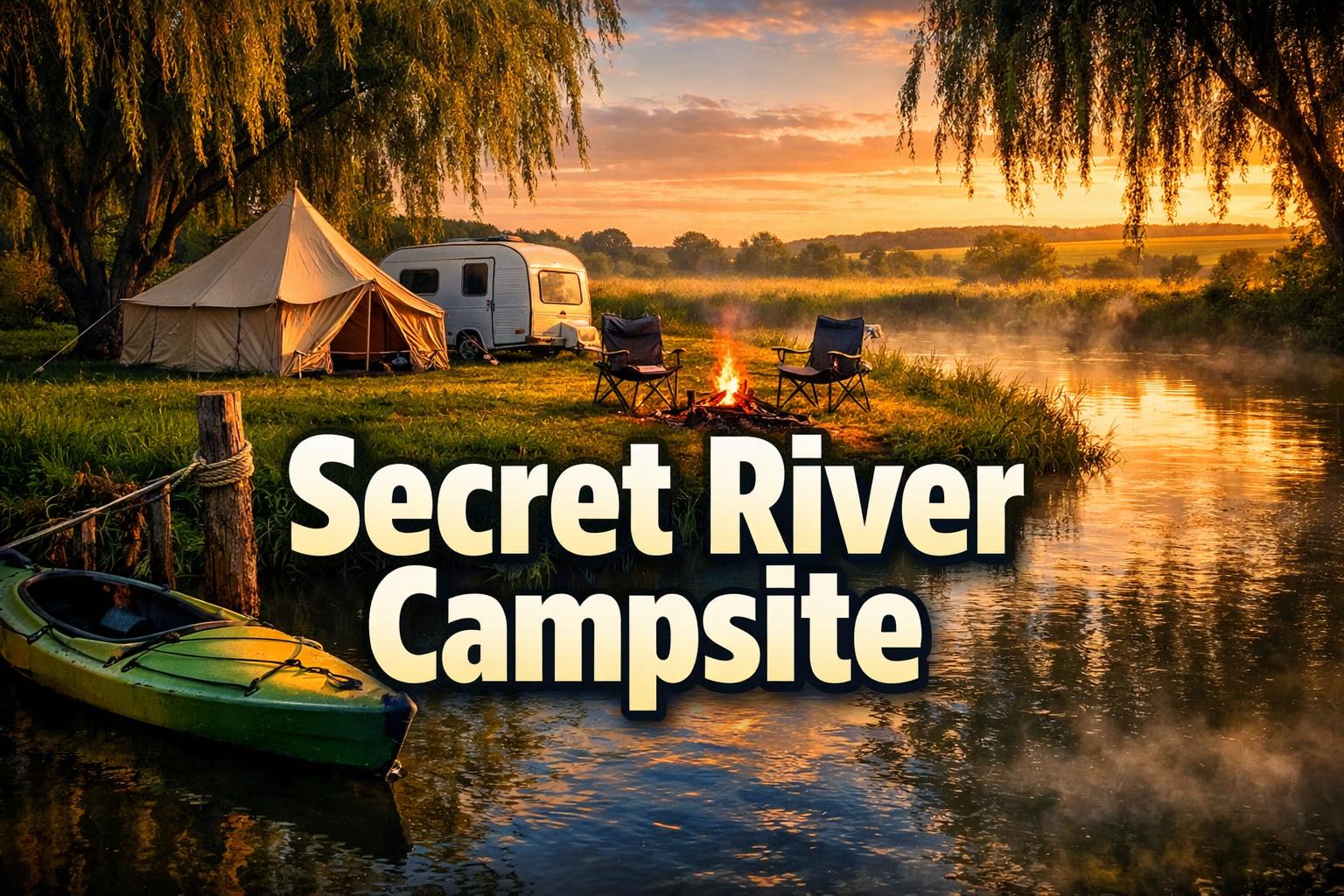
Looking for a peaceful campsite near River Trent where you can fall asleep to water sounds and wake up to river mist? Boatlane Camping offers riverside-focused camping and caravan pitches in Nottinghamshire designed for fuss-free breaks and family-friendly weekends. Our park specialises in river-facing and lakeside-style grass pitches — both electric and non-electric — with clear rules and practical facilities so your stay is safe and relaxed. Whether you’re towing a touring caravan (one caravan per pitch) or pitching a tent with a small group, Boatlane delivers an easy, nature-first escape within a short stroll of the Trent. This page owns the ‘riverside’ niche: expect river-facing descriptions, a site map and photos, recommended walking routes, and an honest section on water safety and site rules. Read on for exact pitch details, on-site amenities, nearby walks along the Trent, and quick booking links so you can plan a riverside break in Nottinghamshire that’s calm, convenient and centered on nature.
Why choose a River Trent campsite?
A campsite near River Trent gives you access to one of England’s most historically important rivers without the crowds of larger national parks. The Trent winds through Nottinghamshire with long low banks, reed-lined stretches and little villages such as Hoveringham and Radcliffe-on-Trent where the river is at its most peaceful. Staying riverside means morning birdsong, easy fishing spots (where permitted), and stunning light for photography. At Boatlane Camping you’ll have short walks to the riverbank — many guests report it’s a 10–15 minute walk from our pitches to the Trent — letting you choose quick strolls or longer riverside rambling.
Why riverside over inland fields? The microclimate by the river is usually milder in shoulder seasons, with earlier mornings and softer evenings that suit families and couples seeking calm. Riverside camping is also ideal for anglers, photographers and anyone who appreciates a river-facing pitch for sunset and sunrise views. Unlike many competing sites that offer a generic touring field, Boatlane specialises in grass pitches designed to face the water where possible, so you get the sensory experience — water sounds, river breeze, and views — as part of your stay.
If you value accessibility, a campsite near the River Trent pairs natural beauty with easy access to local pubs, small shops and cycle routes. Our guests often combine short days on the riverbank with afternoon drives to Sherwood Forest or Lincoln (both within easy reach), making a riverside base a flexible holiday choice.
Riverside vs. lakeside — what to expect
Riverside camping differs from lakeside mainly in flow and movement: the Trent offers changing light and the occasional boat, whereas lakes are stiller with more predictable reflections. Expect more bird activity and seasonal changes in riverbank vegetation. For families, the Trent’s shallower edges in places make supervised paddling tempting — but always follow safety guidance. At Boatlane, river-facing pitches aim to capture the view while keeping a sensible setback from the water to balance experience and safety.
Boatlane Camping riverside pitches (what the experience is like)
At Boatlane Camping we focus on offering practical, river-facing stays: electric grass pitches for caravans and tents, non-electric grass pitches for minimalist campers, plus seasonal pitches if you’re looking for a longer-term spot. Each caravan pitch is for one caravan only (our site rules stipulate one caravan per pitch) and family/group stays require a minimum of six people per unit — that keeps group bookings manageable and the site relaxed for everyone. Pitches are grassed and level, with many positioned to capture early-morning or late-evening views toward the Trent.
Expect well-kept grass, clear marking of pitch boundaries, and an on-site friendly team to show you in. We provide access to communal facilities and a tidy, fuss-free welcome that suits touring travellers and families. For photographers and birdwatchers, river-facing pitches give a front-row spot for sunrise and migration watches.
To help visitors visualise a riverside stay, we include on-site photos and a map of river-facing pitches on our booking page. There’s also a short video of a nearby riverside car-camping moment to show the feel of the Trent: before you arrive, watch this quick riverside clip for a real sense of setting.
Visuals and planning: photos, map and riverside notes
We recommend checking our site photos and the pitch map before booking so you can request a river-facing spot. Our main site has updated images of electric grass and non-electric pitches and a downloadable site map. For a sneak preview of Trent-area riverside camping, watch the short On-the-Up clip below.
Facilities and practicalities (water, waste, electric, accessibility)
Practicalities matter on a riverside campsite. At Boatlane Camping, electric grass pitches supply 6–10 amp hook-ups (check booking notes for exact amperage). Non-electric grass pitches are ideal for lightweight camping or campers wanting a quieter, more traditional pitch. We offer seasonal pitches for longer stays and have a clear one-caravan-per-pitch policy to prevent overcrowding. Group and family bookings have a six-person minimum per unit, which helps us manage amenities fairly.
On-site amenities include fresh water points, a chemical toilet disposal point, and clearly signed waste & recycling areas. Greywater policies: please use designated disposal points and avoid pouring greywater near hedges or the riverbank to protect wildlife. We’ve placed bins and water taps well away from the river to reduce contamination risk.
Accessibility: paths from the main car park to pitches are hard-packed; some river-facing pitches have slightly uneven grass. If mobility is a concern ask our team for exact pitch locations at booking and we’ll recommend the most accessible spots. The site is family-friendly, and small dogs are welcome but must be kept on a lead near the river to protect waterfowl and livestock.
Arrivals, hookups and staying comfortable
Arrive between our specified check-in times so the team can point out water and waste points. Bring adaptors for UK hook-ups and a long hose for water refill to avoid multiple trips. For winter stays, check that your caravan has adequate insulation; river valleys can be damper in cold months.
Walks and nature near the river (route ideas + etiquette)
One of the best reasons to pick a campsite near River Trent is the walking. From Boatlane Camping you can walk to quiet stretches of bank in under 15 minutes for gentle riverside strolls, birdwatching or a picnic. Recommended routes: a circular walk through Hoveringham (approx 3–4 miles depending on route), a shorter riverside loop towards Gunthorpe (2–3 miles) and longer stretches toward Radcliffe-on-Trent for cafés and village amenities (allow 60–90 minutes by foot or 15 minutes by car).
Wildlife: look for wagtails, swans, herons and seasonal wildflowers on riverbanks. Please keep to established footpaths, close gates behind you, and avoid disturbing nesting birds. Dog owners: keep dogs on a lead near livestock or nesting sites and clear up mess.
Etiquette: leave no trace — take litter home, use provided bins, and avoid washing dishes or clothing directly in the river. If you plan to fish, check local bylaws and obtain any required permits. For navigational help, a small waterproof map or phone app with offline OS mapping will help you follow public footpaths and permissive routes safely.
For a quick visual of riverside campsite life on the Trent and to compare settings, this short Trentfield Farm video gives a helpful preview.
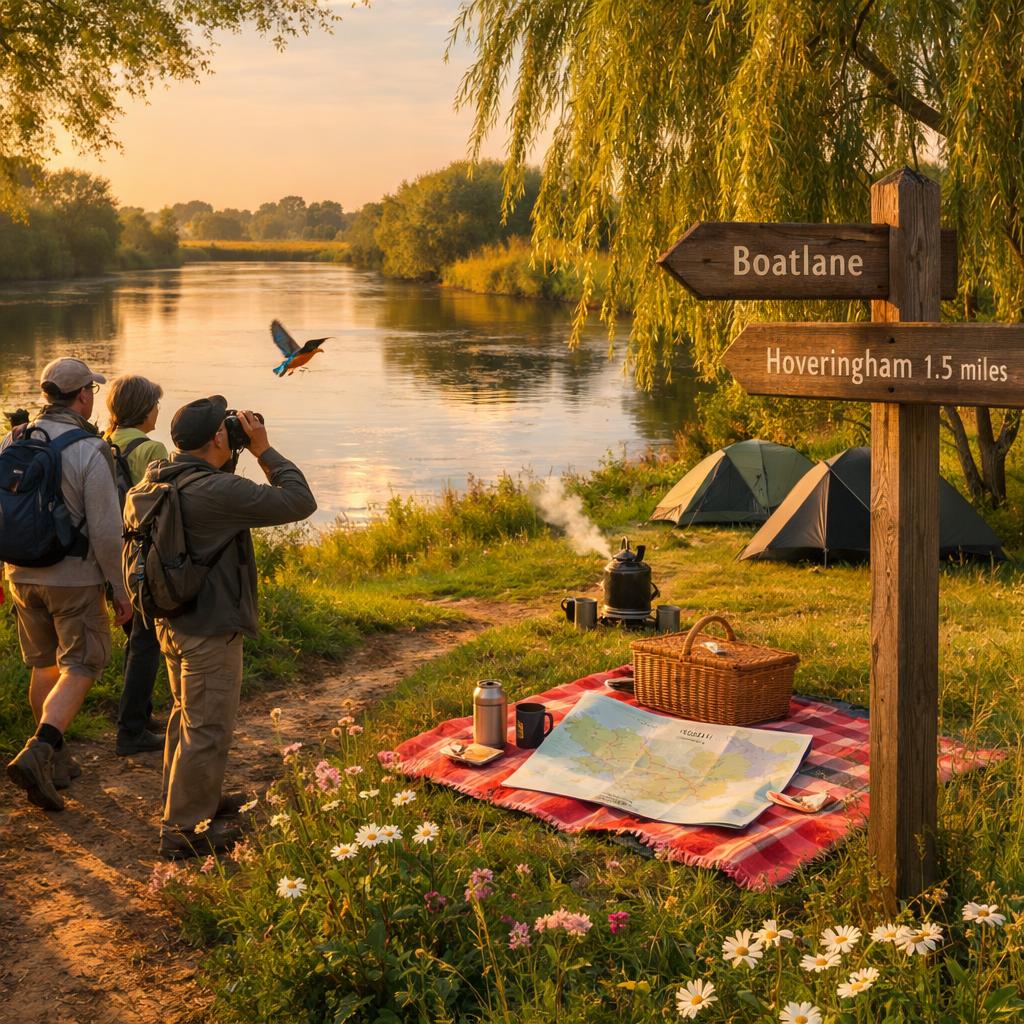
Route example: a 3-mile river loop
Start at the site gate, head north along the marked footpath to the riverbank, follow the Trent east for 1.5 miles to a small picnic area, then loop inland via village lanes back to Boatlane. The route features flat ground, a couple of stile-free gates and benches — ideal for families. Always wear sturdy footwear and check field conditions after heavy rain.
Safety and site rules near water
Riverside camping is beautiful but brings responsibilities. At Boatlane Camping we enforce simple, common-sense rules to keep everyone safe near the River Trent:
– Supervise children at all times near the water. Even shallow sections can have strong undercurrents. Never let children play alone near the bank.
– No swimming or unsupervised paddling in the Trent from site land unless you are with a qualified group or have confirmed safe, permitted access. River conditions change rapidly with weather and tides upstream.
– Keep dogs on leads near the river and recall-trained elsewhere — waterfowl and livestock are common on the banks.
– Do not discard waste or chemicals near the river. Use the campsite’s waste and chemical disposal points.
Emergency procedures: know the quickest access route for emergency responders — we’ll point this out on arrival. Mobile signal varies; carry a charged phone and a torch after dark. If someone is in immediate danger in the water, do not enter the river unless trained. Throw a floating aid, call 999 and state clearly you need the fire and rescue service for a water rescue on the River Trent with your site grid reference or postcode.
These rules are in place to protect guests and local wildlife. Observing them lets riverside stays remain peaceful, low-impact and safe for years to come.
Practical safety tips for camp life by the Trent
Keep lifejackets for small children and weak swimmers when near the bank. Post a simple risk note on your awning or tent entrance if you have visitors so everyone knows to supervise children. Consider a small first-aid kit with a thermal blanket and waterproof matches.
Booking and pricing links
Ready to book a riverside break? Boatlane Camping makes booking straightforward — choose between electric grass pitches, non-electric grass pitches or inquire about seasonal pitches if you’d like a longer-term stay. Remember our site policies: one caravan per pitch and a minimum of six people for group/family units.
For the latest availability and to view river-facing pitches and photos, visit the Boatlane Camping homepage where you can check dates and pitch types. If you prefer to preview a river-facing photo asset directly, here’s a site image that helps convey pitch character and river proximity:
We also suggest contacting the site team by phone or email for specific pitch requests (e.g., river-facing spot) and to confirm hook-up amperage. Booking early for bank-holiday weekends is wise — riverside pitches are in high demand for their views and easy access to walks along the Trent.
Helpful booking tips: choose your pitch type carefully (electric vs non-electric), request a river-facing pitch in the notes, and if mobility or group layout matters mention it at booking so the team can advise on the best pitch numbers.
Quick links to book
Visit Boatlane Camping to view pitch types, availability and to make secure bookings. If you want a visual first, the site’s river-facing photo (linked below) offers a good preview before you reserve.
Key Takeaways
- Boatlane Camping specialises in riverside pitches near the River Trent with electric and non-electric grass options and a one-caravan-per-pitch policy.
- Riverside camping offers unique sunrise/sunset views and easy access to riverside walks, but it requires sensible water safety and environmental etiquette.
- Check facilities and book early for river-facing pitches; use the Boatlane Camping homepage to view photos, maps and availability.
- Follow site rules: supervise children near water, keep dogs on leads near banks, and use designated waste/chemical disposal points.
- If unsure about wild camping or local permissions, choose an authorised campsite like Boatlane for a safe, legal riverside stay.
Frequently Asked Questions
Can I sleep in my car at a campsite in the UK?
Sleeping in your car at a campsite depends on the campsite’s own rules. Many UK campsites, including Boatlane Camping, require you to book a pitch and park vehicles in designated areas. Some sites allow car-camping (staying in your car) but still require a pitch fee; others restrict stays to tents or caravans. Always check the campsite’s terms before arrival. Wild sleeping in your car on private land without permission is not permitted and could be treated as trespass.
Is River Trent famous for anything?
Yes. The River Trent is one of England’s major rivers, noted for its historical role in trade, industry and navigation. It flows through the Midlands to the Humber Estuary and is associated with towns such as Stoke, Newark and Nottingham. The Trent is also known for diverse wildlife, scenic river valleys, and recreational activities like fishing, boating and riverside walking.
What is the 5 caravan rule?
The ‘5 caravan rule’ commonly refers to planning or permitted development regulations limiting large caravan gatherings (for example, some caravan sites or local authorities restrict more than five static caravans or a single event with multiple touring units). For Boatlane Camping specifically, our policy is one caravan per pitch to prevent overcrowding and preserve a relaxed atmosphere. If you plan a large group, contact the site to discuss group arrangements and permissions.
What happens if you get caught wild camping?
Consequences for wild camping vary by location. In England and Wales, wild camping without landowner permission is often classed as trespass and may lead to moving on, fines, or enforcement action, especially in environmentally sensitive areas. Landowners or local authorities can ask you to leave; repeated refusal could result in police involvement. Responsible alternatives include staying at authorised campsites like Boatlane Camping, or seeking permission from the landowner.