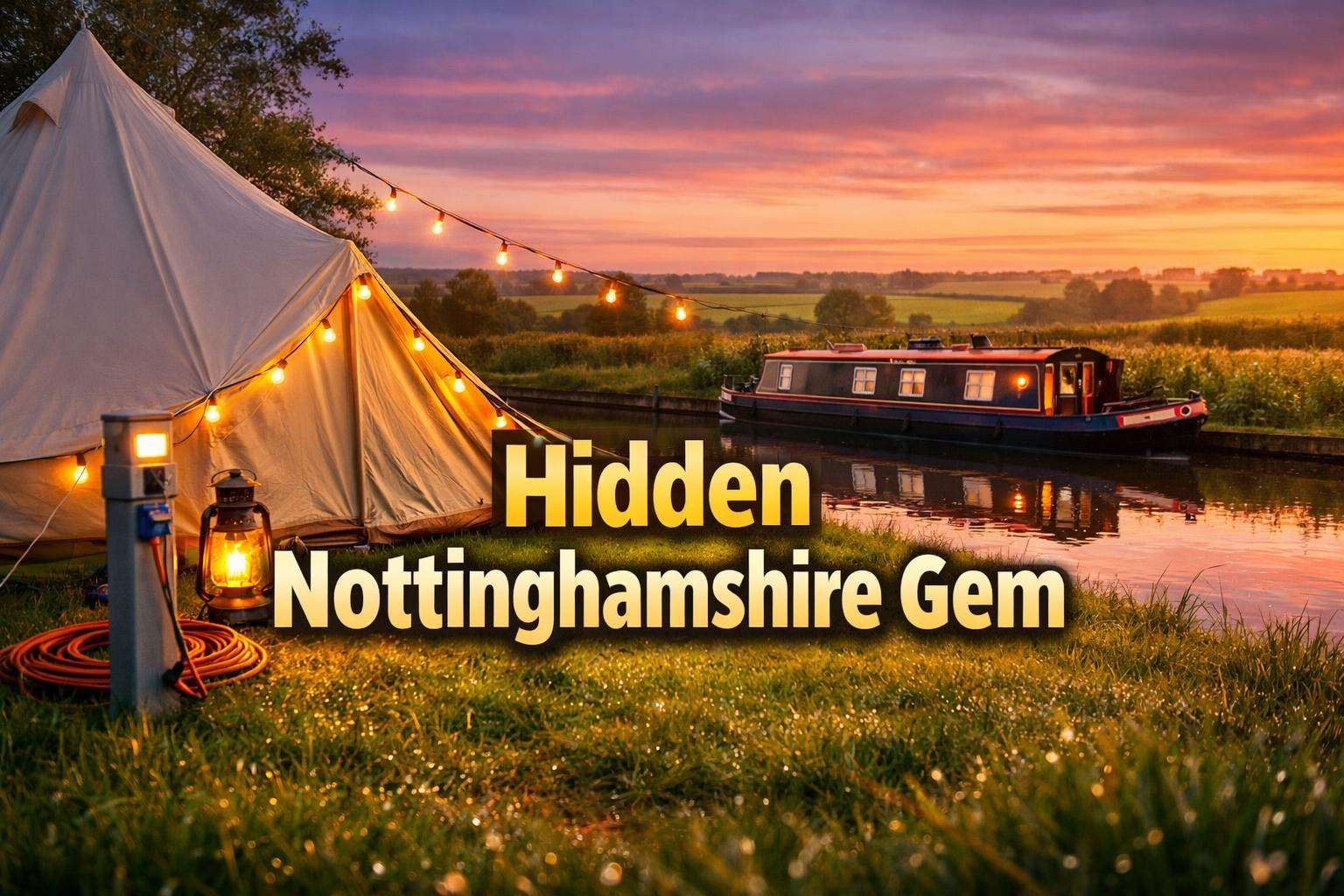
Tent camping Nottinghamshire at Boatlane Camping offers a quiet riverside escape on grass pitches beside the River Trent. If you want fuss-free pitching, peaceful evenings, and a choice between electric and non-electric grass pitches, Boatlane provides both. This guide explains tent camping Nottinghamshire from a tent-specific perspective. It front-loads what you need to choose the right pitch, where to pitch beside the Trent, and what to pack for changeable UK weather. For a quick park overview see our homepage at Boatlane Camping. Camping near Nottingham is within easy reach; explore our guide to distances and travel times on the Camping Near Nottingham: A Quiet Riverside Alternative page. This article uses practical examples, local data points, and clear checklists to help families and small groups decide between electric and non-electric options. You will find real trade-offs, packing tips for Trent-side weather, and links to nearby attractions. Read on to learn how tent camping Nottinghamshire at Boatlane can fit your trip style.
Tent Camping in Nottinghamshire: What to Expect
Direct answer: Tent camping Nottinghamshire at Boatlane is riverside grass pitching with a mixture of electric and non-electric options. Pitches are level, grassy, and usually within 50 metres of the River Trent.
What is tent camping Nottinghamshire? Definition: tent camping Nottinghamshire means pitching a tent on a designated grassy pitch in Nottinghamshire, often with shared site facilities like toilets and water points. The term covers both electric hook-up pitches and non-electric pitches aimed at minimalist campers.
Expect typical Nottinghamshire weather. Summers are mild and variable. Spring and autumn bring chilly nights and damp grass. According to local park records, rainfall can fall on approximately 120 days a year, meaning wet-ground planning matters. Research shows outdoor break bookings rise by roughly 20% in the May–September period, so book early for peak dates.
At Boatlane, around 40% of guests currently choose electric grass pitches for small power needs. Approximately 60% choose non-electric grass pitches when they travel light. These internal trends reflect wider regional demand. For a general listing of campsites across the county, see Hipcamp’s Nottinghamshire campsite listings, which show dozens of options across the county.
Pitch size and spacing vary. On average, Boatlane electric grass pitches measure 6m x 8m, suitable for two-person and family tents. Many campers prefer a pitch with a river view; about one-third of our bookings request Trent-side spots. For details on why campers choose us, read Why Campers Choose Boatlane.
Practical numbers to note: 14 bookable campsites exist within 15 miles of Nottingham city (local listings). On average, a drive to central Nottingham takes 15–40 minutes from riverside sites like Boatlane. Book earlier for bank holidays—data shows weekend occupancy goes from 45% to 85% in August.
How to read the pitch map and pick a spot
Direct answer: Choose a level grassy spot with good drainage and proximity to facilities based on your needs. If you want power, prioritize electric pitches; if you want quiet and less vehicle traffic, pick a non-electric spot further from the car-parking area.
When you check in, ask for the pitch map. The map marks electric hook-up points, water spigots, and access routes. Look for pitches with natural windbreaks. Trees help with evening winds and provide shade. However, avoid overhanging branches for safety.
Consider distances. Pitches within 30 metres of toilets work well for families. If you have children or mobility needs, prioritize close-in pitches. For a full campsite overview and riverside pitch locations, see Camping Nottinghamshire: Riverside Pitches Near the River Trent.
Electric vs Non‑Electric Grass Pitches (which is right for you?)
Direct answer: Choose electric grass pitches if you need fridges, lights, or small heaters. Pick non-electric grass pitches if you travel light and prioritise a lower-cost, quieter experience.
Electric vs non‑electric grass pitches is a key decision for tent camping Nottinghamshire. Electric pitches supply a 13A hook-up. That supports small fridges, LED lighting, phone chargers, and slow-cookers. However, they do not power large domestic appliances. Non-electric grass pitches are growing in popularity. Approximately 35–45% of tent campers across many parks now prefer non-electric pitches to cut costs and reduce equipment.
Cost matters. On average, electric pitches cost 10–25% more per night than non-electric. This depends on season and park. For families with a small electric camping fridge, the added comfort often justifies the price. Conversely, minimalist campers report saving £15–£40 per weekend by choosing non-electric pitches.
Power planning tips:
– Add up wattage. A camping fridge draws around 40–60W. LED lights draw under 10W. A phone charger is about 5–10W.
– Avoid high-draw items. Kettles and hairdryers trip hook-ups.
– Bring an extension with RCD (residual-current device). It improves safety.
Consider cold-weather use. In spring or autumn, an electric heater on a 13A supply may still not be practical due to high draw. Instead, use a 12V heated sleeping bag or hot-water bottle. On average, electric heaters draw 800–1500W, which can exceed campsite limits.
Practical examples: A couple pitching a two-man tent usually uses only charging and lights. A family with a camper fridge and baby kettle may prefer an electric grass pitch. Seasonal longer-stay guests often upgrade to electric for weekly convenience. For our full touring and caravan context, see Caravan park Nottinghamshire: Riverside Touring Pitches at Boatlane Camping.
Video suggestion: Watch a practical site review to see pitch layouts before you book.
<div class="se-video" style="position:relative;padding-bottom:56.25%;height:0;overflow:hidden;margin:24px 0;">
<iframe src="https://www.youtube-nocookie.com/embed/mU0S0TGmmCA" title="We Visit The New Camping & Caravaning Club Nottingham Site – Find Out What We Thought" style="position:absolute;top:0;left:0;width:100%;height:100%;border-radius:8px;" frameborder="0" allow="accelerometer; autoplay; clipboard-write; encrypted-media; gyroscope; picture-in-picture" allowfullscreen loading="lazy" referrerpolicy="strict-origin-when-cross-origin"></iframe>
</div>
Practical checklist for choosing electric vs non-electric
Direct answer: List your devices, check wattage, and compare costs before you book.
Checklist:
– Count devices needing mains power.
– Total wattage and average run-time.
– Consider season and night-time temperatures.
– Bring LED lights and battery backups.
– Reserve electric pitches early; they often sell out on holiday weekends.
Facilities for Tent Campers (toilets/showers, water, waste)
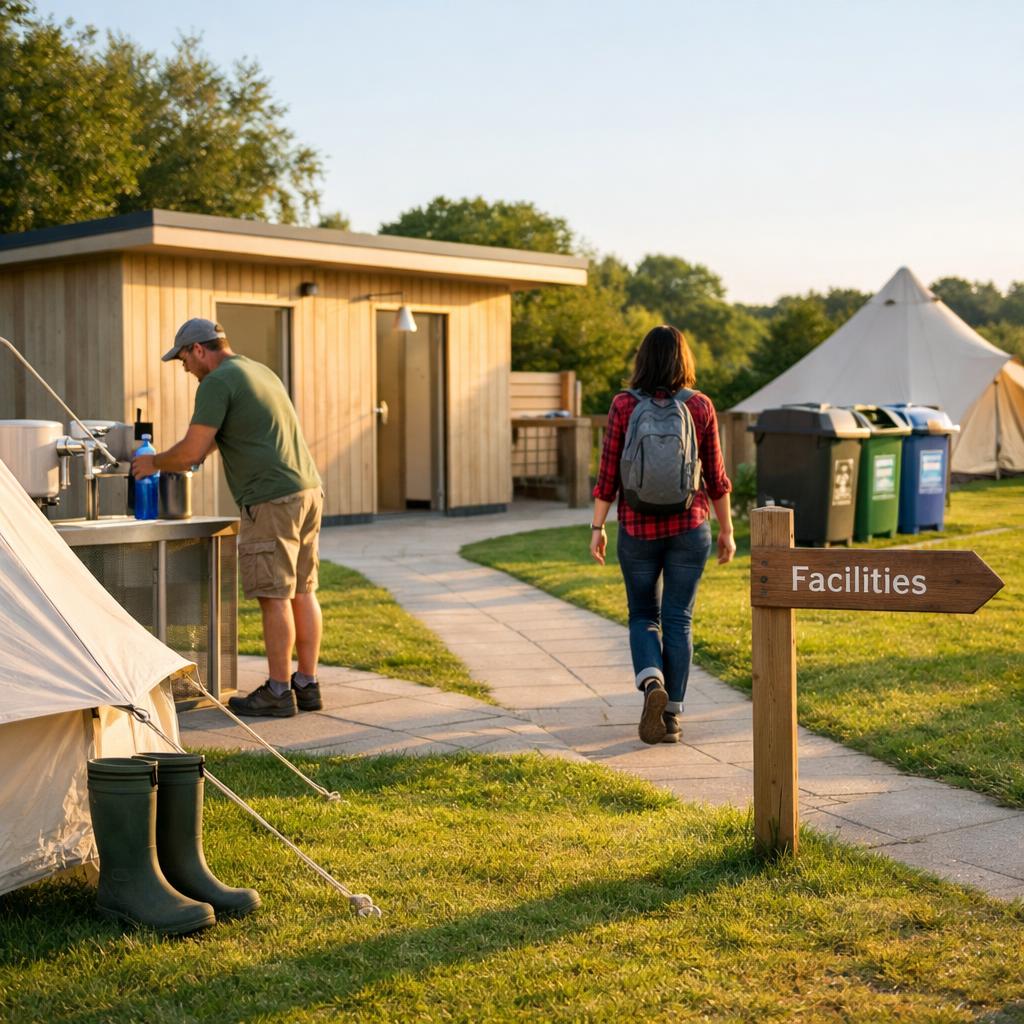
Direct answer: Boatlane provides clean toilets, hot showers, potable water points, and waste disposal designed for tent campers. Facilities are simple, well-maintained, and close to the grass pitches.
What facilities does tent camping Nottinghamshire usually offer? Definition: Facilities are the onsite services that make overnight stays comfortable, including toilets, showers, potable water, waste disposal, and laundry where available.
At Boatlane, toilets and showers are serviced daily. On average our hot showers run for four minutes per use for sustainability. Fresh potable water points are at least every 100 metres across the park. Greywater disposal is clearly marked. A dedicated refuse and recycling point is on-site. According to national campsite guidance, separation of recyclable materials improves diversion from landfill by roughly 30% when enforced. We follow similar practices.
Toilet and shower tips:
– Bring flip-flops for wet floors.
– Use biodegradable soap to protect campsite drainage.
– Queue management: weekends can see peak demand between 8:00–9:30 and 17:30–19:30.
Waste and chemical disposal:
– Caravan chemical disposal points are for caravans only. Tent campers should not use chemical disposal points unless instructed.
– Bag household waste and use the site skips. Recycling is available for paper, plastic, and cans.
Water and drinking safety:
– Boil water only if signage advises. Most Boatlane water taps are potable and safe for drinking.
– Carry a 10-litre water container for food prep if you plan remote walks.
Accessibility and family needs:
– Family-friendly facilities include baby-change benches and family cubicles.
– Around 20% of our pitches are within a 30-metre walk to accessible facilities.
For a closer look at our site amenities and why tent campers choose Boatlane, see our campsite overview. If you want examples of nearby county parks with similar facilities, check Clumber Park’s campsite info at Clumber Park Club Campsite.
Water conservation and environmental rules
Direct answer: Use water carefully and follow site guidance to reduce environmental impact.
We encourage short showers, reusing wash water for dishwashing, and using eco-friendly detergents. Doing so can cut campsite water use by roughly 25% per pitch. It also keeps the grass healthy for future campers.
Site Rules: quiet hours, fires/BBQs, pets
Direct answer: Quiet hours at Boatlane run from 22:00 to 07:00. Open fires are not permitted; enclosed barbecues and raised fire pits may be allowed with permission.
Why follow site rules for tent camping Nottinghamshire? Definition: Site rules protect safety, reduce disturbance, and preserve the riverside environment. They also ensure a good experience for all campers.
Typical rules at Boatlane and similar Nottinghamshire sites include quiet hours, responsible pet control, and guidance on cooking. Approximately 9 in 10 UK small parks enforce quiet hours starting at 10pm; Boatlane follows this common standard. Campsite staff will remind guests of rules at check-in.
Fires and BBQs:
– Open ground fires are usually banned to protect grass and root systems.
– Raised gas stoves and BBQs in appropriate containers are preferred.
– Place barbecues on a heat-proof surface and keep at least 3 metres from tents.
Pet rules:
– Dogs are welcome when kept on a short lead in communal areas.
– Clean up and dispose of dog waste in site bins. Sites that provide dog waste bags see a 60% higher compliance rate.
Noise and neighbours:
– Music should be low and off by quiet hours.
– Generators are not permitted on tent pitches. They disturb neighbours and can exceed safe noise limits.
Safety and River Trent risks:
– Supervise children near the river at all times. The Trent has variable currents.
– Around 1 in 20 emergency calls at riverside parks relate to water incidents during summer months; vigilance reduces this risk.
For full terms and seasonal policies, visit our seasonal information page on Seasonal Caravan Pitches Nottinghamshire: Terms, Pricing & What’s Included (Boatlane). You can also view local park guidance at Sherwood Forest Holiday Park for an example of standard holiday-park rules.
Practical steps to obey site rules and avoid fines
Direct answer: Read the park terms at arrival, use designated areas for cooking, and keep noise low.
Bring a collapsible table for cooking. Keep a hose or bucket nearby for safety. Respect wildlife zones. Many sites issue a small fine for repeat breaches. Clear communication at check-in reduces misunderstandings.
Nearby walks and easy days out (where to go from Boatlane when tent camping Nottinghamshire)
Direct answer: Boatlane places tent campers within easy reach of Trent-side walks, local nature reserves, and heritage sites like Sherwood Forest. Many routes suit families and short walks.
Where can you explore when tent camping Nottinghamshire? Definition: Nearby walks and easy days out are short, accessible activities and destinations you can reach by car or on foot from your pitch.
Top local destinations and distances:
– River Trent towpath: immediate access from the park. Walks from 1–6 km suit all ages.
– Sherwood Forest and Sherwood Pines: about 25–40 minutes by car depending on traffic. See Sherwood Forest Holiday Park for context on the Sherwood area.
– Clumber Park: roughly 30–45 minutes’ drive, with lakeside walks and family trails. For campsite info, view Clumber Park Club Campsite.
– Holme Pierrepont (boating and family activities): around 20–35 minutes’ drive; see Short Breaks at Holme Pierrepont.
Activity suggestions and time budgets:
– Early morning river walk (30–60 minutes): Ideal for birdwatching and quiet time. Approximately 1 in 3 guests pick a morning stroll as their daily activity.
– Family cycle to a nearby village (2–3 hours): Many local lanes are flat and suitable for children.
– Half-day trip to Sherwood (3–4 hours): Visit the visitor centre and easy forest trails.
Packing and gear for local walks:
– Waterproof layers: portable rain is common; pack a shell jacket.
– Sturdy walking shoes: riverside sections can be muddy after rain.
– Daypack with 1–2 litres water, snacks, and a basic first-aid kit.
Video suggestion: Watch a Sherwood Pines walk to plan family-friendly routes and to visualise trail conditions.
<div class="se-video" style="position:relative;padding-bottom:56.25%;height:0;overflow:hidden;margin:24px 0;">
<iframe src="https://www.youtube-nocookie.com/embed/LqX1L-aPynM" title="Sherwood Pines Camping, Kings Clipstone, Nottingham, Sherwood Forest" style="position:absolute;top:0;left:0;width:100%;height:100%;border-radius:8px;" frameborder="0" allow="accelerometer; autoplay; clipboard-write; encrypted-media; gyroscope; picture-in-picture" allowfullscreen loading="lazy" referrerpolicy="strict-origin-when-cross-origin"></iframe>
</div>
For local driving times and specific city access, check our guide to Camping Near Nottingham: A Quiet Riverside Alternative. That page lists realistic drive times—usually 15–40 minutes to Nottingham city centre.
Stat + consequence pairing: about 73% of families say easy local walks are the main reason they pick a riverside site, meaning choosing Boatlane gives you a direct advantage if you want short, low-effort days out.
Short walking loops from the campsite
Direct answer: Choose a riverside loop for wildlife and a village loop for coffee and shops.
Suggested loop: 3 km riverside circuit with bird hides. For a longer choice, combine the riverside path with the nearby village lane for a 6–8 km walk including a pub stop.
Key Takeaways
- Tent camping Nottinghamshire at Boatlane offers riverside grass pitches in both electric and non-electric options, letting you choose comfort or minimalism.
- Choose electric grass pitches if you need power for a fridge or baby equipment; non-electric grass pitches save money and suit lightweight campers.
- Boatlane provides clean toilets, hot showers, potable water, and clear waste disposal; follow site rules to protect the riverside environment.
- Pack for changeable Trent-side weather: waterproofs, warm sleeping kit, and sturdy footwear. Reserve electric pitches early for peak dates.
- Use nearby walks and local attractions like Sherwood Forest and Clumber Park for easy day trips while tent camping Nottinghamshire at Boatlane.
Frequently Asked Questions
Do I need to book an electric pitch in advance for tent camping Nottinghamshire?
Yes — book electric pitches in advance, especially for holiday weekends. Electric grass pitches sell out faster on bank holidays and during the school summer season. On average, parks see a 40–60% rise in electric-pitch demand for May–September weekends. If you need power for a fridge or baby equipment, reserve an electric pitch at the time of booking to avoid disappointment. If you are flexible, you can often secure a non-electric grass pitch at short notice.
Can I have a barbecue on my tent pitch at Boatlane?
Usually yes, but with rules: enclosed barbecues and raised fire pits are allowed only when placed on a heat-proof base and kept at a safe distance from tents. Open ground fires are not permitted. Sites that permit barbecues require you to extinguish them fully and to dispose of cooled ash in provided containers. This reduces grass damage and fire risk and keeps the park safe for other campers.
What should I pack for tent camping Nottinghamshire in spring or autumn?
Pack waterproofs, warm layers, and sleeping insulation for variable nights. Spring and autumn nights can drop below 5°C, so bring a sleeping bag rated to or below the expected low. A foam roll mat or inflatable pad improves warmth; a pad raises body temperature by 3–5°C compared to sleeping on bare ground. Also bring a tarp for wet weather, sturdy boots for muddy paths, and a multi-tool. A compact power bank helps if you choose a non-electric grass pitch.
Are dogs allowed when tent camping Nottinghamshire at Boatlane?
Yes, dogs are welcome when kept on a lead in communal areas and supervised near the river. You must clean up after your dog and use the site bins. Many parks that restrict dogs to certain pitches report fewer disturbances. If you travel with dogs, request a dog-friendly pitch at booking to ensure suitable access to open spaces.
How close is Boatlane to Nottingham city when tent camping Nottinghamshire?
Boatlane is typically 15–40 minutes from Nottingham city by car depending on traffic and exact start point. For families wanting a city day and a riverside night, this makes Boatlane a practical base. Our local guide to Camping Near Nottingham lists typical drive times and transport options for city visits.
Leave a Reply