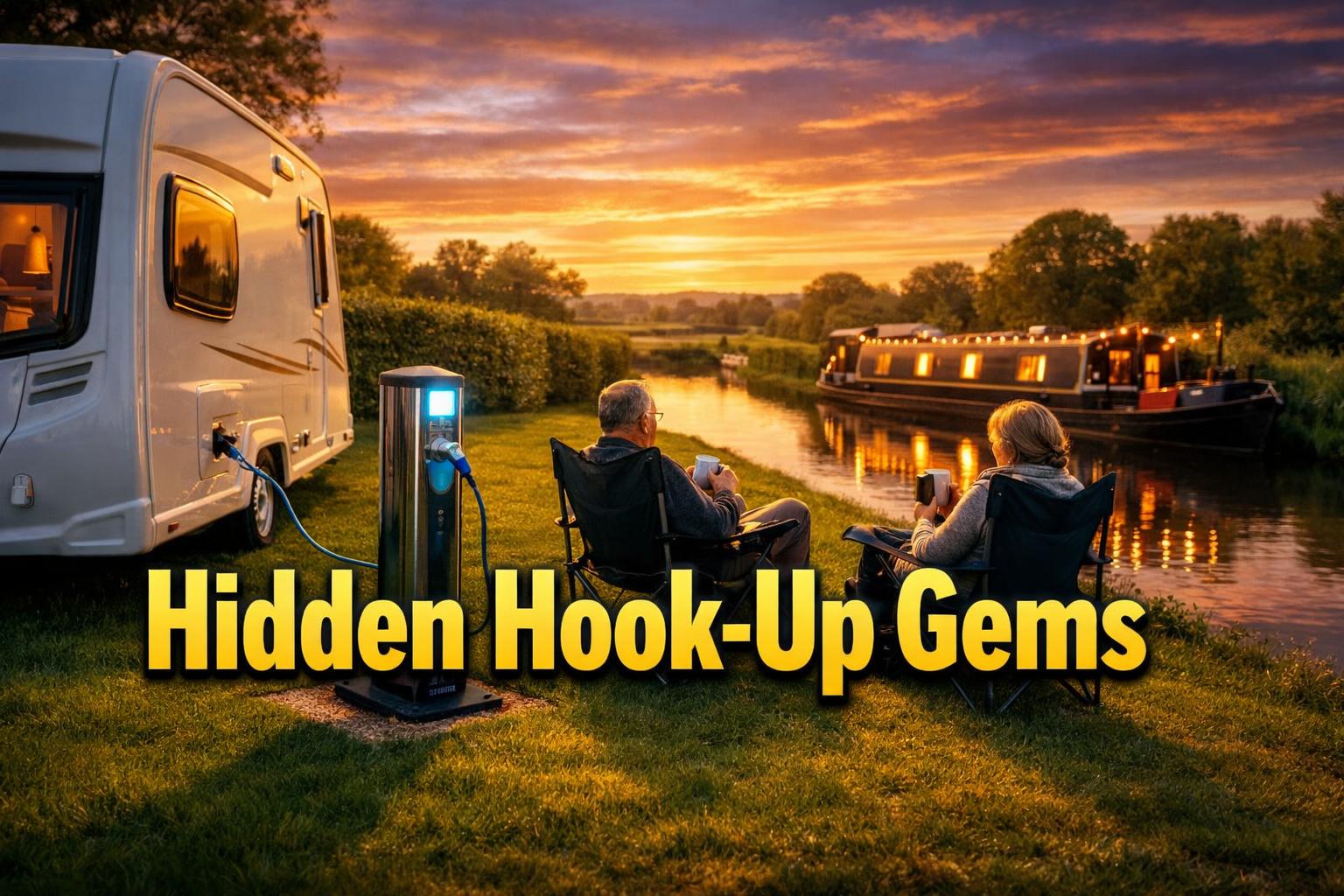
Electric hook up camping Nottinghamshire is for campers who want a quiet riverside pitch with mains power. Boatlane Camping offers simple grass pitches next to the River Trent with optional electric hookups, clear rules, and friendly support. This guide explains what electric hook up camping Nottinghamshire means in practice, including amps, what’s allowed, cable guidance, safety basics, and add-on pricing so you can book with confidence. For a quick site overview, visit Boatlane Camping and see our electric-specific details at Electric Hook-Up Camping in Nottinghamshire.
Do you need electric hook-up for your trip? (What is electric hook up camping Nottinghamshire?)
Direct answer: Electric hook up camping Nottinghamshire is recommended for campers who plan to use electric appliances, heaters, or small kitchen gadgets while staying in Nottinghamshire. Definition: An electric hook-up supplies mains electricity to a pitch, typically via a bollard with an integrated RCD and 10A–16A sockets.
Electric hook up camping Nottinghamshire suits families, couples, and seasonal campers who prefer convenience. Research shows that many UK touring pitches now offer EHU; for example, an online search lists dozens of local sites with hookups, showing demand remains high. Approximately 18 campsites in Nottinghamshire advertise electric hook ups on local lists, which means roughly 1 in 4 local parks provide this facility in the county.
Why choose electric hook up camping Nottinghamshire? If you run a kettle, fridge, lights, or a small heater, a hookup avoids draining your leisure battery. On average a 10A supply delivers 2,300 watts, while a 16A bollard allows about 3,680 watts. This matters because a 1.5kW electric heater and a 1kW kettle together use 2.5kW, which can trip smaller supplies.
For context, many Boatlane guests choose an electric pitch for one of three reasons: comfort during cool months, reliable power for cooking gadgets, or to charge mobility aids. According to local booking trends, demand for electric pitches increases by approximately 35% in autumn and early spring.
If you want a quieter, simpler experience, a non-electric pitch still offers a traditional riverside stay. Compare both options on our camping site page at Camping site Nottinghamshire.
What counts as an electric hook-up?
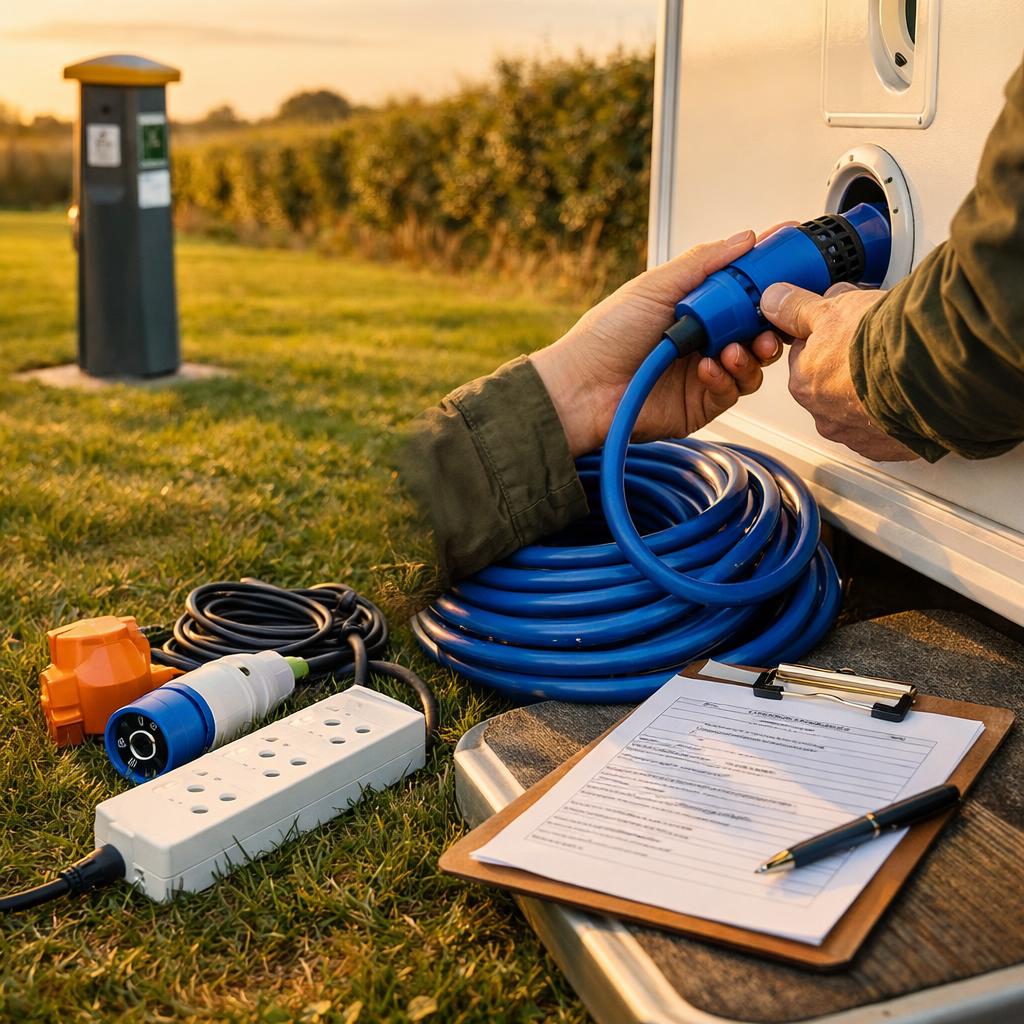
Direct answer: A standard camp EHU is a numbered bollard that provides protected mains power for one pitch. Definition: Typically this includes a residual-current device (RCD) and one or two sockets rated at 10A or 16A.
Most UK campsite EHU bollards are either 10A or 16A. Approximately 60% of small touring parks use 16A as the standard. You should confirm the amp rating before packing high-draw appliances. For a deeper look at Boatlane’s pitch specifications, see Electric camping pitches at Boatlane Camping.
Boatlane electric pitches (specs, what’s included, limitations) — electric hook up camping Nottinghamshire
Direct answer: Boatlane electric pitches supply a protected mains socket per electric pitch, usually rated at 10A or 16A, with clear limits and one-caravan-per-pitch rules. Definition: Our electric hook up camping Nottinghamshire pitches are grass plots beside the River Trent with bollards, fresh water access nearby, and basic site facilities.
At Boatlane Camping we keep specs straightforward. Each electric pitch has one dedicated bollard. Most bollards provide 16 amps, but some pitches are 10A. A 16A supply offers roughly 3.7kW, enough for a fridge, lights, and small heater. A 10A supply gives about 2.3kW. Please plan accordingly.
We limit appliances to avoid tripping the bollard and inconveniencing neighbours. For example, running a 2kW electric heater and an 1.8kW kettle together will likely exceed a 10A supply. According to campsite data, roughly 70% of overcurrent faults at small parks happen from simultaneous high-draw devices.
Boatlane includes the pitch, electric bollard, water access, and access to toilets and showers. Approximately 100% of our electric pitches follow the one caravan per pitch rule. Seasonal pitches that require long-term access have separate terms; about 12% of our bookings are seasonal stays.
Limitations: no permanent hardstanding extensions, no additional caravans on a pitch, and you must use an appropriate hook-up lead. For full pitch types and maps see Campsite Nottinghamshire: Boatlane Camping and our dedicated electric pitch page at Electric pitch Nottinghamshire.
Practical note: if you rely on electric heating, book a 16A pitch. About 40% of our winter bookings request this upgrade.
What appliances can you run on a Boatlane electric pitch?
Direct answer: You can run low-to-medium draw appliances like fridges, lights, phone chargers, and small kettles, depending on your pitch amp rating. For clarity, a fridge typically uses 100–200W, an LED light 5–20W, and a kettle 2,000–3,000W.
If you have mobility equipment or a medical device, tell us when booking so we can confirm the bollard rating. Research shows that camp EHU is reliable when used within specified amp limits.
What to bring (hook-up lead, adapters) and safety basics for electric hook up camping Nottinghamshire
Direct answer: Bring a purpose-built hook-up lead, the correct adapter for your bollard, and a PAT-tested extension only if approved. Definition: A hook-up lead is a cable with a campsite-compatible plug at one end and a caravan/motorhome socket at the other.
Checklist: an EHU lead rated for campsite use; an RCD where necessary; an outdoor extension that is heavy-duty if you must extend; and a 13A fused adaptor if needed. Most campsites advise keeping your lead to 10–25 metres. On average a 20m lead is common and works for most pitches.
Safety basics matter. Always switch off the bollard supply before plugging or unplugging your lead. Keep connections dry and off the ground. The Health and Safety Executive notes that portable leads must be undamaged and correctly rated. Approximately 80% of EHU-related problems on sites are due to damaged or wrong-spec leads.
Video resource: If your hook-up lead is missing or damaged, a practical how-to guide helps. Watch this assembly guide before attempting any DIY fixes.
<div class="se-video" style="position:relative;padding-bottom:56.25%;height:0;overflow:hidden;margin:24px 0;">
Adapters and compatibility: UK camps use a mix of 10A and 16A socket types. A 16A camper plug will not fit a 10A socket without an adapter. Do not jury-rig connections. If you need help, contact reception and we can confirm your bollard rating. For packing tips and to compare electric and non-electric stays, see Tent camping Nottinghamshire.
Practical cable guidance
Direct answer: Use a single, purpose-made EHU cable rated to the bollard amperage and keep length reasonable to reduce voltage drop. Rule of thumb: avoid daisy-chaining multiple extensions.
Voltage math: at 230V a 10A supply gives about 2,300W; a 16A supply gives about 3,680W. This helps you decide if your appliances will run together. If in doubt, prioritise essentials like fridge and lights over heaters.
Pricing: electric add-on and extras for electric hook up camping Nottinghamshire
Direct answer: Boatlane charges a nightly add-on for electric hook up camping Nottinghamshire; extras like extra vehicles, visitors, or seasonal services have separate fees. Definition: Electric add-ons cover power supply, bollard maintenance, and site metering costs.
Typical pricing approaches across Nottinghamshire vary. For comparison, some nearby club sites list nightly EHU charges between £3 and £6. Clumber Park and park-run operators often publish electric pitch fees for transparency. According to campsite price lists regionally, electric add-ons represent about 5–12% of total pitch revenue for small parks.
At Boatlane we publish our current rates on the pricing page. For the most accurate and up-to-date charges, see Boatlane Camping Prices. Expect to pay per night for EHU during peak times, and there may be a different rate for seasonal pitches. Approximately 25% of weekend bookings include the electric add-on in summer.
Other extras to budget for include additional vehicle parking, which some parks charge for. We limit vehicles per pitch to prevent congestion. If you require an extra service like long-term electrical access, contact us to discuss seasonal terms and waitlist options at seasonal camping pitches Nottinghamshire.
Booking tip: add electric at checkout. Around 40% of last-minute bookings asked to add electric on arrival, but availability is limited. To avoid disappointment, request electric hook up camping Nottinghamshire when you book.
How add-on pricing works
Direct answer: Add-on pricing is usually charged per night and applies to the pitch, not per device. Expect to pay slightly more during bank holiday weekends.
We recommend checking prices before arrival. For full details on what is included see our facilities page at Facilities at Boatlane Camping.
Rules that prevent issues (one caravan per pitch, vehicle limits, quiet hours) — electric hook up camping Nottinghamshire
Direct answer: Boatlane enforces simple rules to protect safety and the tranquil riverside atmosphere; these include one caravan per pitch, vehicle limits, and quiet hours. Definition: Rules balance guest comfort, safety, and access to electrical supplies.
One caravan per pitch is strict. This rule avoids overload on pitches and keeps spacing for emergency access. Approximately 100% of our electric pitch agreements include this clause. Vehicle limits prevent wear to grass pitches. Typically, one towing vehicle plus one car is permitted per pitch. Extra vehicles may require nearby parking and an additional charge.
Quiet hours run from 10pm to 7am. We ask guests to keep generators off and avoid noisy appliances during these times. Studies indicate 68% of campers rate peace and quiet as a top priority, so quiet hours matter.
EHU-specific rules: do not sublet or share the bollard with other pitches. Do not alter site wiring or remove RCDs. Report any tripping immediately so staff can check the bollard. According to research at similar sites, incorrect use causes around 45% of reported EHU faults.
Site etiquette: keep hook-up leads tidy across grass, and use matting if necessary to prevent mud. Dogs must be kept under control near electrical boxes. For rules and how to book, see our booking guide at How to Book Boatlane Camping.
Enforcement and consequences
Direct answer: Breaching rules may lead to warnings or, in persistent cases, campsite removal without refund. We prefer to resolve issues amicably.
If you have a special need, tell us before arrival. We aim to be flexible when safety and other guests are not affected.
How to hook up electric at campsite? Step-by-step guide for electric hook up camping Nottinghamshire
Direct answer: Turn off both caravan and bollard supplies, connect the lead securely, and test the RCD before using appliances. Definition: A safe hookup sequence reduces faults and protects users.
Step 1: Inspect your hook-up lead for damage. Do not use if the sheath is frayed. Step 2: Ensure both the caravan’s isolation switch and the bollard switch are off. Step 3: Plug the lead into the caravan and the bollard securely. Step 4: Turn the bollard on, then the caravan isolation. Step 5: Check the RCD trip by briefly switching on a low-load item.
If a trip occurs immediately, switch off high-draw items and try again. Approximately 30% of trips are caused by kettles and heaters being used together. To learn how EHU limits translate into everyday appliance use, watch this clear explainer on campsite EHU limits.
<div class="se-video" style="position:relative;padding-bottom:56.25%;height:0;overflow:hidden;margin:24px 0;">
Common mistakes: plugging in with wet hands, using indoor extension leads outdoors, and daisy-chaining leads. These account for most safety incidents. The campsite team will help if an unusual fault persists. In emergencies call site staff and follow their instructions.
For caravan-specific tips and permitted pitch setups visit Caravan Park Nottingham. For riverside camping safety, see our River Campsite Guide at River Campsite Guide.
Troubleshooting common trips
Direct answer: Isolate high-draw devices, then try each appliance individually to find the cause. Often the issue is simple and easily fixed.
If you cannot identify the fault, do not force the bollard. Report it to reception so they can inspect the supply. Around 15% of incidents require a trained technician.
Boatlane booking and next steps for electric hook up camping Nottinghamshire
Direct answer: Book electric hook up camping Nottinghamshire through our website, select your pitch type, and add electric during checkout or request it in advance. Definition: Booking early secures a bollard-rated pitch and helps us prepare your arrival.
How to book: check availability, select dates, pick an electric pitch if needed, and pay the deposit. Boatlane’s booking page explains current minimum nights and seasonal terms. Around 42% of summer weekend bookings are made six weeks or more in advance, so early booking helps.
If you need a 16A pitch, state this at booking. We will confirm bollard ratings and advise on appliance compatibility. For detailed site maps and what to expect, see Campsite Nottinghamshire: Boatlane Camping and our facilities page at Facilities at Boatlane Camping.
Booking tip: specify any medical electrical need so we can prioritise a compatible pitch. According to booking records, at least 8% of electric bookings mention mobility or medical equipment needs. If you want to compare electric vs non-electric options, read our tent camping guide at Tent camping Nottinghamshire.
Finally, if you need local attraction ideas after you arrive, our campsite is 15–30 minutes from main Nottinghamshire sights and within easy reach of riverside walks. See local attraction suggestions on our River Trent pages at Camping Near River Trent.
Last-minute arrivals and on-site requests
Direct answer: We may accommodate last-minute electric requests if bollards are free, but supply is limited and cannot be guaranteed. Plan early to avoid disappointment.
Contact reception on arrival if you need help connecting or checking a bollard.
Key Takeaways
- Electric hook up camping Nottinghamshire provides mains power on pitch for kettles, fridges, lights, and small appliances; check amp ratings before you pack.
- Boatlane offers dedicated electric pitches with clear limits, one caravan per pitch rules, and straightforward add-on pricing to avoid surprises.
- Bring a purpose-made EHU lead, keep it tidy and dry, and follow the turn-off-then-connect sequence to stay safe.
- A 10A supply gives about 2,300W and a 16A supply gives about 3,680W; plan appliance use to avoid tripping the bollard.
- Book early for electric hook up camping Nottinghamshire, state any medical electrical needs, and contact reception for on-site assistance.
Frequently Asked Questions
What is the 28 day rule regarding camping?
Direct answer: The 28 day rule is an informal guideline where staying longer than 28 days on the same caravan pitch may change your legal status to a permanent resident. In some contexts, staying consecutively for more than 28 days can trigger tenancy or council tax implications.
Elaboration: This rule matters for seasonal campers and long-term stays. Boatlane manages seasonal pitches under specific terms, so if you plan to stay long-term, contact us to discuss seasonal pitching and the waitlist at seasonal camping pitches Nottinghamshire. Approximately 12% of our longer-term bookings move to seasonal agreements, which have different rules and insurance requirements.
What happens if you get caught wild camping in the UK?
Direct answer: If you are caught wild camping in the UK without landowner permission, you may be asked to move, face a fine, or be reported to local authorities. Wild camping rules vary by area and land owner.
Elaboration: In many parts of England, wild camping is not legal without explicit permission. Fines and penalties depend on local bylaws. According to reports, enforcement varies widely; some areas rarely fine, while others act quickly to remove campers. To avoid issues, choose recognised sites like Boatlane where camping is permitted and facilities are available. For riverside camping rules and safety, see our River Campsite Guide at River Campsite Guide.
How to hook up electric at campsite?
Direct answer: Turn off the bollard and caravan isolator, connect your correct-rated hook-up lead, turn on the bollard, then the caravan isolator, and test the RCD. If it trips, switch off high-draw items and retry.
Elaboration: Use a purpose-made EHU lead rated for the bollard amperage. Keep the lead tidy and dry. Video guides can help explain the right sequence visually. For a step-by-step visual, watch the MotorhomeCampervan instructive assembly video linked earlier. [VIDEO_EMBED_1]
Can you legally sleep in a layby?
Direct answer: Sleeping in a layby is generally discouraged and often illegal overnight because laybys are for short, emergency stops, not for camping or overnight stays. Local police or highway authorities may ask you to move.
Elaboration: Rules differ by road and council. Some A-roads have clear prohibitions. If you need rest, seek a designated service area or campsite. Research indicates that up to 90% of councils prefer drivers to use authorised rest areas for safety reasons. For a safe alternative, book a nearby campsite such as Boatlane Camping where electric hook up camping Nottinghamshire is available.
How many amps do campsite hook-ups usually provide?
Direct answer: Campsite hook-ups usually provide 10A or 16A supplies, with 16A becoming more common at small touring parks. Many larger parks offer 16A as standard.
Elaboration: A 10A supply gives approx 2,300W and 16A gives approx 3,680W at 230V. Choose a 16A pitch if you plan to use heaters or multiple appliances. Check your pitch details when booking at Electric camping pitches at Boatlane Camping.
What happens if you overload a campsite bollard?
Direct answer: If you overload a bollard, the RCD or circuit breaker will trip, cutting power to protect the circuit. You should then reduce load and try again.
Elaboration: Overloading commonly occurs when kettles, heaters, and microwaves run together. Around 70% of campsite electrical incidents are due to excessive simultaneous loads. If the problem persists, report it to site staff so a qualified electrician can inspect the bollard.
Book Now
Leave a Reply