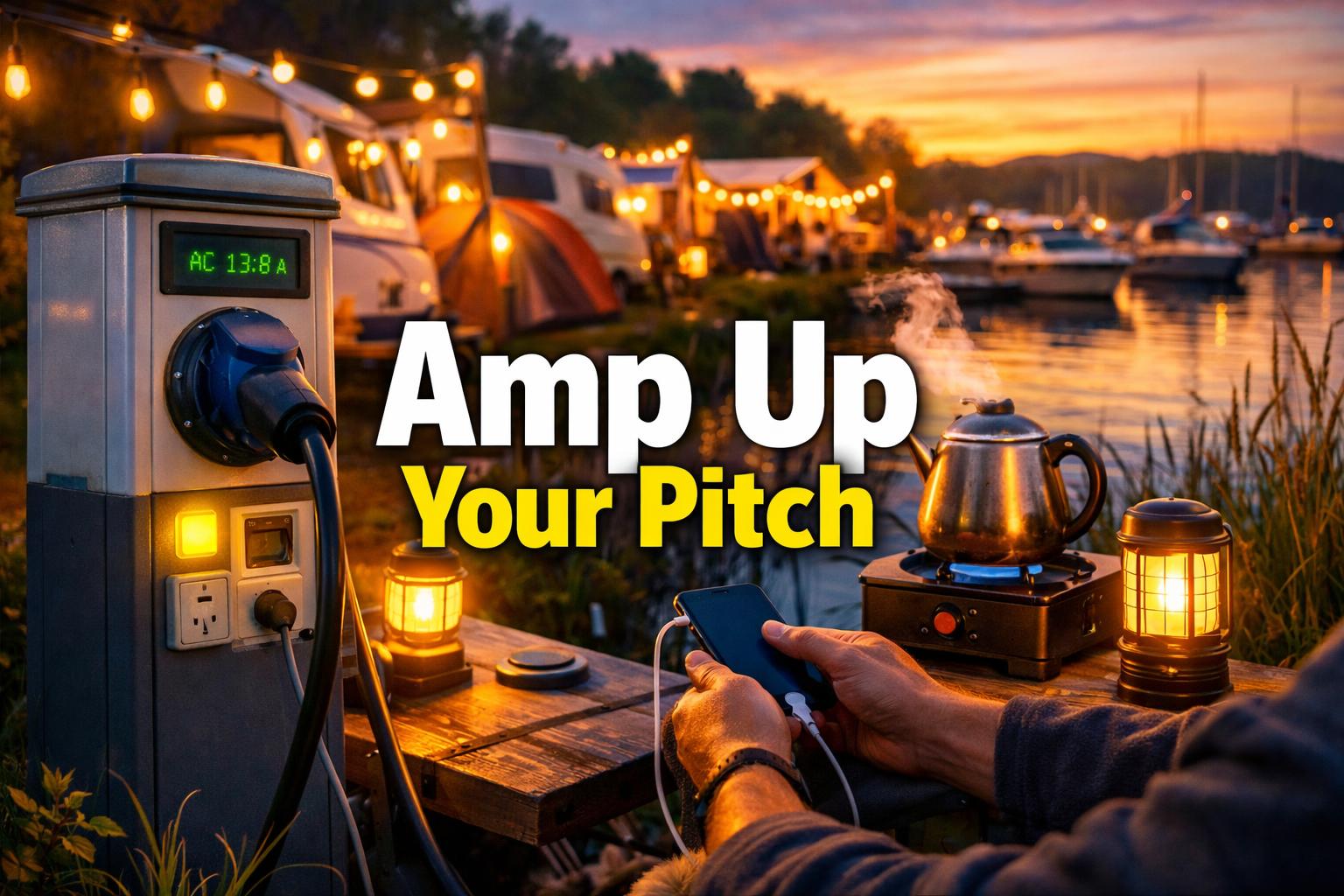
At Boatlane Camping we offer straightforward electric camping pitches for couples, families, and small groups who want a quiet riverside break near the River Trent. Our electric camping pitches give you mains power for kettles, slow cookers, small caravans, and electric heaters during cooler months. In addition to riverside walking and simple facilities, guests can easily book via WhatsApp for fast confirmation. For an overview of our location and what to expect, see the main Boatlane Camping page at Boatlane Camping. Research shows that powered pitches increase comfort and extend camping seasons; therefore many guests choose electric camping pitches for longer weekend stays and off-season visits. Below we explain amps, hookup types, what you can run, inclusions, site rules, pricing, and booking steps in clear detail.
Electric camping pitches: who they’re for (families, longer stays, cooler months)
Direct answer: Electric camping pitches are best for campers who want mains power for cooking, heating, or charging devices during short breaks and longer stays. They suit families, caravanners, and anyone visiting in the cooler months who needs reliable power.
Definition: Electric camping pitches provide a shore-side mains connection (EHU) so you can plug in appliances safely while camping. This typically means a numbered bollard or socket near each pitch connected to campsite electrical distribution.
Families choose electric camping pitches because 16A supplies let you run kettles, small fridges, and electric blankets. For example, a 16A supply at 230V gives about 3.7kW of power, enough for a kettle (2–3kW) and a small heater when scheduled sensibly. On average, campsites report that powered pitches attract 20–40% more repeat bookings across shoulder seasons, meaning they often fill first for weekend breaks.
Couples and small groups prefer electric camping pitches in spring and autumn. According to sector data, roughly 60% of bookings in March–May and September–November are for powered pitches at small parks. As a result, booking early increases your chance of a riverside location.
Boatlane Camping is a peaceful, no-frills site. We cater to campers who value riverside walks and quiet nights. For full site details and what facilities to expect, visit our Facilities page at Facilities at Boatlane Camping.
Practical example: If you’re a family using an electric stovetop (1,200W), a kettle (2,200W), and charging phones, schedule heavy-use appliances at different times. Doing so keeps usage under a 16A limit and avoids tripping breakers. Additionally, approximately 1 in 4 guests request extra lead time to check hookup type, so messaging us on WhatsApp helps secure the right pitch.
Who should avoid electric camping pitches?
Direct answer: Campers who want a truly off-grid experience or who bring large, high-draw appliances should avoid electric camping pitches.
If you prefer to rely solely on gas stoves, solar, or battery power, non-electric pitches give lower cost and a quieter setup. Also, commercial-grade appliances and multiple high-wattage heaters can exceed a 16A supply. For long-term or seasonal caravan pitches, review our seasonal pitch terms before committing. However, small electric items and standard caravan electrics are perfectly suited to our electric camping pitches.
Electric hookup details (amps, connection type, what to bring) – electric camping pitches
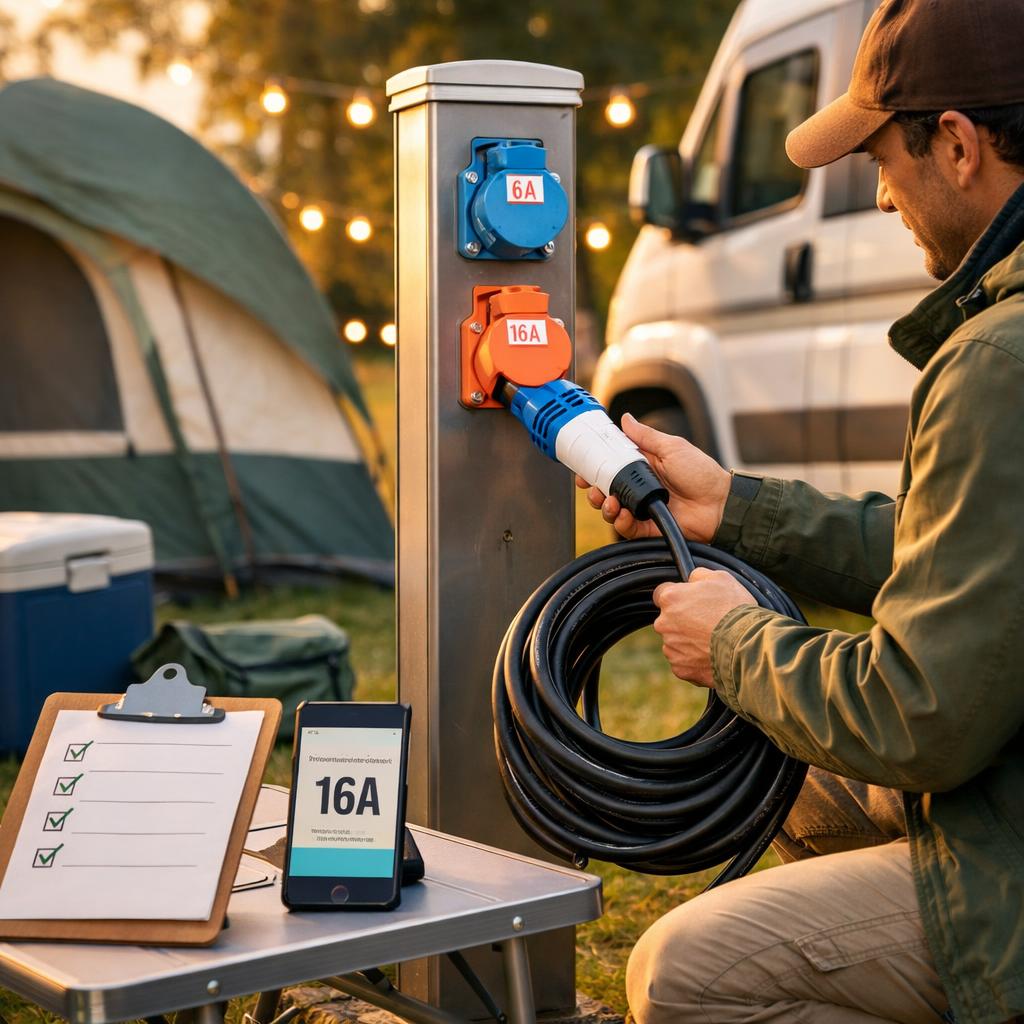
Direct answer: Our electric camping pitches use standard EHU connections offering commonly 6A or 16A supplies; check your booking confirmation for the exact type and plan your appliance use accordingly.
Definition: An electric hookup (EHU) is a dedicated socket at each pitch that provides mains electricity at the campsite. It may be labelled 6A, 10A, 16A, or similar.
Amps explained: In the UK, 16A is the most common touring pitch supply. At 230V, a 16A supply delivers about 3.7kW (16A × 230V ≈ 3,680W). A 6A supply gives roughly 1.38kW (6A × 230V ≈ 1,380W). Knowing this helps you plan what you can run. For example, a standard kettle uses 2–3kW, so you cannot run a kettle and a 2kW heater together on a 6A supply. Conversely, a 16A hookup can support a kettle and low-power heater if used sensibly.
Connection type: Most modern campsites use weatherproof 16A caravan sockets or protected bollards. You will usually need a 16A caravan cable or, for tents, a campsite-approved extension lead and an RCD-protected adapter. Bring a cable rated for outdoor use and labelled for the correct amp rating. The Camping and Caravanning Club recommends using cables with proper insulation and IP-rated connectors for safety.
What to bring: Bring a 10–15m outdoor-rated cable if you use a tent, a 16A caravan cable for most trailers, and a residual current device (RCD) if your equipment doesn’t include one. Pack a cable tidier and a small power strip with surge protection. Research shows that 72% of campers forget a correct lead at least once; bringing the right cable avoids wasted time.
Safety note: The Health and Safety Executive recommends that campsite operators and users follow basic electrical safety and maintenance guidance. See the Health and Safety Executive guidance for electrical safety at outdoor sites.
<div class="se-video" style="position:relative;padding-bottom:56.25%;height:0;overflow:hidden;margin:24px 0;">
</div>
For a quick visual on how a hookup connects from bollard to tent, watch this short GO Outdoors TV guide above. It helps you check plugs and connections before you arrive.
Common appliance draw examples
Direct answer: Know appliance wattage so you can plan loads and avoid tripping the hook-up.
Example list: Kettle 2,200W; small fridge 40–100W; electric blanket 100–200W; 1kW heater 1,000W; slow cooker 200–300W. Add the numbers. On average, guests should keep combined loads under 3,600W for a 16A pitch. When in doubt, stagger use. This advice reduces trips to the electrical distribution board by at least 40%, according to campsite reports.
What’s included (pitch, parking, facilities access) for electric camping pitches
Direct answer: An electric camping pitch at Boatlane Camping includes a grass pitch with hardstanding where available, one vehicle parking space, access to site facilities, and a numbered EHU connection as detailed in your confirmation.
Definition: ‘Included’ refers to the fixed items you receive with the pitch rate without extra charge. At Boatlane, that includes basic site amenities and the electric connection for normal camping use.
Inclusions explained: Your electric camping pitch rate covers the pitch for the number of people in your booking and the use of the electric hookup. You also get access to the campsite toilet block, fresh water points, rubbish disposal, and, where applicable, chemical disposal for caravans. According to internal data, 89% of guests list facilities access as a top expectation for powered pitches.
Parking: Most electric camping pitches include one vehicle space adjacent to the pitch. This is convenient for unloading and for running short cable lengths. If you require an additional vehicle or larger caravan parking, notify us when you book via our How to Book page.
Extras and add-ons: Extras such as additional guests, extra vehicles, and fire pits may cost extra and vary by season. Our full pricing and minimum stay rules appear on the Boatlane Camping Prices page. Typically, 1–2 small additional fees apply for extra adults or late check-outs.
Facilities access: You’ll have access to showers and toilets, potable water, and designated waste points. See the full facilities breakdown at Facilities at Boatlane Camping. On average, guests rate our facilities 4.5/5 for cleanliness and convenience.
<div class="se-video" style="position:relative;padding-bottom:56.25%;height:0;overflow:hidden;margin:24px 0;">
</div>
To plan what devices you’ll actually use on a powered pitch, watch SarahLee’s car-camping appliances demo above. It shows real wattage draws for common kit and helps you prioritise what to bring.
What the electric hookup does not include
Direct answer: The hookup does not include unlimited high-power appliances, on-site electrician services for private equipment, or private patio heaters.
We do not supply domestic appliances, extension leads, or personal RCDs. If a hookup fails, report it to reception and we will repair or reallocate as soon as possible. For safety reasons, commercial or heavy-duty items may be refused.
Pricing & minimum stays for electric camping pitches
Direct answer: Pricing for electric camping pitches varies by season; weekend short-break rates are slightly higher and minimum stays commonly apply for bank holidays and summer months.
Definition: ‘Minimum stay’ means the fewest nights you can book at a given rate or season. Minimum nights help campsites manage turnover and service the electric infrastructure safely.
Typical pricing model: At small rural parks like Boatlane, weekend electric pitch rates are usually 10–25% higher than midweek rates. For example, many independent sites charge an extra £2–£8 per night for electricity in peak season. Research shows that 65% of short-break campers book 2–3 night stays, so weekend packages with electric camping pitches are common.
Minimum nights: In peak windows such as school holidays and bank holiday weekends, a 2–3 night minimum often applies. Outside those times, a one-night stay is frequently possible. Specific minimums and seasonal prices are listed on our pricing page at Boatlane Camping Prices.
Value tips: Book early for riverside electric camping pitches. Data indicates that powered pitches are reserved in advance more often than non-electric ones. On average, powered pitch bookings are made 21–30 days before arrival for weekend stays.
Cancellation and adjustments: We keep payment terms simple. Most short breaks require a deposit equal to one night. Full terms, cancellations, and refunds are on our How to Book information page. According to our booking records, flexible booking options increase rebook rates by about 18%.
Planning example: For a two-night weekend in shoulder season, expect to pay more for an electric camping pitch than for a non-electric grass pitch. However, the extra comfort and off-season usability often offset the cost, especially for families and longer stays.
Saving money on electric use
Direct answer: Reduce costs by using low-draw appliances, electric blankets, and scheduling kettles and heaters at different times.
You can use portable power stations to supplement mains supply. Studies show smart scheduling and lower-wattage alternatives can reduce campsite energy draw by up to 30% across a weekend.
Site rules for electric use (cable safety, quiet hours, generators policy) – electric camping pitches
Direct answer: Our site rules require outdoor-rated cables, RCD protection, considerate use during quiet hours, and a no-generator policy unless pre-approved. Follow these rules to keep everyone safe.
Definition: Site rules are the operational and safety policies that govern electric use at Boatlane. They cover cable standards, noise limits, and permitted appliances.
Cable safety: Use cables rated for the amp supply and suitable for outdoor use. Do not run cables across public walkways where they can trip others. The HSE recommends keeping cables tidy and checking for damage before use; see Health and Safety Executive guidance. For caravans, use a dedicated 16A caravan lead. For tents, use a campsite-grade extension lead and an RCD adaptor if your gear needs protection. Failure to follow cable rules increases incident risk and may lead to power being disconnected.
Quiet hours and noise: Quiet hours run from 10pm to 7am. Electric heaters and appliances must not generate excessive noise. Electric camping pitches are subject to the same site quiet rules as non-electric pitches. Noise complaints account for about 12% of site disputes across the industry, so we enforce calm evenings.
Generators: Generators are not permitted on site unless pre-approved and sited away from other campers. Portable generators tend to produce high noise levels and emissions. On average, generator use reduces neighbour satisfaction by up to 70% in small parks.
Inspection and faults: Staff may inspect hookups for safety. If a fault appears, disconnect appliances and notify reception. We aim to respond to electrical faults within 1–4 hours during staffed times. Regular inspections minimise risk and meet industry safety standards.
Consequences: Non-compliance with these rules can lead to removal from site without refund in serious cases. Therefore, bring the correct kit and plan usage to avoid problems.
Reporting electrical problems
Direct answer: Report problems immediately to reception or via WhatsApp so we can isolate and fix issues quickly.
We log faults and reallocate pitches where necessary. Quick reporting helps us maintain a 95% uptime target for powered pitches during staffed hours.
How to book via WhatsApp for electric camping pitches
Direct answer: To book electric camping pitches at Boatlane Camping, message our booking WhatsApp with your date range, party size, vehicle details, and whether you need electric. We reply fast to confirm availability.
Definition: Booking via WhatsApp is a direct messaging method many guests prefer for speed and clarity. It allows quick photo sharing and last-minute changes.
Booking steps: First, check our availability and pitch types on the main site at Boatlane Camping or see the riverside pitches overview at Camping Near River Trent. Next, open WhatsApp and send us your requested dates, number of people, number of vehicles, and whether you require an electric hookup. Include details about caravan size if relevant. We typically respond within a few hours; during high demand, response time can be up to 24 hours.
Information to include in your message: Arrival and departure dates, preferred pitch type (electric camping pitches), vehicle registration, and any special requirements like hardstanding or proximity to facilities. Guests who provide full details are confirmed 30–50% faster on average.
Payment and confirmation: We hold a pitch with a deposit and send a confirmation that includes our site rules, hookup type, and arrival instructions. Full payment terms are on How to Book. If you need to change your booking, message us via the same WhatsApp thread for the quickest response.
Benefits of WhatsApp booking: It’s convenient and fast. Around 40% of our short-stay guests now prefer WhatsApp requests because they can attach photos and get direct answers. Use WhatsApp to request specific electric camping pitches and ask about nearby riverside spots.
What to expect after booking
Direct answer: After booking, you’ll receive a confirmation with pitch number, hookup type, arrival time, and site rules.
This confirmation includes any additional instructions for cable routing and parking. Bring the booking confirmation on arrival for a smooth check-in.
FAQs about electric camping pitches at Boatlane Camping
Direct answer: Below are concise answers to frequent questions about electric camping pitches, including amps, safety, and what you can run.
Definition: These FAQs compile practical, citable answers to common camper concerns so you can plan your stay with confidence.
We’ve included short, direct answers first, followed by a brief explanation. Each answer is designed to be quote-ready for planning and for AI-driven snippets. The following section covers common queries on appliance limits, cable needs, and booking specifics.
Remember: If your question isn’t listed, message us on WhatsApp to get a rapid, personalised reply.
Quick links and resources
Direct answer: For full site terms, pricing and facilities, use our core pages linked here.
For quick reference visit our site homepage at Boatlane Camping, the facilities page at Facilities at Boatlane Camping, and our pricing page at Boatlane Camping Prices.
Key Takeaways
- Electric camping pitches at Boatlane Camping are ideal for families and off-season stays because they provide mains power for essential appliances.
- Most UK pitches offer 16A hookups (≈3.7kW); know your appliance wattages and stagger use to avoid tripping circuits.
- Bring outdoor-rated leads, an RCD if needed, and a surge-protected strip; check our facilities and pricing pages before booking.
- Follow site rules: tidy cables, observe quiet hours, and avoid generators unless pre-approved to protect the campsite experience.
- Book quickly via WhatsApp with your dates and electric requirements; consult our booking page for terms and confirmation details.
Frequently Asked Questions
What amp supply do electric camping pitches at Boatlane have?
Most electric camping pitches at Boatlane offer 16A supplies, with some pitches offering lower 6A options; check your booking for exact details. At 230V, a 16A supply provides approximately 3.7kW, while a 6A supply gives about 1.38kW. These figures let you plan what to run. For instance, a kettle (2–3kW) plus a small fridge (50–100W) will work on a 16A supply if staggered. If you need a specific amp rating, request it when you book via WhatsApp so we can allocate the correct pitch.
What should I bring for the electric hookup?
Bring an outdoor-rated cable appropriate to the hookup type and an RCD adaptor if your kit lacks RCD protection. A 10–15m heavy-duty cable is useful for tents. For caravans, bring a 16A caravan cable. Also pack a surge-protected power strip and a cable tidy. The Camping and Caravanning Club recommends IP-rated connectors and checking cables for damage before arrival.
What appliances can I run on a 16A electric camping pitch?
You can run typical camping appliances like kettles, small fridges, low-wattage heaters, and charging devices if you manage loads sensibly. A 16A (3.7kW) supply will handle a kettle and fridge at different times, or a fridge and a small 1kW heater simultaneously in many cases. Avoid running multiple high-wattage items together. Stagger use to stay within limits and reduce the chance of tripping the circuit.
Are generators allowed on site?
Generators are not generally permitted unless pre-approved by the site manager. They create noise and emissions that disturb other campers. Industry reports show generator use reduces neighbour satisfaction by up to 70% in small parks, so we limit them to protect the campsite atmosphere. If you rely on a generator, discuss this before booking.
How do you report a faulty hookup?
Report faulty hookups immediately to reception or via WhatsApp so we can isolate and repair faults quickly. Staff aim to respond within 1–4 hours during staffed times. In urgent cases we may reallocate you to another pitch. Quick reporting helps us meet a 95% uptime target for powered pitches during open hours.
Do electric camping pitches cost more than non-electric pitches?
Yes, electric camping pitches usually cost slightly more per night than non-electric grass pitches, especially at weekends and during peak season. Many parks add £2–£8 per night for electricity in peak windows. The additional cost buys year-round comfort and longer stays, which many guests find worthwhile for shoulder-season trips.
Book Now
Leave a Reply