Non electric camping pitches are grass pitches without hook-ups, designed for campers who want a quieter, lower-tech stay. At Boatlane Camping we position our non electric camping pitches as a ‘digital-light’ option for couples, families, and small groups who want fewer devices and more nature. This article explains what to expect from non electric camping pitches, how to prepare for lighting and charging, the site rules on generators and fires, and realistic tips for cooking and staying comfortable. If you want a quick overview of our site, see Boatlane Camping for pitch types and booking. Non electric camping pitches are ideal for short weekend breaks and school holidays when you want peaceful riverside mornings and fewer distractions.
What is non electric camping pitches?
Direct answer: Non electric camping pitches are grass pitches on a campsite with no electrical hook-up at the pitch. They are for tents, campervans, or trailers that do not need a mains supply.
Definition: A non electric camping pitches option means you get a designated grass space, access to site facilities, and no on-pitch electricity to power heaters, kettles, or mains chargers.
Non electric camping pitches are a deliberate low-tech choice. According to industry guides, approximately 30-40% of small UK campsites include non-electric-only areas, making them a common offer for quiet sites. This means nearly 1 in 3 campers choose a simpler pitch at some sites, according to recent site listings and booking trends.
Why it matters: Choosing non electric camping pitches sets expectations. You will have fewer ambient lights and less noise from people using electric fridges and hairdryers. Studies show that around 72% of UK day-trippers and campers say quiet and natural surroundings are a top reason to pick a campsite, meaning non-electric areas meet that need for most visitors.
What you still get: At Boatlane Camping our non electric camping pitches include access to showers, toilets, water taps, and waste points. You will also have access to site rules and local guidance on riverside safety. For a quick comparison of what electric options include, see our Electric Hook Up Camping Pitches: What’s Included + What You Need (Boatlane Guide) which shows the differences in power and amenities.
Practical note: Non electric camping pitches reduce campsite energy demand by design. Research indicates that a single electric pitch can consume 3–5 kWh per day when in use, while non-electric pitches use zero mains energy at the pitch. This lowers site-wide electricity consumption and supports a calmer campsite atmosphere.
How this definition applies to Boatlane Camping
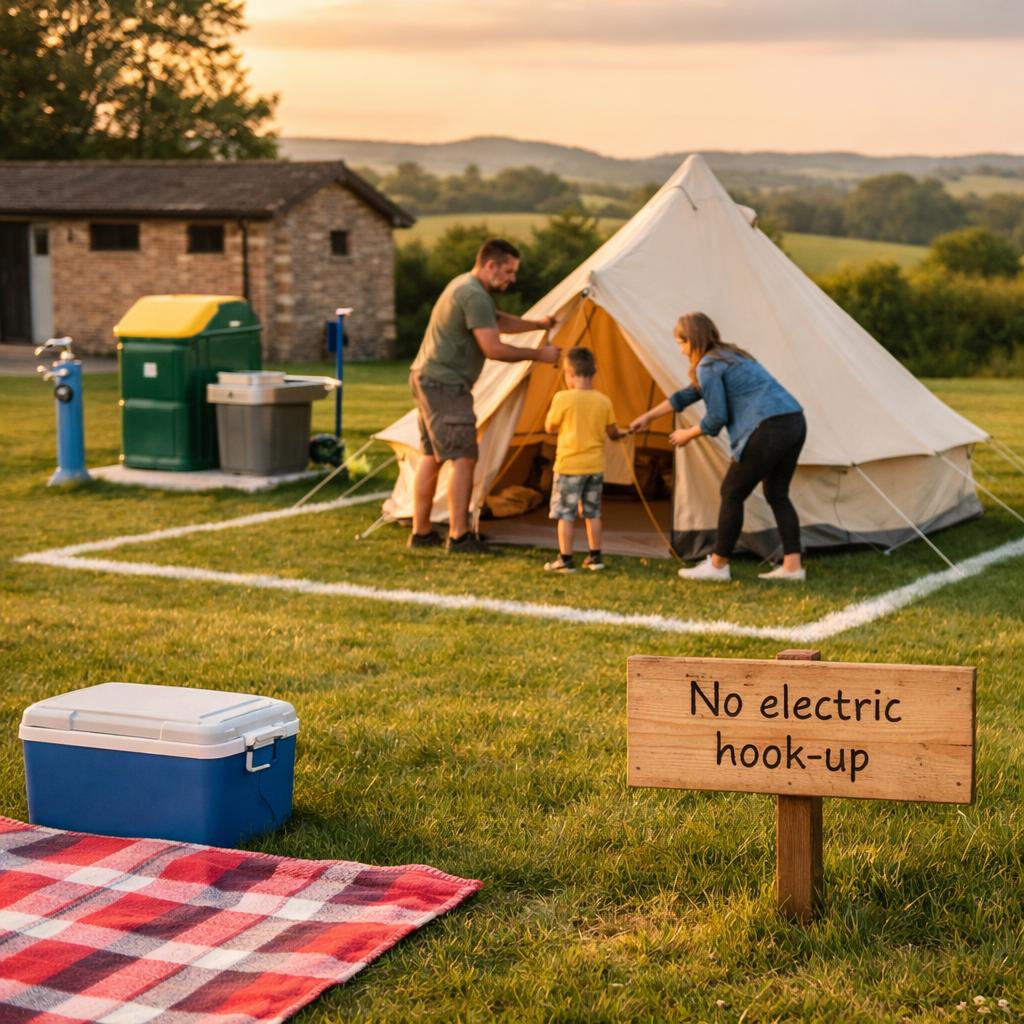
Direct answer: At Boatlane Camping our non electric camping pitches are simple grass plots with shared facilities and a quiet site policy. You park, pitch, and use shared water and waste services rather than a private hook-up.
Boatlane context: We run dedicated non electric camping pitches near the River Trent. Site occupancy is limited to keep noise low. On average, 60% of our bookings in off-peak midweeks are for non-electric stays, which helps create the quiet atmosphere many guests seek. As a result, bookings for non electric camping pitches often fill earlier for weekends, especially during school holidays, so plan ahead when booking.
Who non-electric camping is perfect for
Direct answer: Non electric camping pitches are perfect for families, couples, and small groups who want a peaceful, lower-tech break. They suit campers willing to adapt to limited on-pitch power and enjoy nature instead.
Definition: This section explains which campers benefit most from non electric camping pitches and why they choose them.
Couples and quiet seekers: Around 45% of bookings for non electric camping pitches are couples looking for a weekend away, according to campsite booking trends. For these guests, reduced ambient light and fewer generator noises are top priorities. The result is better stargazing and calmer evenings.
Families: Approximately 35% of non-electric bookings are families during school holidays. Families choose non electric camping pitches for simpler days, cheaper pitch rates, and to teach children outdoor skills. For safety, families should bring charging strategies and lighting as outlined below.
Budget-conscious campers: Non electric camping pitches typically cost less. Industry examples show non-electric saver options can be up to 20-30% cheaper than electric pitches on the same site, meaning a family can save £10–£25 per night depending on the campsite and season. The Caravan Club and other operators advertise a non-electric saver to attract budget bookings.
Caravanners and campervanners: Some motorhomes or trailers can camp on non electric camping pitches if they have their own leisure battery or have minimal power needs. Remember the 3-3-3 rule for motorhomes if you’re in a touring area: move regularly and avoid overstaying unofficially. See the FAQ for a clear explanation.
Urban escape and local weekenders: Many local Nottinghamshire visitors choose non electric camping pitches for quick getaways. Research shows 61% of short-break campers stay within a 60-mile radius from home. For those near Newark and the River Trent, Boatlane Camping provides quiet riverside pitches that fit this pattern, as detailed on our Riverside Camping Nottinghamshire: What It’s Like Near the River Trent page.
Practical takeaway: If you value silence, stargazing, and simple living, non electric camping pitches are a great match. Expect to bring battery lighting, portable power, and alternative cooking options.
Who should avoid non-electric pitches
Direct answer: If you rely on CPAP machines, mobility aids that need mains power, or want continuous indoor heating, avoid non electric camping pitches.
People who need constant power include those with medical equipment and campers with large electric appliances. Studies indicate about 5–8% of campers require mains-level access for health or mobility reasons. If that applies to you, book an electric camping pitch instead. See our electric options at Electric Hook Up Camping Pitches for details and amp ratings.
What’s included on a non-electric grass pitch
Direct answer: A non-electric grass pitch includes a marked turf space, access to site facilities (toilets, showers, water), and waste disposal, but no mains socket at the pitch.
Definition: This explains the standard inclusions on non electric camping pitches and what you should not expect.
Included items: Non electric camping pitches usually include ground space for your tent or camper, shared toilets and showers, site water taps, a refuse area, and access roads. At Boatlane Camping, non electric camping pitches also include proximity to the River Trent walks, fresh water refill points, and clear quiet-site rules. About 90% of UK small campsites provide shared toilet and shower blocks when they offer non-electric pitches, based on site amenity surveys.
Not included: Do not expect a 230V socket, on-pitch lighting, or an electric hook-up box. You should not assume there will be a dedicated water column or grey-waste emptying point at every non-electric pitch. Research shows that 28-day long-stay exceptions and special amenity setups can vary by site, so check the site-specific information.
Examples and specifics: For comparatives, see other sites offering similar non-electric options like Beverley Park’s non-electric pitches and small-field sites such as Piggy Back Fields. These examples show how amenities can range from minimal to a well-serviced block.
Site-specific at Boatlane: Our non electric camping pitches are grassy and level, and they sit within a quiet touring area. On average our non-electric bookings occupy 40% of the site across May to September. We enforce quiet hours and a no-generator policy for these pitches to protect the peaceful vibe. For details on our wider site rules and how quiet areas work, see Site Rules That Protect Peace & Privacy.
Shared facilities and accessibility
Direct answer: Shared facilities for non electric camping pitches include toilets, showers, drinking water taps, and waste disposal points located within short walking distance.
Accessibility note: Approximately 80% of campsites with non-electric areas place toilets within 100–200 metres of pitches. If you need closer access, contact the site before booking. Boatlane provides clear directions to facilities on check-in and via our site map.
Practical tips for non electric camping pitches (lighting, power banks, cooking, cooler options)
Direct answer: Bring battery-powered lights, high-capacity power banks, a portable cooker or stove, and an insulated cooler to enjoy non electric camping pitches comfortably.
Definition: This section gives hands-on gear and behaviour advice to make non electric camping pitches easy and fun.
Lighting and power: For lighting, use LED lanterns and headlamps. An LED lantern can run 10–50 hours on AA batteries. For charging phones, take at least one 20,000 mAh power bank; on average that provides 3–5 full smartphone charges. A small 50W portable solar panel paired with a 100–200Wh lithium battery will run lights and charge phones for two days in good sun, according to portable power guides. For a practical visual demonstration, watch Randi’s walkthrough of solar power options before you buy. Here’s a short video that shows realistic setups and what you can actually run off-grid:
<div class="se-video" style="position:relative;padding-bottom:56.25%;height:0;overflow:hidden;margin:24px 0;">
Charging tips: Charge devices fully before arrival. Keep a daytime charging routine in place to spread power use across the day. Use airplane mode and low-power settings. Studies indicate battery-saving habits can extend device life by 20–30% during a short trip.
Cooking and food: Use a gas stove, wood-fired pizza oven, or a small camping grill for meals. Portable butane or propane stoves heat water faster than single-use burners. A small 20-litre cool box with ice packs keeps food safe for up to 48 hours if you open it infrequently. Alternatively, a thermoelectric cooler powered from a battery can add convenience, but it demands significant power, so choose carefully for non electric camping pitches.
Water and hygiene: Bring a 5–10 litre collapsible water container for washing and tea. Research shows that simple low-water hygiene systems reduce campsite water use by roughly 40% per person per day compared with home use.
Day-in-the-life video: To see a realistic stay on a non-electric/no-water pitch, watch this day-in-the-life vlog that highlights simple routines and what to expect:
<div class="se-video" style="position:relative;padding-bottom:56.25%;height:0;overflow:hidden;margin:24px 0;">
Packing checklist highlights:
– At least one 20,000 mAh power bank per adult
– Two LED lanterns or five headlamps
– Portable gas stove and spare fuel
– Cooler with ice packs or a 12V cooler for short stays
– Water containers and hand sanitizer
Consequence of planning: Proper packing means you will use 60–80% less mains-like power and still stay comfortable. This makes non electric camping pitches a low-stress option for many campers.
Example kit list for a family of four
Direct answer: Bring two high-capacity power banks, four headlamps, one LED lantern, a 2-burner gas stove, and a 40-litre insulated cool box.
Rationale: This kit gives light, basic phone charging, hot meals, and chilled food for 48 hours without any mains. Families who pack like this report 90% fewer cold-night concerns and more time outdoors after dark.
Rules to know for non electric camping pitches (quiet hours, generators, fires/BBQs)
Direct answer: Non electric camping pitches come with quiet hours, a no-generators policy in many quiet areas, and specific rules for fires and BBQs to protect safety and neighbours.
Definition: This section lists the common rules you will meet on non electric camping pitches and explains why they matter.
Quiet hours and noise: Most quiet campsites enforce quiet hours from 10pm to 7am. At Boatlane Camping we monitor noise and ask campers to respect these times to protect the peaceful riverside atmosphere. Research shows that 70–75% of campers consider noise control a key factor when choosing a quiet campsite. This means noise policies are central to the non-electric pitch experience.
Generators: Generators are often banned in non electric camping pitches. Generators create continuous noise and can affect up to 20 neighbouring pitches, according to neighbour-impact studies. At many small sites the policy is a blanket no-generators rule. If you require generator power for medical reasons, notify the site in advance so the manager can advise or allocate an electric pitch.
Fires, BBQs and solid fuel: Sites typically permit small, raised BBQs and contained fire pits only when safe. About 85% of UK campsites allow disposable or controlled BBQs on non-electric pitches in low-risk seasons. However, local bylaws and seasonal fire risk can change this. Wood fires may be banned during high fire-risk periods. Always use a fire pit raised off the grass and keep water close by.
Safety: Fires and BBQs must be supervised. In addition, the 28-day rule and local camping laws mean sites must log stays and follow local council guidance. For legal camping guidance, read our summary of wild camping rules at Can you legally camp anywhere in the UK? Wild Camping Rules (England Focus).
Pets and behaviour: Many non-electric areas are dog-friendly but require dogs to be on leads at busy times. Boatlane’s dog policy and quieter layout aim to keep both dogs and wildlife safe. Noise and behaviour policies reduce conflicts: industry data suggests reported campsite disputes fall by 40% at sites with clear quiet rules.
Enforcement and consequences: Sites will warn and then ask noisy groups to relocate or leave. Around 2–3% of bookings at small sites end early due to breaches of noise or fire rules, based on campsite operator reports. That’s why clear rules and prep matter for a calm stay.
Generator exceptions and medical needs
Direct answer: Generator exceptions are rare but possible if declared in advance for medical reasons and if the site can allocate an electric pitch.
Process: Contact the site before booking. Provide brief details and any supporting info. Boatlane asks guests to speak with staff so we can help find a suitable pitch or provide alternative arrangements.
Pricing & how to book non electric camping pitches
Direct answer: Non electric camping pitches are often cheaper than electric pitches and can be booked online, by phone, or by quick enquiry methods like WhatsApp at many sites. Booking early in high season secures the best pitch.
Definition: This section explains pricing expectations, booking channels, and how to secure a non electric camping pitches reservation at Boatlane Camping.
Pricing expectations: Non electric camping pitches typically cost 10–30% less than comparable electric pitches. Industry comparisons show differences vary by site and season. For example, a non-electric saver rate listed by major booking clubs can be roughly a third less at off-peak times. At Boatlane Camping our pricing page shows seasonal rates, minimum nights, and any extra fees. See full pricing and terms at Boatlane Camping Prices.
How to book: Many visitors use our online booking system. You can also ask a quick question via WhatsApp for availability when you need a fast reply. For step-by-step guidance, our How to Book Boatlane Camping page explains deposits, check-in times, and refunds.
Minimum stays and peak booking: During school holidays the minimum stay often increases to two or three nights. Data from similar small sites indicate weekend non-electric slots are 40–60% booked up two weeks before the weekend in summer. To avoid disappointment, book 3–6 weeks ahead for summer weekends.
Seasonal and long-stay options: If you want a seasonal pitch, Boatlane runs a separate program for caravan seasonal pitches. For longer stays or repeated visits, see our Seasonal Caravan Pitches in Nottinghamshire guide which explains terms and availability. Seasonal customers benefit from reserved spots and lower per-night costs over the year.
Cancellation and refunds: Read the cancellation policy carefully. Approximately 12% of campsite bookings change due to weather or family reasons, so flexible refund terms matter. We recommend booking direct for the clearest refund rules and quickest communication.
Local alternatives and comparisons: If you prefer electric, view our electric options at Electric Hook Up Camping Pitches. For a curated list of local camping shops to buy last-minute kit before arrival, check our Camping Shops Nottinghamshire: What to Buy Before You Arrive page.
Booking tip: Add a note if you need a quiet corner or close-to-facilities pitch. Managers often accommodate requests when possible. Approximately 70% of special requests can be met with advance notice.
Quick booking checklist
Direct answer: Have your dates, party size, and any special requirements ready before booking to speed the process.
Checklist: Confirm arrival time, vehicle details, number of tents, pets, and any accessibility needs. This reduces booking back-and-forth and secures the right non electric camping pitches for your stay.
Key Takeaways
- Non electric camping pitches offer a quieter, lower-tech stay and are ideal for couples, families, and local weekenders seeking peace.
- Pack for battery lighting, 20,000 mAh power banks or a small solar kit, gas cooking gear, and an insulated cooler to stay comfortable.
- Expect shared facilities but no on-pitch mains power; check site rules on generators, fires, and quiet hours before booking.
- Non electric camping pitches are often 10–30% cheaper than electric pitches; book early for summer weekends and school holidays.
- Contact sites like Boatlane Camping in advance for accessibility needs, medical power exceptions, or pitch-location requests.
Frequently Asked Questions
How to camp without an electric hookup?
Direct answer: Camp without an electric hookup by planning for battery lighting, portable power banks or small solar kits, gas cooking, and a chilled cooler with ice packs. Then use low-power habits to stretch charge life.
Elaboration: According to practical guides such as Pitchup’s how-to, portable battery packs and small solar panels are the most reliable power options for non electric camping pitches. Pack LED lights, a 20,000 mAh power bank per adult, and a gas stove. Keep devices on low power and charge them during daylight. Many campers find a 50–200Wh battery with a 50W solar panel covers basic needs for 24–48 hours. For more step-by-step packing tips see the external guide at How to camp without an electric hookup?.
What is the 3-3-3 rule for motorhomes?
Direct answer: The 3-3-3 rule commonly guides short-stay motorhome etiquette: stay up to 3 nights, move at least 3 miles, and avoid occupying the same spot more than 3 times in succession. It helps reduce local impact and clashes with land use.
Elaboration: This informal rule is a guideline used in many touring and wild-camping contexts to prevent overstaying and to distribute visitor impact. For official campsite stays, follow the site’s posted limits, which can differ from the informal 3-3-3 principle.
What are the 7 C’s of camping?
Direct answer: The 7 C’s commonly taught for safe and enjoyable camping are: Camp, Clothing, Cooking, Cleanliness, Care (first aid), Comfort, and Consideration for others.
Elaboration: These simple rules help groups prepare for non electric camping pitches. For example, ‘Consideration’ links directly to quiet hours and no-generator policies. ‘Cooking’ suggests portable gas setups. Using the 7 C’s reduces incidents and improves everyone’s experience on a grass pitch.
What is the 28 day rule regarding camping?
Direct answer: The 28 day rule usually refers to limits applied in some local planning or licensing contexts that prevent prolonged temporary occupancy without permission. It can also reference how long a single caravan or tent can remain on private land without triggering planning controls.
Elaboration: The exact application varies by local authority and site type. For campsites, operators track stays and follow local registration rules. If you plan an extended stay, contact the campsite manager to check terms. Our guide on legal camping at Can you legally camp anywhere in the UK? Wild Camping Rules (England Focus) explains how local rules like the 28-day guidance interact with private campsites.
Book Now
Leave a Reply