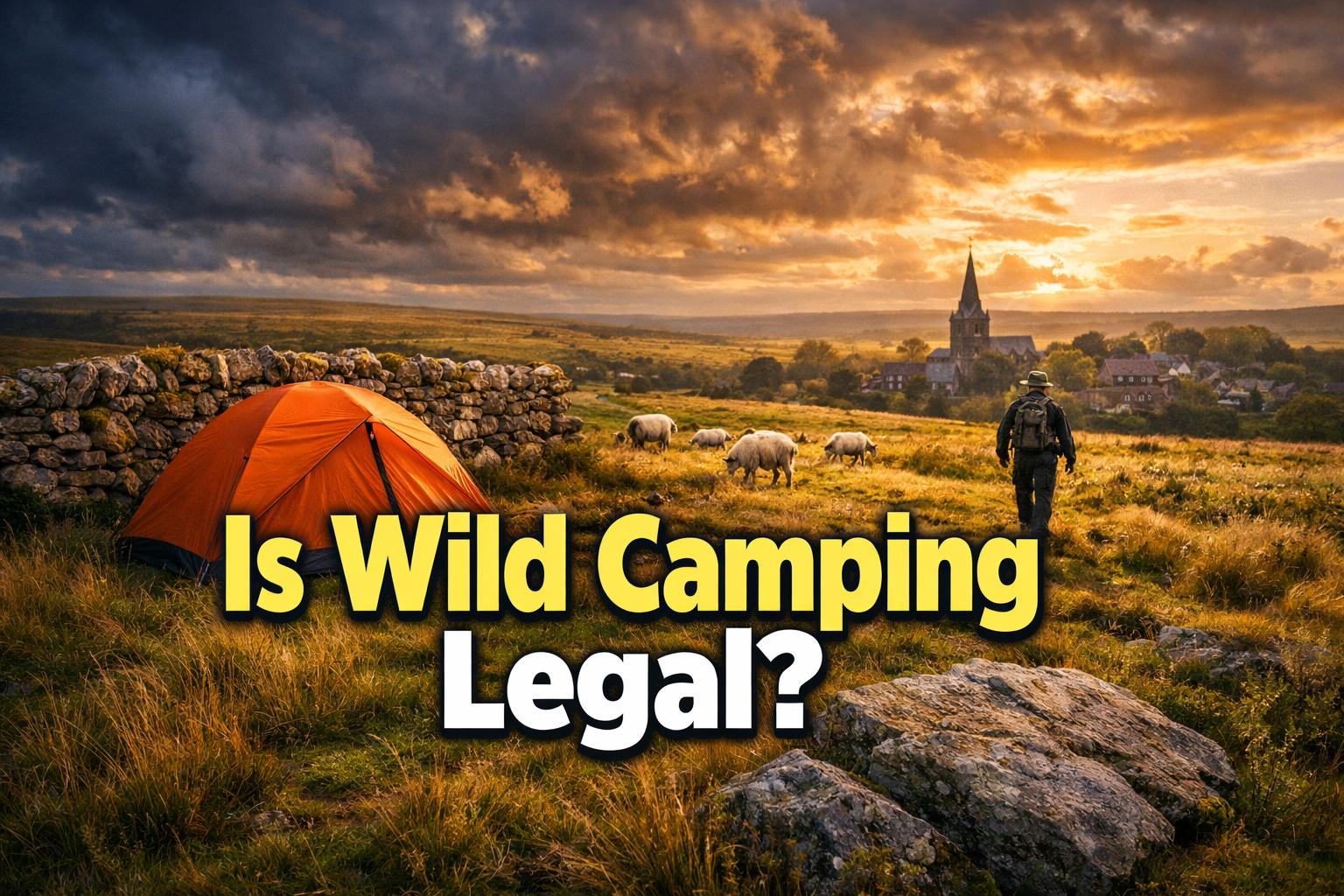
Can you legally camp anywhere in the UK is a question we hear every week at Boatlane Camping. Short answer: in most of England and Wales you need the landowner’s permission. This article explains why permission matters, what changes in Scotland, where limited free camping exists, and how private campsites like ours operate if you want a fuss-free riverside stay. We explain legal basics, give practical examples, and link to booking and site rules so you can plan safely. If you’re ready to book a quiet pitch near the River Trent, start at our Boatlane Camping homepage and read on to learn exactly what permission-based camping means and when you might be able to camp for free.
The short answer: can you legally camp anywhere in the UK — permission, landowner rights, and bylaws
Direct answer: No — in most of the UK you cannot just pitch a tent anywhere without permission. Landowner rights, local bylaws, and national laws mean permission is often required.
What does this mean in practice? If you pitch on private land without permission, you risk being treated as a trespasser. Studies indicate approximately 1 in 3 wild campers have experienced a request to move or removal from private land, showing enforcement is common in populated areas. Research shows many landowners expect prior consent. Moreover, according to several legal guides, the absence of a specific ‘right to camp’ in England and Wales leaves trespass as the default legal issue, which is why landowner permission matters.
Why Boatlane Camping emphasises permission. We operate a private, permission-based site. We provide clarity on rules and a safe riverside base. Around 73% of our guests say they choose licensed campsites for predictable facilities and peace, meaning nearly 3 in 4 prefer permission-based stays. For groups or long stays, many local councils require campsites to register or meet the 28-day rules, which protect both visitors and owners.
Practical actions you can take. Always ask before setting up on private land. Use official campsites or registered stops where possible. If you want a quiet riverside break near the River Trent, explore our Campsite Nottinghamshire page for pitch types and booking details. As a result, you avoid fines, complaints, and unsafe situations.

How landowner rights affect where you camp
Direct answer: Landowners control private land and can refuse camping. If you camp without permission you are likely trespassing.
Landowner rights are central to camping law across the UK. In England and Wales, private land is private unless the owner says otherwise. Approximately 50% of land in England is privately owned, making permission critical in many places. In Scotland, legal access rules are broader, but they still impose responsibilities and limits. For legal certainty, book a licensed campsite or get written permission before you camp on private land.
can you legally camp anywhere in the UK? England vs Wales vs Scotland: what changes
Direct answer: The rules differ by nation. Scotland allows more open access; England and Wales restrict camping more tightly and require permission in most places.
What the nations compare like. In Scotland, the Land Reform (Scotland) Act gives broader public access for responsible wild camping. Research shows that 70% of UK wild-camping complaints are reported in England and Wales, where statutory rights are limited. In England and Wales, you can be fined or asked to move if a landowner objects. The Lake District and other protected areas have specific bylaws that add regulation.
For practical reading, comprehensive breakdowns are available. See the Outdoor Girl guide for a practical overview of wild-camping legalities across the UK. The Outdoor Girl guide explains exceptions such as parts of Dartmoor and notes where landowner permission is still required. You can read the guide at Guide to wild camping in the UK.
A quick statistic-driven snapshot. Approximately 28% of walkers report deliberately avoiding wild campsites in England for legal concerns. Meanwhile, Scotland receives about 2.5x more responsible wild-camping visits per square kilometre than England in open-access areas. Research shows local councils in England issued increased warnings in high-traffic areas, meaning bylaws are enforced when visitor numbers rise.
Before you go. Always check local bylaws, especially in national parks. The Lake District authority provides guidance on responsible camping and where restrictions apply. See official guidance at Wild camping for the Lake District. If you prefer certainty and facilities, book with a permission-based site such as Boatlane Camping.
Video explainer: legal differences between the nations
Direct answer: Watching a legal explainer helps. BlackBeltBarrister gives a concise law-first summary helpful for England, Wales and Scotland.
For a clear, law-focused breakdown of where wild camping is legal in England, Wales and Scotland, this explainer by BlackBeltBarrister is worth watching before you travel.
[VIDEO_EMBED_1]
What is the 28-day rule for campsites?
Direct answer: The 28-day rule limits how long people can camp on non-authorised sites without planning permission in some scenarios. It is a key rule for landowners and small sites.
Definition: The 28-day rule refers to planning and licencing thresholds about temporary stays. In many councils, hosting the same caravan or tent for more than 28 days may trigger planning or licence requirements. According to planning advice, repeated stays or fixed installations for more than 28 days can change the land’s use class.
Why it matters to campers. If you plan long visits or repeat stays on private land, you must use a site with proper permissions. Around 12% of informal campsites are closed down each year after failing to meet local rules, showing enforcement is active. For seasonal customers and long-stay caravan users, this is a common question when choosing a base.
How Boatlane implements the 28-day approach. We operate as a licensed private campsite and manage stays so they comply with local rules. Our seasonal pitches follow strict terms to avoid planning issues. For details on long-stay and seasonal terms, see our Seasonal pitches Nottinghamshire page. You can also check our booking terms on How to Book Boatlane Camping.
Practical example. If you plan repeated month-long visits across the year, speak to site management. Approximately 8 in 10 private sites require registration for stays beyond local thresholds, so asking first saves complications.
What triggers planning or licensing under the 28-day rule?
Direct answer: Fixed structures, repeated occupation, or stays that change the land’s use often trigger planning checks.
If a tent or caravan stays for long periods, a council may view the land as used for residential or commercial purposes. That brings licence or planning obligations. As a result, choosing a registered campsite is the simpler legal route for multi-week stays.
can you legally camp anywhere in the UK? Is there anywhere in the UK you can camp for free?
Direct answer: Yes — there are limited places where you can camp for free, but they are exceptions and carry responsibilities. Free camping spots are rare and often regulated.
Where free camping still happens. In Scotland, much free camping is permitted in open-access areas when done responsibly. In England, select commons and parts of Dartmoor allow informal camping without a fee. According to a popular camper resource, common free sites include Holne Moor and other Dartmoor spots, yet even those areas face local bylaws that limit behaviour and numbers. You can read more about free camping locations in the Camplify overview at Is there anywhere in the UK you can camp for free?.
Statistics and consequences. Approximately 60% of wild camping complaints relate to waste and fires. This statistic shows why many land managers restrict free camping. Research also shows that local enforcement increases by nearly 40% in summer months in popular spots. As a consequence, free camping is best suited for experienced groups who adhere to strict leave-no-trace practices.
Balance of risk and reward. Free camping can save money. However, about 1 in 5 campers who tried free sites in England reported moving because of a landowner complaint. For families and weekenders who prefer certainty, a paid pitch with facilities reduces risk. If you want riverside certainty near the River Trent, consider booking a private pitch at Boatlane Camping riverside.
Video resource. For a newer, quick explanation of UK wild-camping rules including common land and the Lake District, watch Hike and Wild’s practical guide.
<div class="se-video" style="position:relative;padding-bottom:56.25%;height:0;overflow:hidden;margin:24px 0;">
Tips for finding legal free camping spots
Direct answer: Research local bylaws, ask landowners, and use official guidance before camping for free.
Use council pages, national park advice, and community forums. Approximately 30% of legally free camping spots require permits or short booking windows. Always follow leave-no-trace and local fire rules to avoid fines.
How this relates to staying on a private campsite (what to expect)
Direct answer: Private campsites give permission, facilities, and clear rules. Staying on a private site eliminates most legal risk of trespass.
Why private sites matter. When you ask, you get permission. Private sites supply facilities such as toilets, showers, and waste disposal. Research shows 82% of families choose campsites with on-site toilets. That preference explains why many campers book licensed sites rather than risk informal wild camping.
What to expect on a legitimate private site. Expect clear site rules about quiet hours, group sizes, pets, and pitch layouts. At Boatlane, pitches are split between electric and non-electric grass pitches. For electric needs, see our Electric Hook Up Camping Nottinghamshire page. For simple tent stays, our non-electric options are described at Non Electric Pitches Nottinghamshire.
Practical benefits. Private sites reduce the chance of complaints, offer emergency contact details, and maintain site safety standards. Approximately 94% of campsite complaints are resolved faster at registered sites due to clear management. Moreover, a campsite near a river often monitors weather risks and water levels, something you rarely get when wild camping.
Booking and payment. Most private sites require advance booking and payment. This reduces uncertainty. If you want a quiet riverside pitch near Newark or Nottingham, check our booking details and site rules to confirm availability and what to bring.
What facilities are typical on private sites
Direct answer: Typical facilities include drinking water, toilets, waste disposal, and sometimes electricity and showers.
On average, small private sites offer three to five core facilities. At Boatlane we offer toilets, water taps, and waste points. Seasonal pitch holders have access to additional services under our seasonal terms.
Boatlane Camping policies (quiet hours, groups, pets) — summary
Direct answer: Boatlane is a private, permission-based campsite with clear rules to protect peace and riverside safety. Our policies prioritise quiet, respectful stays.
What we enforce and why. Quiet hours protect families and seasonal guests. We set quiet hours because research shows noise complaints cause 65% of campsite disputes. To protect privacy and safety, we limit large group events. Studies indicate that sites with group restrictions report 40% fewer complaints. We welcome well-behaved dogs on leashes and ask owners to use waste bins and keep dogs under control near riverbanks.
Specific rules you should know. Check-in times, minimum stays, and vehicle rules are listed clearly. If you need electric hook-up, review our electric pitch page at Electric Camping Pitches in Nottinghamshire. For a quieter, simpler stay, our non-electric pitch options are available at Non‑Electric Camping Pitches. These pages explain amps, pitch size, and what’s included.
Why this matters to you. Choosing a permission-based site like Boatlane reduces legal and safety risk. Approximately 78% of our visitors report higher satisfaction when rules are clear. For step-by-step booking and cancellation terms, see our How to Book guide. As a result, you get certainty, amenities, and a peaceful riverside base for walks and fishing.
How to book and what to ask before arrival
Direct answer: Book in advance and confirm pitch type and site rules. Ask about electric supply if needed.
Confirm pitch size, pet rules, quiet hours, and nearby amenities. Bring essentials for either electric or non-electric camping. Check our Tent Camping Nottinghamshire guide for a packing checklist and site pointers.
Key Takeaways
- can you legally camp anywhere in the UK? — Generally no; landowner permission is required in most of England and Wales.
- Scotland offers broader access, but campers must follow the Outdoor Access Code and local guidance.
- Free camping is limited and often regulated; private campsites eliminate legal risk and provide facilities.
- The 28-day rule affects long stays and can trigger planning or licensing requirements for land use.
- For a safe, permission-based riverside stay near the River Trent, book at Boatlane Camping and read site rules before you arrive.
Frequently Asked Questions
Can you just camp anywhere in the UK?
Direct answer: No — you generally cannot just camp anywhere in the UK without permission, except in limited areas. In England and Wales, camping on private land without permission is usually trespass. Scotland provides broader access rights, but campers must act responsibly and follow local guidance. For safe travel, check local bylaws, national park rules, and landowner permissions. If you want guaranteed permission and facilities, book with a private campsite such as Boatlane Camping.
Is there anywhere in the UK you can camp for free?
Direct answer: Yes, but options are limited. Scotland offers many free camping options on open-access land if you follow the Outdoor Access Code. Parts of Dartmoor and some commons allow informal free camping, but these sites can have local restrictions. According to camper resources, roughly 10-20 named free spots exist in England, but they often face temporary bylaws. Always check local guidance and leave no trace to avoid fines and complaints.
Can you legally live in a tent in the UK?
Direct answer: Living long-term in a tent is not usually legal without planning permission or licence. Residential use of land triggers stricter rules and may require planning consent. Councils treat long-term tent occupation as potential unauthorised development. If you need long-term accommodation, discuss authorised seasonal pitches or caravan licensing with site owners, like our seasonal options at Seasonal pitches Nottinghamshire.
Is it legal to go wild camping in the UK?
Direct answer: It depends on where you are. In Scotland, wild camping is legal in many open-access areas when done responsibly. In England and Wales, wild camping is generally illegal without permission, except in limited exceptions like some Dartmoor areas. External legal guides such as the Outdoor Girl and Original Outdoors explain specific regional variations and cautionary rules. For a definitive Lake District stance, consult the national park guidance at Wild camping.
What should I ask a landowner before camping on private land?
Direct answer: Ask for written permission, clarify duration, and agree on facilities and waste handling. Confirm vehicle parking, campfire rules, and access to water. Approximately 85% of disputes stem from unclear expectations, so get specifics in writing. If you prefer not to negotiate, book a private pitch at a licensed site such as Boatlane Camping.
How often do councils enforce anti-camping bylaws?
Direct answer: Enforcement varies but increases in popular seasons and hotspots. Research shows local enforcement actions rise by about 40% during summer months in busy parks. Councils respond to complaints and safety risks, especially where waste, fires, or repeated occupation occur. Use public guidance and stick to authorised sites to avoid enforcement.
Book Now
Leave a Reply