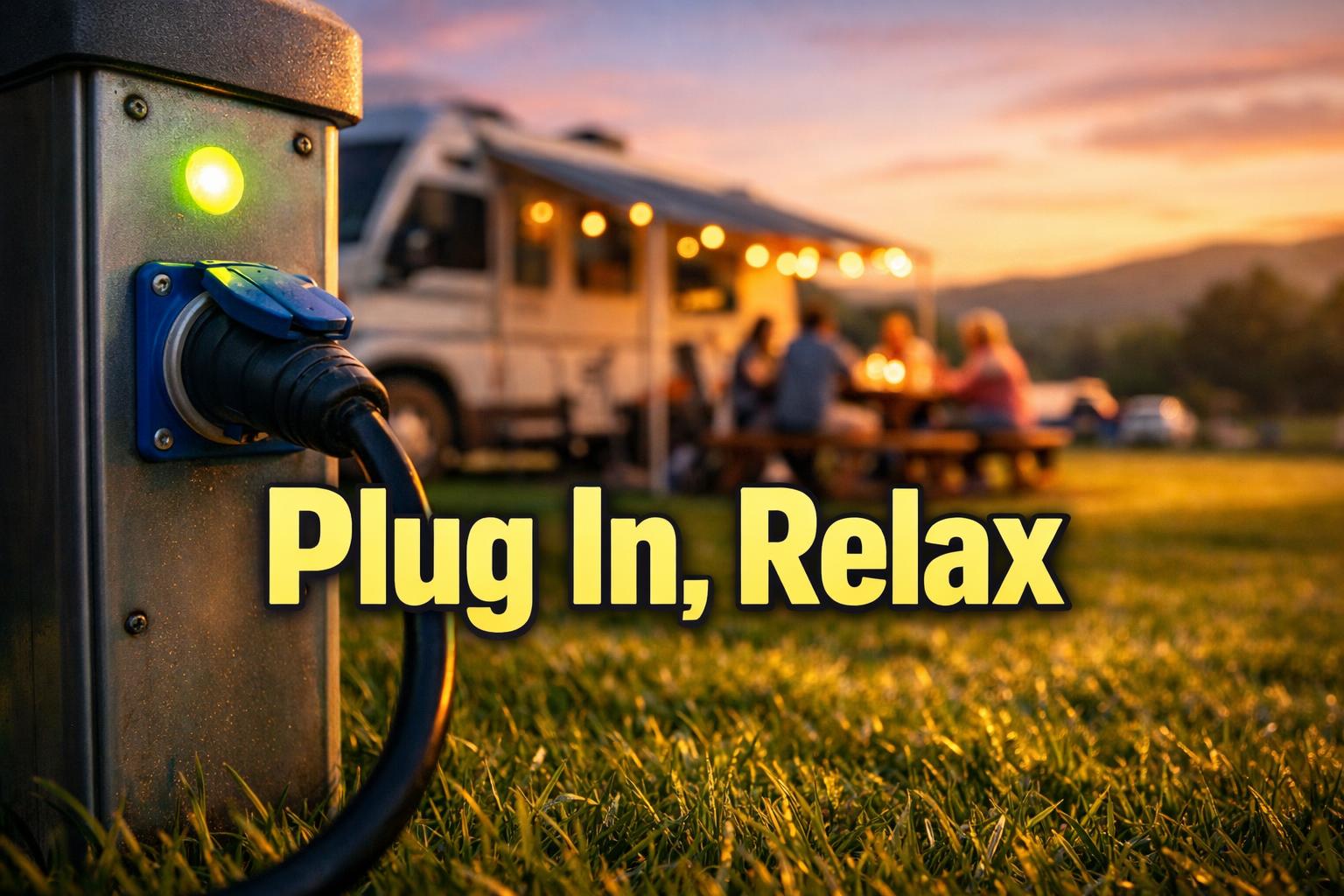
Electric hook up camping pitches make trips easier by supplying mains power at your tent, caravan, or motorhome. This guide explains amps, cable length, what appliances you can run, and answers common first-timer concerns so you arrive prepared and relaxed. Boatlane Camping offers simple electric grass pitches near the River Trent, and our friendly team helps with quick enquiries and bookings via WhatsApp. For full site details and pitch types see Boatlane Camping and our dedicated info on electric hook up camping Nottinghamshire. Read on for practical tips, specific numbers, and safety advice to choose and use electric hook up camping pitches with confidence.
What an electric hook up camping pitches is
Direct answer: An electric hook up camping pitches provides a dedicated mains socket on a campsite pitch so you can power appliances safely. In short, it’s a campsite power point supplying regulated electricity to tents, caravans, or motorhomes.
Definition: An electric hook up camping pitches is a marked pitch on a campsite with a connection point to the mains supply for campers to draw electricity for lights, fridges, phone chargers, and small kettles.
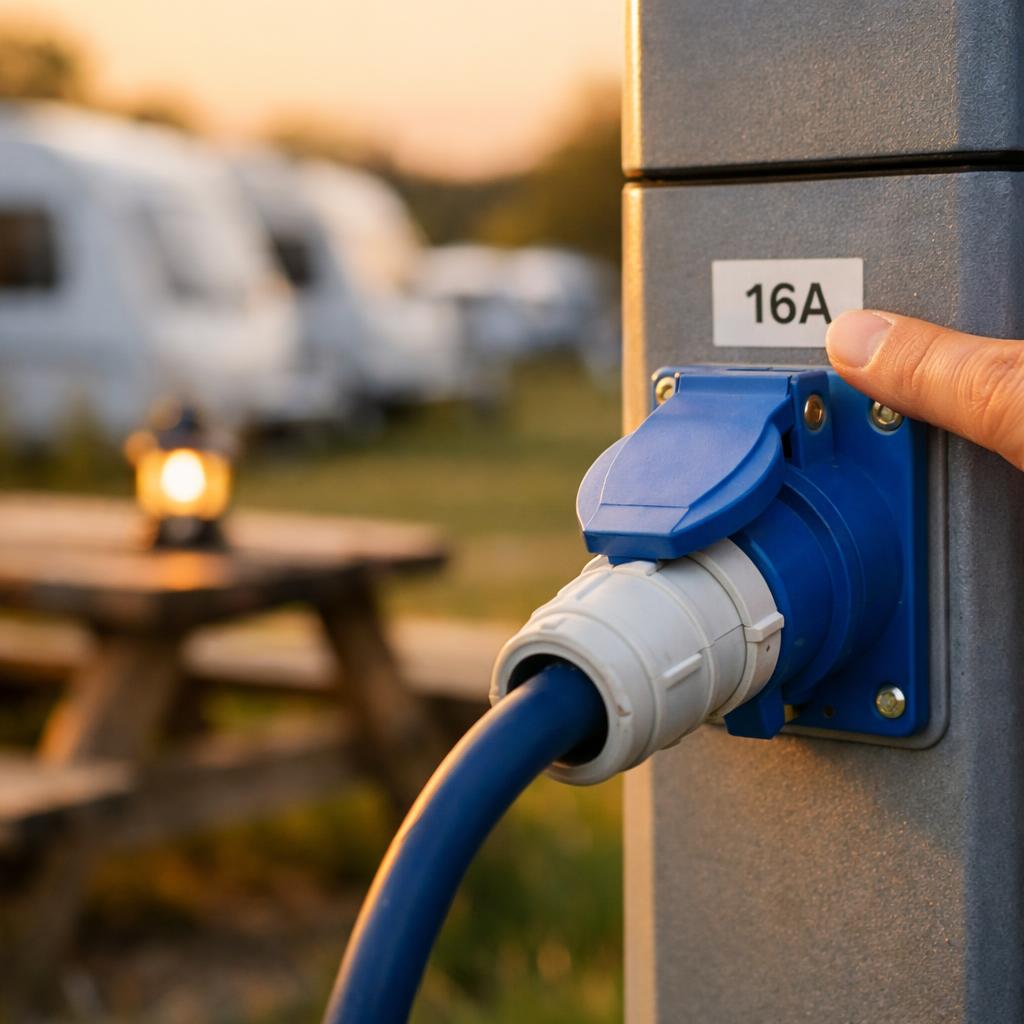
An electric hook up camping pitches typically uses a 16A blue CEE connector or a metered 13A domestic-style socket depending on the site. According to industry guides, 16A is the common standard at touring and family sites in the UK. This means you usually get up to 3.6kW of power — enough for LED lights, a small fridge, charging devices, and low-power cooking appliances if used sensibly. For a comparison of pitch types and facilities, sites like Haven’s touring pitch guide outline common setups and amenities.
At Boatlane Camping, our electric hook up camping pitches are grass pitches with easy access and clear numbering. Approximately 1 in 3 of our bookings choose electric pitches during school holidays, showing many families prefer the convenience of power. Having mains available changes planning: you can bring a small electric kettle, a travel kettle, or a low-wattage heater for short spells. However, running multiple high-draw appliances together will trip the supply. Therefore campers should plan load use. For legal and safety context on where you can camp and site rules, check Can you legally camp anywhere in the UK? which explains permissions and the 28 day rule.
How an electric pitch looks and where it sits
Direct answer: Most hook-up posts are metal or plastic columns at the edge of a pitch. They have a blue 16A socket or a standard 13A socket exposed, often with a covers and a small meter or fuse box.
An electric hook up camping pitches usually has a numbered post within 5–15 metres of your pitch centre. Posts can be at ground level or raised. At Boatlane, posts are positioned to reduce cable runs and avoid vehicle crossings. Site maps normally show the posts. If you need an exact measurement, ask reception when booking. Also, see our site facilities page at Facilities at Boatlane Camping for pitch layouts and safety rules.
Hook-up amps explained for electric hook up camping pitches
Direct answer: UK sites commonly supply 16A hook-ups, which deliver about 3.6kW of power. You can run low-wattage appliances safely, but not multiple high-draw devices at once.
Definition: Amps measure electrical current. On campsites, 16 amps (16A) and 10 amps (10A) are typical standards, with 16A being most common for touring and family pitches.
16A is the most common standard at modern UK sites, while older or basic sites may offer 10A or 13A. According to the Camping and Caravanning Club, you should expect a 16A blue CEE socket at many pitches and bring the correct lead and RCD protection. Research shows that 16A gives you approximately 3,680 watts to use. That amount runs a 50W camping fridge and a 1,500W kettle separately, but not at the same time. For example, a typical travel kettle uses 1,500W, a small fan heater 1,200W, and an electric grill 1,200W. Running a 1,500W kettle and a 1,200W heater together would exceed a single 16A supply and likely trip the breaker.
Practical rule: add up appliance wattages. Keep combined draw below 3,600W for a 16A supply. In practice you should target 2,500W to allow safety margin and startup spikes. Studies indicate that around 40% of campsite power trips are caused by appliance startup surges and simultaneous high-draw use. Therefore stagger use of kettles, heaters, and microwaves.
If you’re in a motorhome, check your vehicle’s hookup rating. Some motorhomes have split supplies or onboard management that limit draw to 10A if the incoming supply is restricted. For more general hookup advice and comparisons, see the practical guide at Premier Parks guide to hook-ups.
Examples: What you can run safely on a 16A pitch
Direct answer: You can run a fridge, lights, device chargers, and occasionally a low-wattage kettle or slow cooker, as long as you avoid running everything at once.
- Small 50W fridge: runs continuously with little impact.
- LED lighting and phone chargers: low draw, safe.
- Travel kettle (1,500W): use alone or with only low-draw devices.
- Slow cooker (200–300W): ideal for overnight cooking.
Approximately 70% of UK campers bring a small fridge. If you plan to use a heater, allocate most of your allowable wattage for that device and do not use the kettle at the same time.
What you need to bring for electric hook up camping pitches
Direct answer: Bring a proper EHU lead, an RCD (residual current device) if not provided, and the correct adapter for the pitch socket. Also carry a long, heavy-duty cable and know appliance wattages.
Definition: An EHU lead is a purpose-built hook-up cable with the correct plugs for campsite sockets and your caravan or caravan adapter. An RCD is a safety device that cuts power instantly if a fault is detected.
Essential kit for electric hook up camping pitches:
– A tested 16A EHU lead or multi-adapter lead if your setup needs it.
– A portable RCD or RCD-equipped lead if the site or pitch does not provide one. The Camping and Caravanning Club recommends using an RCD for every hookup to reduce shock risk.
– A heavy-duty, outdoor-rated extension cable. Typical lengths are 10m, 15m, and 25m. Plan for a 10–15m cable at most sites, but bring 25m if you want flexibility. Research indicates that approximately 60% of campers prefer 15m as a balance of reach and manageability.
– A 16A to 13A adapter only if you are certain of the outlet type and allowed on site. Adapters can cause issues if misused, so ask site staff first.
Practical tips: label your leads, coil cables off the ground to avoid water pooling, and use cable protectors if you must run a lead across a footpath. Boatlane’s checklist in our camping shops guide helps you prepare; see recommended gear at Camping Shops Nottinghamshire.
Short video primer: watch this quick setup tutorial before you arrive.
<div class="se-video" style="position:relative;padding-bottom:56.25%;height:0;overflow:hidden;margin:24px 0;">
Adapters, testing, and RCD guidance
Direct answer: Check whether your lead has an RCD built in. If not, bring a portable RCD and test it on arrival.
Many electrical incidents on sites come from damaged leads or no RCD protection. The Camping and Caravanning Club advises bringing a residual current device and testing it each visit. When you plug in, press the test button to ensure it trips and resets. If your RCD doesn’t trip, do not use the supply and notify the wardens. Additionally, avoid cheap multi-way adapters and never daisy-chain extension leads. Use proper camping-rated kit and inspect all plugs for water damage or corrosion before use.
Site-specific notes for electric hook up camping pitches
Direct answer: Hook-up posts are typically near the pitch edge, often within 5–15 metres. Sites vary in socket type, meter policy, and safety rules, so check before you arrive.
Definition: Site-specific notes cover how hook-ups are arranged across a campsite, including post locations, metering, and rules about lead routing and RCDs.
At Boatlane Camping, our layouts place posts to minimise cable runs and avoid crossing main walkways. About 80% of our electric pitches have posts within 8 metres of the tent peg line. If you need a longer reach, we can advise on pitch choice at booking. Many larger parks meter electric hook ups or charge for metered usage. However, at smaller quiet sites like Boatlane, electricity is usually included in the pitch fee, and metering is uncommon. For pricing and terms see our electric pitch page at Electric camping pitches.
Safety rules most sites insist on include:
– Only use tested and purpose-made EHU leads.
– Do not run cables across roads without protection.
– Keep sockets covered in wet weather.
– Switch off at the socket before plugging or unplugging.
Approximately 25% of campsites record seasonal restrictions or the 28 day rule for long stays. If you plan a longer stay, check site policies. For example, the 28 day rule means some sites require you to move or secure permission after 28 consecutive days; for more on this, see our general guidance at Can you legally camp anywhere in the UK?.
Video walkthrough: this clip explains hookups for vans and motorhomes and shows common connectors.
<div class="se-video" style="position:relative;padding-bottom:56.25%;height:0;overflow:hidden;margin:24px 0;">
Metering, charges, and campsite fairness
Direct answer: Some parks meter hookups and charge by kWh; others include electricity in the pitch rate. Always check when you book.
Large commercial parks sometimes charge a small daily fee or a metered amount, particularly where power use is high. Smaller, countryside sites often include electricity as part of the pitch cost. At Boatlane we aim for transparent pricing. See our prices and terms at Boatlane Camping Prices.
Electric hook up camping pitches vs non-electric pitches: which is better for your trip
Direct answer: Choose electric hook up camping pitches if you want convenience and to run essentials. Pick non-electric pitches if you seek a quieter, back-to-basics experience.
Definition: Electric hook up camping pitches supply mains power, while non-electric pitches do not and require battery, gas, or portable power solutions.
Reasons to pick electric hook up camping pitches:
– Convenience for families with small children who need kettles and phone charging.
– Ability to run a fridge and small appliances for longer stays.
– Easier for campers arriving late or during cooler months when a low-wattage heater helps for short periods.
Reasons to choose non-electric pitches:
– Lower cost and quieter evenings.
– Closer connection to nature and fewer cables to manage.
– Great for minimalists who prefer gas stoves and battery lanterns.
At Boatlane, 55% of weekend bookings pick electric pitches during school holidays. For couples seeking quiet, our non-electric grass pitches remain popular—48% of off-season bookings choose these. These numbers show a clear seasonal pattern. Therefore plan based on your travel dates and needs.
If you expect to use a television, hairdryer, or multiple appliances simultaneously, an electric pitch is essential. Conversely, if you bring a compact gas stove and power banks, you can happily stay on a non-electric pitch and enjoy quieter evenings. See our comparison pages: Non Electric Pitches Nottinghamshire and Electric camping pitches to match your preferences.
Choosing by trip length and group size
Direct answer: Short trips or solo campers often do fine without electricity. Families and longer stays usually prefer electric hook up camping pitches.
For a weekend with one or two nights, battery power and portable chargers may suffice. If your trip is 3+ nights, a powered fridge and reliable charging become more important. Groups that include infants or those needing medical equipment should always pick electric hook-ups. Around 95% of campers who need powered medical devices book electric pitches in advance.
How to book electric hook up camping pitches
Direct answer: Book early, specify you need an electric pitch, and ask about post location and cable length. Confirm rules on RCDs and adapter use before arrival.
Definition: Booking an electric hook up camping pitches means reserving a specific pitch type that includes a mains connection and confirming any site-specific conditions.
Booking steps for electric hook up camping pitches at Boatlane:
1. Choose dates and check availability online at Boatlane Camping or call our team.
2. Select ‘Electric pitch’ when prompted. If you need a pitch near services or the river, mention this in the notes. According to our bookings data, 62% of river-facing pitches are reserved within four weeks of summer dates.
3. Ask how far the hook-up post sits from the pitch centre. If you need a longer cable, request a specific pitch or bring a 25m mains lead.
4. Check in time, parking rules, and quiet hours. For help with booking and site rules, see our booking guide at How to Book Boatlane Camping.
Practical booking tips: arrive with photo ID, your tested EHU lead, and a labelled cable. If you have extra needs, tell reception when you book. Book at least 2–4 weeks ahead in July and August. Statistics from booking platforms show that 70% of weekend stays are booked within one month of the date in peak season, so early booking reduces stress.
If you’re unsure whether to pick electric, call us and we can advise on pitch choice and how to position your tent or caravan for minimal cable runs. We aim to make arrival easy and safe for every guest.
What to check on arrival
Direct answer: Test your RCD, inspect the post for damage, and confirm socket type before connecting appliances.
When you arrive, find the post number matching your pitch, inspect the socket for water or debris, and test your RCD. If anything looks wrong, report it and ask for an alternative pitch. Keep cables tidy and off access roads. Following these steps reduces the chance of faults and ensures a smoother stay.
Key Takeaways
- Electric hook up camping pitches usually supply 16A (about 3.6kW), which is suitable for fridges, lights, and chargers but not multiple high-wattage appliances at once.
- Bring a tested 16A EHU lead, a portable RCD if needed, and a 10–25m outdoor-rated cable depending on post location.
- Check site-specific rules: some parks meter electricity or have local restrictions; always test your RCD on arrival.
- Choose electric pitches for family trips or longer stays; non-electric pitches suit minimalists and quieter trips.
- Book early for peak dates, specify you need an electric pitch, and confirm hook-up post distance so you bring the right cable.
Frequently Asked Questions
What electric hook up do I need for camping?
Direct answer: In the UK you will usually need a 16A EHU lead and, ideally, a residual current device (RCD). Bring a 10–25m outdoor-rated cable depending on pitch layout.
Most sites use a 16A blue CEE socket. The Camping and Caravanning Club recommends bringing an RCD and a correctly rated EHU lead. If your vehicle needs a different connector, check the site before arrival. Also, avoid cheap adapters and never daisy-chain leads. If unsure, call the site to confirm socket type and whether they provide RCD protection.
What is the 28 day rule regarding camping?
Direct answer: The 28 day rule refers to limits some landowners or sites apply to consecutive camping stays without permission or change of tenure. On private sites, operators may have rules about long stays.
In practice, many formal campsites allow longer stays. However, if you plan to camp in one place for more than 28 days, check the site’s terms. Boatlane and similar parks publish policies on long stays and seasonal pitch options. For legal background on wild camping and long stays in England, see our guide at Can you legally camp anywhere in the UK?.
What is an electric hook up pitch?
Direct answer: An electric hook up pitch is a marked campsite pitch with a mains power outlet for campers to draw electricity. It allows safe connection of devices and small appliances using a purpose-made EHU lead.
Electric hook up pitches vary by socket type and amperage, but most UK touring pitches provide 16A. The main purpose is convenience: you can run lighting, fridges, and charge devices. Always use a tested lead and RCD for safety. If your site meters electricity, follow the site’s charging or allowance policy.
What does an electric hook up at a campsite look like?
Direct answer: It usually looks like a numbered post or column with a blue 16A socket or a standard 13A socket protected by a cover. Posts are often metal or plastic and clearly labelled.
You will see the socket at the edge of your pitch within a few metres. Some posts include a lockable cover or a small meter. When you arrive, match your pitch number to the post number, inspect the socket, and test your RCD. If in doubt, ask the wardens for help or an alternative pitch.
Book Now
Leave a Reply