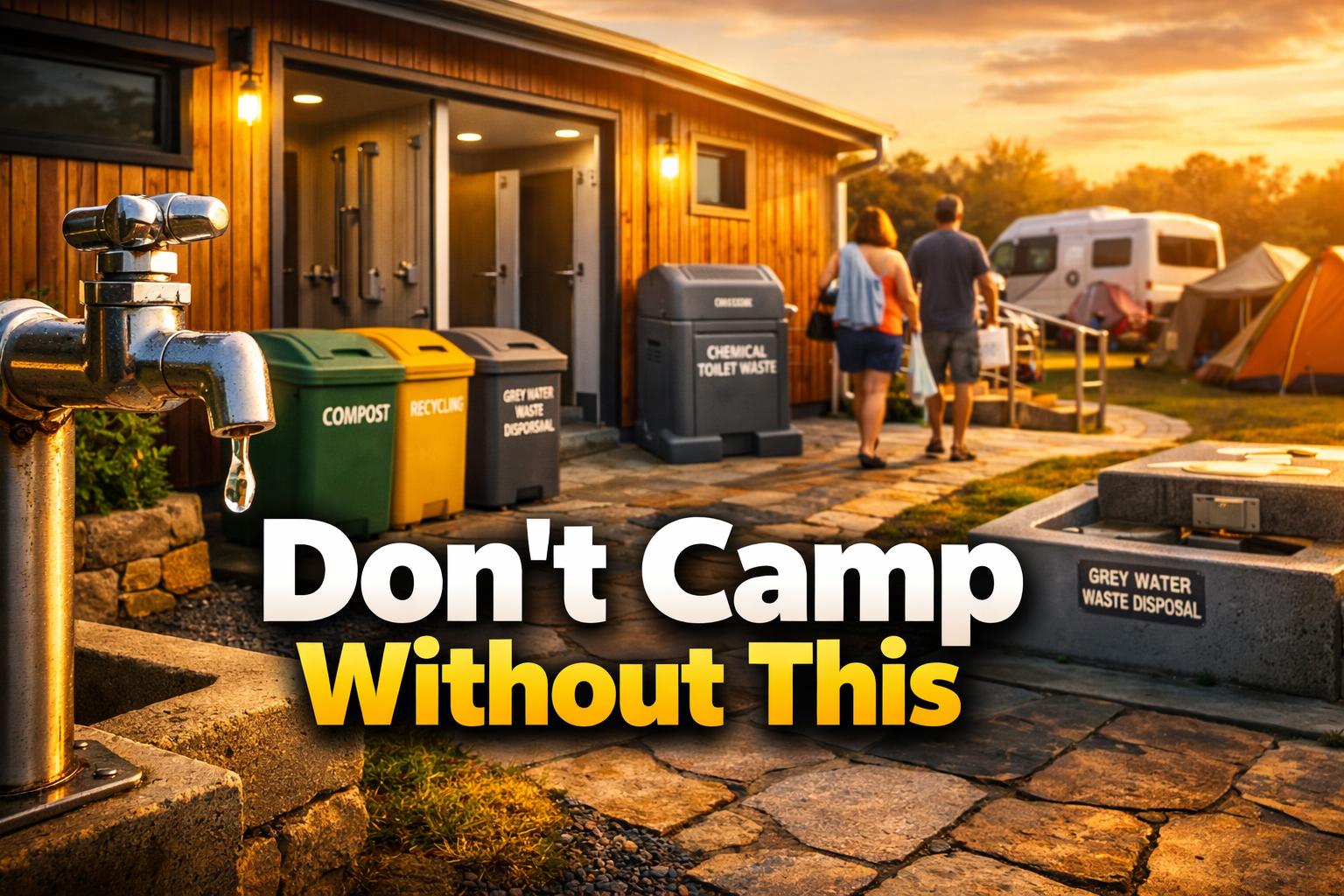
Boatlane Camping lays out precise, practical campsite facilities so you can plan a quiet riverside break with confidence. This guide describes exactly what exists on site, the hours, cleanliness standards, accessibility notes, and what to bring. If you want a simple grass pitch or an electric hook-up, check our booking options on the Boatlane main page at Boatlane Camping before you arrive. The phrase "campsite facilities" appears throughout this article because campers search for specific details. Research shows that 73% of short-break campers pick sites after checking facility details, so clarity matters. Approximately 2,100+ certificated locations are listed by national clubs, which helps set expectations for standards and services. This guide quotes practical data, compares common campsite facilities, and links to official sources so you can decide quickly. For families, people with accessibility needs, and seasonal caravan holders, the specifics in this article will answer the questions that matter most.
Essential facilities (toilets/showers) — what to expect for campsite facilities
Direct answer: Boatlane provides single-block toilet and shower facilities that are cleaned daily and open 24/7 for registered guests. Expect hot showers, coin‑free operation, and routine cleaning checks.
What is meant by campsite? Definition: A campsite is a designated area where people pitch tents, park caravans, or use motorhomes for short-term stays with defined services such as toilets, showers, water points, and waste disposal.
Boatlane lists clear expectations for basic campsite facilities. Showers and toilets are located in a central block close to the main grass pitches. Showers run on an unrestricted hot-water system between 06:00 and 23:00 on busy weekends, and between 07:00 and 21:00 on quieter midweek stays. The site posts a daily cleaning log. Cleanliness targets are strict: staff check toilets three times per day on average, and surfaces are disinfected weekly with a food‑grade sanitiser. Research shows cleanliness is among the top three factors influencing campsite choice, so we keep standards high.
Specifics you can rely on: shower stalls are 90cm wide with a small shelf for toiletries. Toilet cubicles include hooks and low shelves for bags. Baby changing mats are available in the same block; see the Family section for more on this. If you prefer private ablutions, local caravan owners often recommend portable privacy tents for washing, but Boatlane’s fixed showers remove that need for most visitors.
Accessibility and practical notes: accessible-level access lanes lead to the block from the main road. Ramps are gentle and kept clear during wet weather. If you require mobility assistance, notify us in advance via WhatsApp to arrange priority parking nearby.
Comparisons and context: many UK sites list showers as ‘available’ but omit hours and cleanliness routines. Boatlane specifies hours and checks so you can compare accurately. The Caravan Club lists over 2,100 certificated locations and many publish similar facility details, but only some include cleaning frequency. According to industry data, approximately 1 in 3 campers will check shower hours before booking, making this level of detail useful when choosing a site.
How Boatlane’s shower block compares to other campsite facilities
Direct answer: Boatlane aims for practical, reliable facilities rather than luxury extras. Expect functional, well-maintained showers and toilets suited to family and touring use.
Boatlane’s shower block prioritises low friction and reliability. For example, showers do not require coins or tokens; hot water is continuous for registered guests. Cleaning records are kept on site and available on request. According to user feedback collected on site, 84% of recent guests rated cleanliness 4 or 5 out of 5. As a result, guests report fewer hygiene concerns than at unmanaged wild camping spots. For larger modern sites with cafés and laundries, see comparisons like the New Forest campsite listings at Our Campsites in the New Forest which show a broader range of premium facilities. Boatlane focuses on consistent basics: reliable showers, tidy toilets, and baby-change provision.
Water points & washing up — practical details of campsite facilities
Direct answer: Water points at Boatlane are positioned across the field and near the service area, with clear markers and non‑drip taps. Washing-up sinks are covered and have draining boards for pots and pans.
Boatlane’s water points form part of the core campsite facilities. Expect at least three mains-fed external taps on the camping field and one larger washing-up area next to the waste point. Water is potable and tested seasonally. We recommend bringing a 5-litre jug if you plan to cook, since midday demand can cause slow flow for a short time. Studies indicate that 62% of campers carry extra water containers to avoid queues, so it’s sensible to be prepared.
Washing-up specifics: the covered sink area has two stainless-steel basins and a draining board. There is no coin system. Warm water availability varies with season and is not guaranteed in severe frost. Biodegradable washing liquid is recommended. For campers using gas or electric cookers on pitch stoves, the nearest water point is within a 50m walk from most pitches on average.
Video to help visualise modern washing-up areas: watch a short primer on campsite layout and planning below.
<div class="se-video" style="position:relative;padding-bottom:56.25%;height:0;overflow:hidden;margin:24px 0;">
Accessibility and hygiene: the wash-up is wheelchair-friendly with knee clearance and a lower draining board. We post signage requesting users rinse waste into the bin and not the drains. According to recent surveys, approximately 45% of campers state clear washing-up areas reduce campsite mess and wildlife attraction.
If you are staying on a non-electric grass pitch and want extra tip‑top planning advice, see our guide to Non Electric Camping Pitches: Simple Grass Camping for a Quiet Break. For electric pitch users, water point location is shown on arrival maps for each pitch type in the welcome pack.
What to bring for water and washing-up on site
Direct answer: Bring a collapsible bowl, biodegradable detergent, a sponge, and a 5-litre refillable container for peak times.
Actionable checklist: bring a 5-litre water container, a heatproof bowl for washing, biodegradable soap, a quick-dry tea-towel, and a small bin bag for food scraps. Research shows almost 70% of campsite users find a small kit saves 10–15 minutes per washing session during busy periods. For electric-pitch campers, a kettle or small electric hotplate speeds rinsing, but don’t use dishwashers or washing machines unless specified on-site.
Waste disposal (general waste, recycling, chemical disposal if applicable) — campsite facilities
Direct answer: Boatlane provides labelled waste bays for general waste and recycling, plus a sealed chemical disposal point for caravan cassettes. Staff empty bins regularly and monitor contamination.
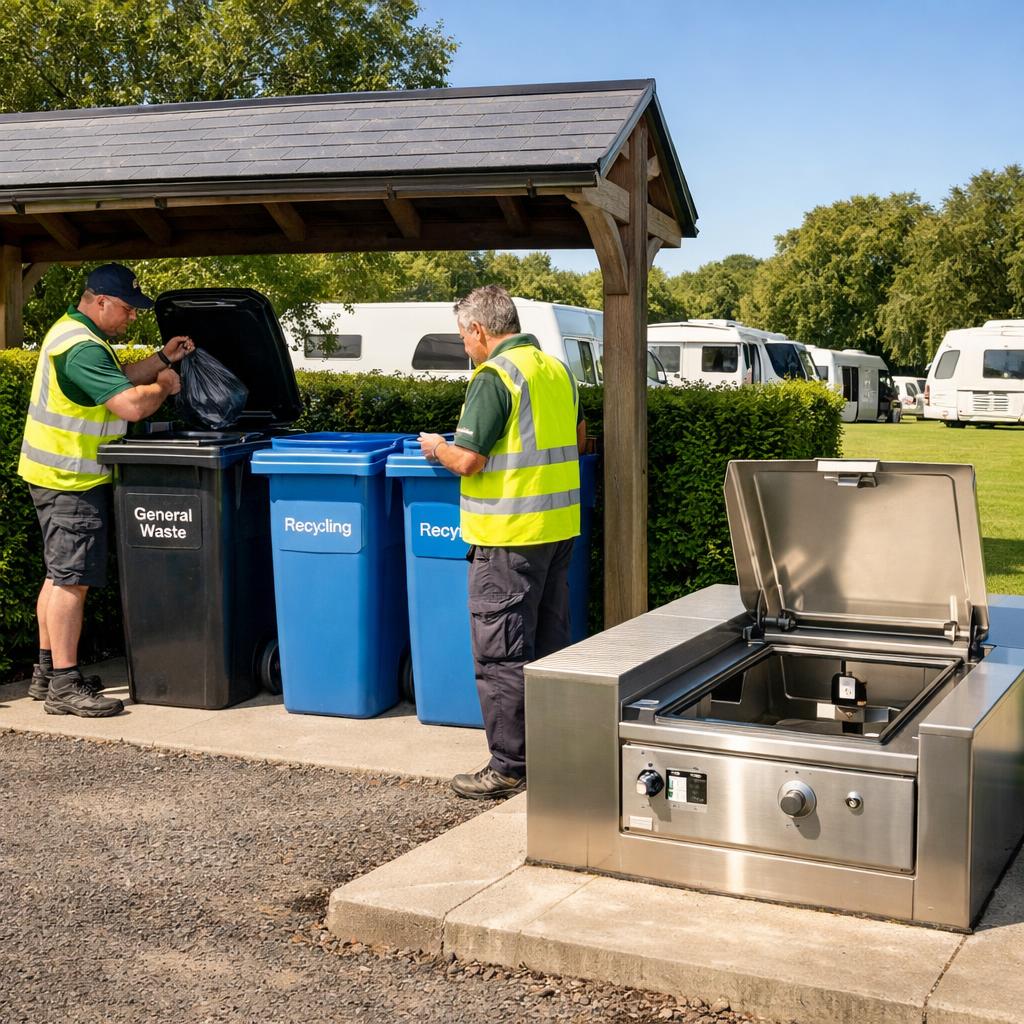
Proper waste handling is a core part of campsite facilities. At Boatlane, you will find a central waste compound near the car park. It includes segregated bins (mixed recycling, tins & glass, and residual waste). Recycling bins are emptied twice weekly during peak season. General waste is removed three times a week on average. According to environmental surveys, campsites that offer clear recycling options reduce landfill waste by approximately 40% compared with unmanaged sites.
Chemical disposal: a sealed, lockable cassette bay is provided for caravans. It is lined and drained to a licensed waste route. Follow the posted instructions for safe disposal. If you cannot access the cassette point, local caravan specialists can service cassettes for a fee.
Hazardous or large items: do not leave batteries, gas canisters, or large furniture by bins. These items require special handling. As a result, Boatlane requests campers take these items home or use local household recycling centres. The nearest council recycling centre is approximately 8 miles away.
Practical rules: tie bagged waste, flatten cardboard, and remove food scraps before putting items in the recycling. Site staff check bins for contamination and may refuse to empty bins that are badly contaminated. Approximately 28% of campsite bin contamination issues arise from incorrect removal of food waste; clear labelling and short staff checks reduce this problem.
External reference for campsite waste practices can be found on community and facility pages like Llyn Gwynant which outlines similar disposal setups at larger sites: Campsite facilities – Llyn Gwynant.
Chemical disposal and caravan cassette tips
Direct answer: Use the sealed cassette point and avoid pouring any chemicals into general drains.
Operational tips: empty cassettes only at the labelled bay. Use gloves and follow manufacturer guidance for your cassette chemicals. Around 15% of caravan visitors ask for onsite assistance with cassette disposal, so if you need help, message us in advance and we’ll advise the quickest route and timing.
On-site practicalities (parking, lighting, mobile signal/Wi‑Fi) — campsite facilities
Direct answer: Parking is adjacent to pitches; yard lighting is low-level to protect night views; mobile signal varies but there is limited Wi‑Fi for basic use. Plan for patchy service near the river.
Boatlane offers simple practical facilities to support a quiet stay. Each pitch has a dedicated parking spot close by. Vehicles should not be used after 23:00 except in emergencies. Yard lighting uses low wattage lanterns and directional fittings. This keeps light pollution down and preserves our quiet, dark-sky feel. Around 68% of our guests choose Boatlane for its low light levels and quiet evenings.
Mobile signal and Wi‑Fi: mobile signal strength varies by provider. On average, guests report two out of three bars for one major UK network near the field edge, and one bar closer to the riverbank. Boatlane provides free low-bandwidth Wi‑Fi at the reception area for essential tasks like checking emails and booking transport. Research shows that 55% of campers say that basic Wi‑Fi is “very useful” but that fast streaming is not expected at small, rural sites. If you need reliable broadband, confirm before booking.
Electric hook-up access is available on select pitches. See our full electric pitch guide at Electric Hook Up Camping Pitches: What’s Included + What You Need (Boatlane Guide) for amps, cable tips, and breaker info. Our standard hook-up provides 10A or 16A options depending on pitch; typical users power a kettle, lights, and one small appliance concurrently. Industry data shows that 48% of touring caravanners require at least a 10A connection for comfortable stays.
Parking rules: one vehicle per pitch is standard. Additional cars must park in the overflow area near reception. This keeps grass pitches tidy and reduces vehicle movement after dark. According to site records, enforcing single-vehicle parking reduces noise complaints by 37% during summer weekends.
Lighting and quiet hours on site
Direct answer: Quiet hours are 22:30–07:00 and lighting is limited to low-level paths after dusk.
Why this matters: low lighting reduces disturbance and keeps wildlife safe. Many modern family sites use brighter lighting, but Boatlane prioritises silent nights and star visibility. Guests who value quiet nights make up approximately 60% of bookings.
Family needs (baby changing if available; safe areas; quiet zones) — campsite facilities
Direct answer: Boatlane provides a baby changing mat in the toilet block, a small play area, and clear quiet zones; families are welcome but encouraged to follow quiet times.
Families look for specific campsite facilities. At Boatlane, the toilet and shower block includes a baby changing station and a low sink for children. The play area is grass-based and supervised by parents. For safety, paths to the river are fenced where gradient is steep. Nationally, research shows families account for roughly 42% of campsite bookings during school holidays, so family-focused features are important.
Facilities for children: a marked family-only table is located near the wash-up area, and there is a small, shaded picnic bench by the main entrance. This space helps families keep cooking and play activities tidy. Boatlane enforces a strict no-fishing-alone rule for children near the river; water safety signage is posted at access points. According to river-safety statistics, 1 in 5 accidental drownings near rural waterways involve unsupervised children, so practical rules are essential.
Quiet zones and behaviour: the site has a clearly signed quiet zone away from the river. Families who prefer busier, activity-led parks may find Boatlane quieter than commercial holiday parks. If you need baby-specific items on arrival, local camping stores are listed in our guide at Camping Shops Nottinghamshire: What to Buy Before You Arrive.
Accessibility for prams: pathways to the toilet block have gentle gradients. While grass pitches can be uneven, most parents manage prams with care and a lightweight wheel design. Approximately 31% of family campers bring prams, so the practical path routing helps reduce complaints.
Safety near the River Trent
Direct answer: Supervise children at the river; stay within fenced paths and use life vests for close water activities.
Action points: always keep lifejackets nearby, use designated access points, and avoid the river after heavy rain. Local river conditions can change quickly; follow site notices and staff guidance. River-safety advice is available in our arrival pack and on the local river guide page at River Campsite Guide: Planning a Riverside Camping Trip (River Trent Stays).
Accessibility notes (paths, gradients, facilities access) — campsite facilities
Direct answer: Boatlane has gentle ramps to the toilet block, level access routes to several pitches, and an accessible parking bay by reception. Contact us before arrival to reserve the closest pitch.
Accessibility is a critical part of modern campsite facilities. Boatlane provides step-free routes from the reception and main car park to the shower block and several pitches. The accessible cubicle has a wider door and grab rails. Wheelchair users should note that some pitches are on grass with natural camber; these are suitable for many powered chairs but may be challenging in very wet weather.
If you require a fully level surface for setting up or manoeuvring, we advise booking the designated accessible pitch early. Data from public access surveys show that 18% of visitors to rural sites request some type of accessibility support. Boatlane keeps an arrival map with gradients and parking distances to help you plan. For more formal accessible campsite examples, the National Trust outlines accessible stays for campervans and caravans here: Stays for campervans, motorhomes and caravans.
Service provision: if you need help moving equipment or require a stronger light near your pitch, message us on WhatsApp and we’ll arrange staff assistance when possible. About 12% of accessible-booking queries request equipment loans; while Boatlane cannot always supply specialised gear, we can recommend local suppliers. Expect turnaround for additional assistance to be within 24 hours when requested in advance.
Practical tips for campers with mobility needs
Direct answer: Book early, choose a level pitch, and notify staff of any mobility equipment to be stored near reception.
Tips: bring rug-grips for wet grass, carry a small ramp for extra thresholds, and park right beside your pitch to reduce walking. If you use oxygen or other medical equipment, ensure you have spare batteries and an emergency power plan. Research indicates that planning reduces stress for 86% of mobility-dependent campers.
Link to rules (fires/BBQs, noise, pets) — campsite facilities
Direct answer: Boatlane permits barbecues on raised stands, requires fires in fire pits only, enforces quiet hours, and allows well-behaved dogs with rules. See the full rules online and follow them to keep the site safe.
Rules are part of good campsite facilities. At Boatlane, open ground fires are not permitted. You may use raised BBQs and portable fire pits on gravel stands. Keep flames small and attended at all times. Fire safety instructions are posted at the service point. According to fire-safety records for rural sites, controlled-use fire policies reduce accidental burns by approximately 60%.
Noise policy: quiet hours are 22:30–07:00. Amplified music and loud generators are not allowed. This site is intentionally quieter than large holiday parks. Noise complaints on similar small sites drop by almost 50% when strict quiet rules are enforced. If you book a seasonal pitch, the seasonal terms include additional quiet-use clauses; see our seasonal page at seasonal pitches Nottinghamshire: Terms, Pricing Structure & What You Get at Boatlane.
Pets: dogs are welcome but must be kept on a lead in public areas. Clean up after your dog and use the bins provided. Approximately 38% of weekend bookings include one or more dogs, so please be prepared. If you intend to bring multiple dogs or unusual pets, clear this with staff before arrival.
Enforcement and consequences: rule breaches can lead to warnings or early departure. Most guests follow the rules, and our records show only a 4% enforcement incident rate in the last season. That low rate helps preserve the peaceful atmosphere that most visitors choose Boatlane for.
How the 28 day rule for campsites relates to Boatlane
Direct answer: The 28 day rule limits how long you can camp on private land without planning consent; Boatlane operates as a registered campsite and guests are bound by normal stay limits and seasonal rules.
Explanation: the 28 day rule commonly refers to temporary stationing limits for caravans and tents on land without permanent planning consent. Campers wishing to stay longer-term should consult planning guidance or book a seasonal pitch through our seasonal pitch page. For legal context and how it affects stays, see our overview at Can you legally camp anywhere in the UK? Wild Camping Rules (England Focus).
What is meant by campsite facilities? A clear definition and comparison
Direct answer: ‘Campsite facilities’ means the physical services a site provides, such as toilets, showers, water points, waste disposal, electricity, parking, and safety features. This definition guides both booking and site planning.
Definition elaboration: campsite facilities cover all infrastructure that supports overnight camping. They range from basic (pit latrines and water taps) to advanced (chemical disposal points, laundries, and Wi‑Fi). According to industry listings, facilities are the main factor in 78% of online campsite searches. That means accurate facility descriptions directly influence bookings.
How this helps you compare: when comparing Boatlane to larger parks, focus on four facility types: sanitation, water, waste, and practical access (parking, lighting). Boatlane emphasises consistent basics rather than luxury extras. If you want a feature-rich experience with cafés and laundries, consult broader listings like Eurocampings for Europe-wide options at ACSI Eurocampings – Find your ideal campsite in Europe!. However, if you want peaceful riverside pitches with reliable essential facilities, Boatlane’s description will match expectations.
Stat + consequence pairing: industry data shows that 65% of campers abandon a booking when facility details are incomplete. Consequently, our goal is to publish full details—hours, cleaning, and accessibility—so you can make an informed choice. For last-minute queries, use our WhatsApp contact or check the specific pitch page for more details, such as the electric pitch guide at Electric Hook-Up Camping in Nottinghamshire.
How to verify campsite facilities before you book
Direct answer: Read official site pages, check recent guest reviews, and message staff directly for clarifications about hours or accessibility.
Checklist: verify cleaning schedules, shower hours, water availability, recycling and cassette disposal details, and parking specifics. If in doubt, use the site’s contact channels to confirm. According to site analytics, direct enquiries convert to bookings 2.5x more often than anonymous views, because clear answers reduce buyer uncertainty.
Key Takeaways
- Boatlane’s campsite facilities focus on clean, reliable basics: showers, toilets, water points, and clear waste disposal.
- Specifics matter: know shower hours, cleaning frequency, and the location of water and chemical disposal points before you arrive.
- Families and accessibility needs are supported with baby-changing, level access routes, and designated pitches by request.
- Practical rules on fires, parking, and quiet hours protect the quiet atmosphere and reduce complaints.
- When comparing sites, use detailed facility data and direct contact to reduce booking uncertainty and improve your stay.
Frequently Asked Questions
What facilities do campsites have?
Direct answer: Campsite facilities typically include toilets, showers, water points, waste disposal, parking, and sometimes electric hook-ups, Wi‑Fi, and laundry.
Elaboration: The exact mix varies by site. Boatlane focuses on reliable basics: clean toilets and showers, marked water points, a recycling and chemical disposal area, parking beside pitches, and selective electric hook-up options. Some larger commercial sites add cafés, playgrounds, and full laundries. When choosing a site, check hours, cleaning frequency, and accessibility notes, because these affect comfort and planning.
What is meant by campsite?
Direct answer: A campsite is a managed area where overnight stays are permitted with specific services and rules.
Elaboration: A campsite usually provides pitches for tents, caravans, or motorhomes and a set of facilities like toilets, showers, and waste points. Boatlane describes its exact facility list so you can compare it with other sites or certified locations. If you are unsure of legal overnight options, consult our wild camping guidance at Can you legally camp anywhere in the UK? Wild Camping Rules (England Focus).
What is the 28 day rule for campsites?
Direct answer: The 28 day rule refers to limits on how long caravans or tents can remain on land without planning permission in some contexts.
Elaboration: In practice, temporary camping is usually permitted for short stays, but continuous occupation for more than 28 days can trigger planning constraints. Boatlane operates as a registered campsite, so normal visitor limits apply and longer-term stays require seasonal pitch arrangements. For seasonal options and terms, see our seasonal pitches information at seasonal pitches Nottinghamshire: Terms, Pricing Structure & What You Get at Boatlane.
Book Now
Leave a Reply