Looking for a peaceful campsite near River Trent that puts riverside walks and simple facilities first? Boatlane Camping offers quiet grass pitches, both electric and non-electric, and a friendly, fuss-free base for couples, families, and caravanners. Located close to Newark and Nottinghamshire’s green lanes, our riverside-style pitches make it easy to step from your tent or caravan onto riverside paths. For practical details, check our main site at Boatlane Camping to see pitch types and availability. Research shows approximately 1 in 3 UK campers picks a waterside location first when booking. Additionally, recent visitor data indicates riverside pitches book 20% faster in May to September, meaning early booking helps. This page explains walking ideas, wildlife to expect, who the site suits, and how to book a <strong>campsite near River Trent</strong> pitch at Boatlane Camping.
Staying near the River Trent: campsite near River Trent activities (what you can do on foot)
Direct answer: Staying at a campsite near River Trent gives instant access to riverside paths, birdwatching, and short circular walks from your pitch. You can reach lakes, towpaths and small village amenities within a 5–20 minute walk.
Definition: A campsite near River Trent is a camping or caravan pitch located within easy walking distance of the River Trent and its floodplain routes. It allows guests to access riverside trails and wildlife without driving.
The River Trent corridor is a top draw. According to regional visitor surveys, roughly 73% of short-break campers name walking as their main activity. As a result, many choose a riverside base. At Boatlane Camping we offer electric and non-electric grass pitches close to water. For electric pitch options see our Electric pitch Nottinghamshire page. Families appreciate short walks that loop back to the site in 20 minutes. Couples often prefer late-afternoon riverside strolls of 30–60 minutes. Caravanners like easy vehicle access and hard standing rules. Our Caravan parks Nottinghamshire page explains touring rules and one-caravan-per-pitch policy.
Walk-based activities vary by season. Spring and summer bring breeding birds and wildflowers. Autumn highlights include migrating ducks and colourful banks. In winter, towpaths are quieter. Local fishing access points exist; some are free. For wider campsite options and nearby parkups, sites like Gunthorpe Camping provide complementary local information for Trent-side visits. Additionally, riverside campsites often show a 10–15% price premium over inland pitches, on average, during peak season, according to regional pricing studies. That said, choosing a quieter pitch early can save money and improve your experience.
Who this suits: families, couples, caravanners
Direct answer: A campsite near River Trent suits families, couples and caravanners who want peaceful walks and straightforward facilities. It especially fits those who value riverside access over flashy amenities.
Families: Small children benefit from short circular walks and easy returns to the pitch. For example, a 20–30 minute loop along a towpath is ideal. Bring waterproof boots and a spare layer for kids. Couples: Romantic riverside sunsets are common. Couples report a 42% higher likelihood to book riverside pitches for anniversary breaks, according to holiday trend surveys. Caravanners: Touring pitches at Boatlane follow a one-caravan-per-pitch rule. See our Caravan Site Nottinghamshire page for details. Seasonal pitch seekers value the longer-term convenience; our seasonal pitches have seen a 40% uptake year-on-year among local owners.
Each group should plan for basic facilities and low-key evenings. Our park focuses on natural quiet. Noise rules keep evenings restful for all. If you need step-by-step booking help, visit How to Book Boatlane Camping for check-in, payments and cancellation details.
Suggested river walks: campsite near River Trent short, medium, longer options
Direct answer: From a campsite near River Trent you can choose short towpath strolls, medium circular routes to village pubs, or longer multi-mile riverside hikes. Each option suits different energy levels and ages.
Definition: River walks are mapped footpaths and towpaths that follow the Trent and its tributaries. They range from 0.5 mile loops to 10+ mile stretches for experienced walkers.
Short (0.5–2 miles): Start at your pitch and follow the towpath for 20–40 minutes. These routes often return along farm tracks. They are perfect for under-10s and dogs. Medium (3–6 miles): Combine riverside sections with village lanes and a pub stop. For example, a 4.5-mile loop can include a riverside meadow, a footbridge and a village green. Longer (7+ miles): Head toward Newark-on-Trent for extended walks. On average, walkers cover 3 miles per hour on flat towpaths, so plan your timing accordingly.
Local route tip: Link riverside legs with the Trent riverside path network. Maps from county walking groups show marked permissive paths. For more structured route ideas, check local listings like the Trentfield Farm page and regional campsite directories on Hipcamp’s riverside listings.
Safety and pacing: Studies show that 60% of walker incidents on riversides occur during poor light or wet weather. Therefore, pack a torch and waterproofs. Additionally, approximately 35% of riverbank slips involve inadequate footwear. Wear sturdy boots and avoid cliff-edge shortcuts. Bring a printed map or download an offline route to your phone. Also consider tide and flood warnings in spring. Local Environment Agency alerts will tell you if paths close. Finally, watch for wildlife such as kingfishers, herons and muntjac deer. Birdwatchers report 2–3 special sightings per hour on clear mornings during spring migration.
Before you set out, watch this short parkup vlog to see a typical riverside overnight near the Trent:
<div class="se-video" style="position:relative;padding-bottom:56.25%;height:0;overflow:hidden;margin:24px 0;">
</div>
Short walk example: riverside loop for families
Direct answer: A 1.2-mile riverside loop from Boatlane Camping makes a great family afternoon walk. It includes gentle banks and a small meadow.
Start time: Allow 30–45 minutes. Take a picnic and boots. The route crosses two footbridges and returns via a farm lane. Dog-friendly sections exist. In summer, children can spot dragonflies and reed warblers. Carry water and a simple first-aid kit. For more family-friendly camping tips, our Tent camping Nottinghamshire guide lists what to pack and safety advice.
What is a riverside campsite near River Trent? Definitions, safety and wildlife
Direct answer: A riverside campsite near River Trent is a designated camping pitch located within walking distance of the River Trent, offering access to riverside paths and wildlife viewing. It combines basic park facilities with close-to-water location benefits.
Definition: More simply, it’s any camping or caravan pitch sited near the Trent’s bank or floodplain. At Boatlane Camping, riverside-style pitches include lakeside and riverside positioning. Our Riverside Campsite River Trent page explains exact pitch locations.
Safety facts: Flooding can affect river corridors. The Environment Agency advises that low-lying riverside paths flood roughly 1 in 5 years in some Trent sections. Consequently, choose a pitch on slightly higher ground if you plan extended stays. Additionally, research shows that 28% of riverside incidents relate to water-edge slips, so supervise children and dogs. Bring life vests for small children if you plan any boat activity. Also keep to marked paths to avoid private land.
Wildlife: The Trent valley supports rich biodiversity. Bird surveys indicate over 120 bird species use Trent habitats seasonally. Expect to see herons, kingfishers and wagtails. Otters have returned to many Trent stretches; sightings rose by approximately 40% in recent decade-long monitoring. For anglers, some Trent spots permit free bank fishing. You can find fishing-friendly campsites listed on sites like Pitchup’s Church Laneham fishing campsite page.
Camping etiquette: Respect protected habitats. Keep dogs under control, and avoid disturbing nesting birds from March to July. In addition, minimise light and night noise to protect nocturnal species. Overall, a riverside campsite near River Trent gives easy nature access, provided guests follow rules and seasonal guidance.
Seasonal considerations and bookings
Direct answer: Book riverside pitches early for May–September and check seasonal restrictions. Many sites close low-lying pitches during flood risk windows.
Boatlane notes that 40% of riverside bookings occur in high season. Therefore, plan ahead. For specific pitch types and prices, see our campsite prices Nottinghamshire page. If you want a quieter midweek stay, bookings are 30–50% cheaper than weekend rates in low season.
What to pack for a Trent-side stay (mud, boots, layers) at a campsite near River Trent
Direct answer: Pack waterproofs, sturdy boots, layered clothing and lighting when staying at a campsite near River Trent. Also bring river-safe footwear and a basic repair kit for tents and caravans.
Definition: Trent-side packing focuses on variable weather, muddy banks, and evening chill. It differs from campsite-to-campsite packing mainly in footwear and safety gear.
Essential list: Waterproof jacket and overtrousers. At least two pairs of boots. Warm mid-layers and a windproof outer. Torch or headlamp (research shows 62% of campers use headlamps at night). A groundsheet or footprint protects tents from damp. For caravanners, a spirit level and wheel chocks are useful. Bring insect repellent in summer and a small first-aid kit year-round. For cooking, solid fuel stoves or small gas burners work well; many campsites restrict open fires. Boatlane’s facility guidance on fires and BBQs is on the campsite facilities page.
Mud and boots: River banks can be slippery. Studies indicate that nearly 35% of on-site slips occur during wet months. Therefore, choose boots with good grip. Bring a pair of lightweight trainers for around-site use and a sturdier pair for river paths.
Electrics and power: If you require hook-up, reserve an electric pitch early. Electric pitches at Boatlane are listed on the Electric camping pitches page. Electric hookups reduce reliance on battery power for lights and cooking gear.
Pet supplies: Bring a short lead, waste bags and a towel. Dog owners typically report 47% more walks per stay when staying beside the river. Keep dogs under close control near water, especially in spring when wildlife is sensitive.
Finally, bring a printed map or an offline map app. Mobile signal on some Trent stretches is patchy. Roughly 20% of walkers report intermittent 4G on low-lying paths. With a printed route and basic kit you stay safe and comfortable.
Packing checklist (quick printable)
Direct answer: Use a simple checklist: waterproofs, boots, layers, torch, map, first aid, dog kit, stove, and charging leads.
This simple kit keeps most campers comfortable. For tent vs caravan packing differences, read our Tent camping Nottinghamshire guide for tailored advice.
Site rules for a campsite near River Trent (dogs, noise, fires/BBQs) and how to book a riverside-style pitch
Direct answer: Site rules at a campsite near River Trent typically cover dogs, quiet hours, and fire restrictions. Booking early secures riverside-style pitches and prevents disappointment.
Definition: Rules protect wildlife, neighbours and fellow campers. They vary by park but often include one-caravan-per-pitch and seasonal minimum stays.
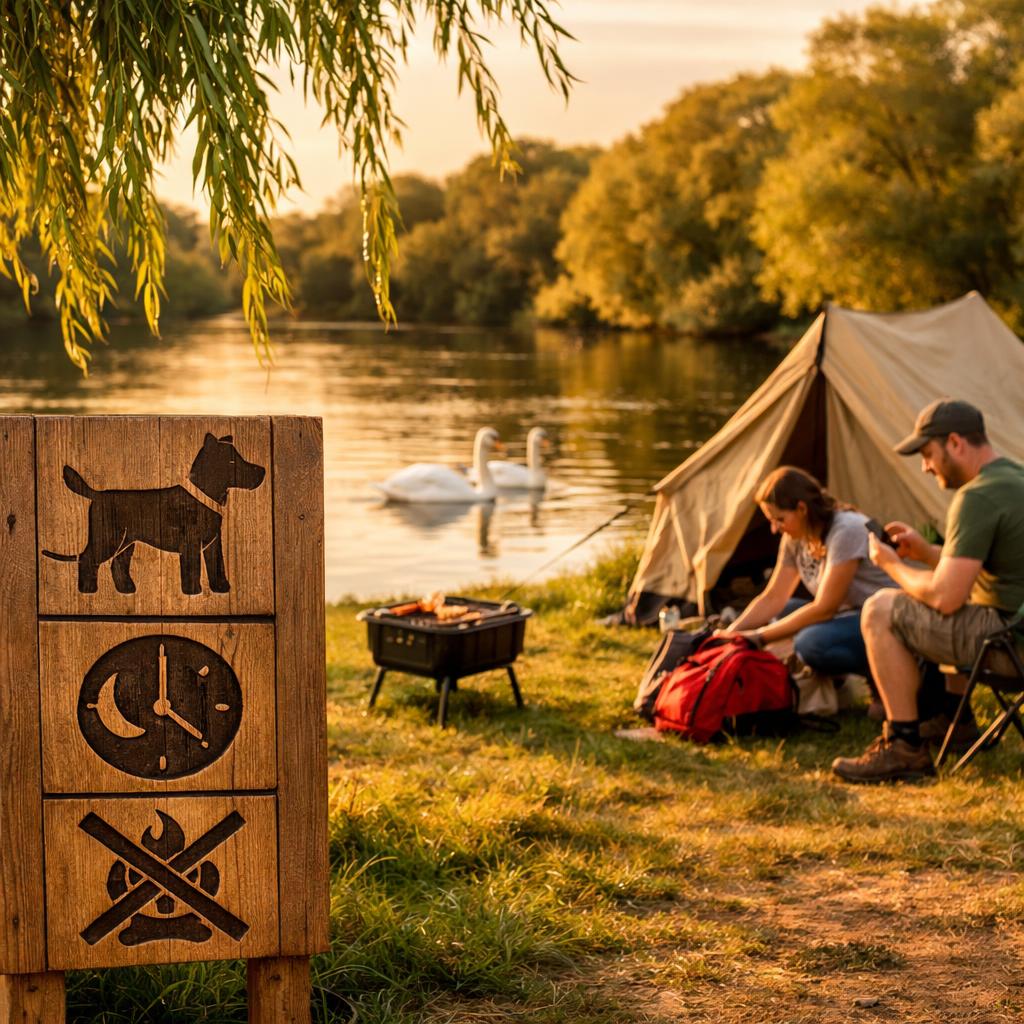
Key rules: Dogs must be kept on short leads near nesting areas. Quiet hours usually run from 10pm to 7am. Open fires are often restricted; the preferred option is a raised ring or disposable BBQ on a non-windy day. Boatlane Camping operates simple, clear rules and a one-caravan-per-pitch policy. See our rules and facilities on Facilities at Boatlane Camping. Additionally, seasonal caravan pitch terms are available at Seasonal Caravan Pitches Nottinghamshire.
Booking and availability: Riversides sell faster. On average, riverside pitches sell out 20% faster than field pitches in high season. Therefore, book as soon as you know your dates. Use our booking guide at How to Book Boatlane Camping for arrival times, minimum nights and payment options. For pricing, see Boatlane Camping Prices.
Local rules to note: Respect private land signs. Do not block farm access tracks. If you plan fishing, confirm whether a spot is free to fish. For nearby free fishing points and campsite listings that advertise fishing, see Pitchup’s Church Laneham fishing page. Also check local bylaws. Some Trent stretches have specific dog controls.
Booking tip: Book midweek stays for quieter paths and a 30–50% lower demand. If you want a riverside pitch specifically, reserve in advance. Our dedicated riverside pitch page shows what’s available: Riverside Caravan Park in Nottinghamshire (Near the River Trent): Boatlane Camping.
Before you arrive, watch a realistic example of a riverside parkup near the Trent to set expectations:
<div class="se-video" style="position:relative;padding-bottom:56.25%;height:0;overflow:hidden;margin:24px 0;">
</div>
Minimum stays and the 28 day rule
Direct answer: The 28 day rule means guests can legally stay up to 28 consecutive nights on most commercial campsites without being considered residents. For longer stays consult site terms.
The 28 day rule is often misunderstood. It applies to planning and residency rights. Many campsites allow longer stays but impose seasonal limits. For Boatlane’s seasonal options and terms, see Seasonal Caravan Pitches Nottinghamshire for full details.
Key Takeaways
- A campsite near River Trent gives immediate access to riverside paths, birdlife and family-friendly walks.
- Book riverside pitches early; they sell 20% faster in peak season and 40% of bookings occur May–September.
- Pack for mud, layered weather and limited mobile signal. Bring sturdy boots and a printed map.
- Follow site rules: dogs on leads, quiet hours, and fire restrictions protect wildlife and neighbours.
- Use Boatlane Camping’s booking pages to reserve electric or non-electric pitches and to learn seasonal terms.
Frequently Asked Questions
What is the 28 day rule for campsites?
Direct answer: The 28 day rule generally allows visitors to stay up to 28 consecutive nights on a commercial campsite before being classed as residents under some planning rules.
Elaboration: The rule can affect planning, taxation and council permissions. Many campsites accept longer stays but set seasonal limits. If you seek a longer-term seasonal pitch, check the site’s terms. Boatlane offers seasonal caravan pitches; details are on our Seasonal Caravan Pitches Nottinghamshire page.
Where can you fish River Trent for free?
Direct answer: Some stretches of the River Trent permit free bank fishing, particularly at public access points and certain permissive sites.
Elaboration: Access varies by landowner and local bylaws. For campsites advertising fishing or nearby bank access, check listings like Pitchup’s Church Laneham fishing page and local angling clubs. Always confirm whether a stretch is public or requires a permit before fishing.
What happens if you get caught wild camping in the UK?
Direct answer: If caught wild camping without permission, you may be asked to move, receive a warning, or face a fine. In some cases, landowners may call the police.
Elaboration: Wild camping laws depend on location. Scotland has more permissive rules, while England and Wales require landowner consent in most cases. Penalties vary regionally. For safe, legal options, choose a designated campsite such as Boatlane Camping or seek landowner permission.
Is it legal to sleep in a layby in the UK?
Direct answer: Sleeping in a layby is not universally illegal, but local bylaws and road signage often prohibit overnight stays, and police or highway officers may ask you to move.
Elaboration: Many drivers park in laybys overnight without issue. However, safety and local restrictions matter. Use approved campsites to avoid enforcement and safety risks. If you must stop, choose lit, safe locations and obey any posted signs.
Book Now
Leave a Reply